A dealer car with a fresh MOT can still carry advisories that matter. That does not automatically make it a bad buy, but it does mean you should slow down before taking the sales pitch at face value.
The useful rule is simple: an advisory is not the same thing as a fail, but it is also not something you should ignore just because the car can legally be sold. Some advisories are minor wear items you can budget for. Others are early warnings that the car may need money soon, or that the dealer should be fixing the issue before asking full retail money.
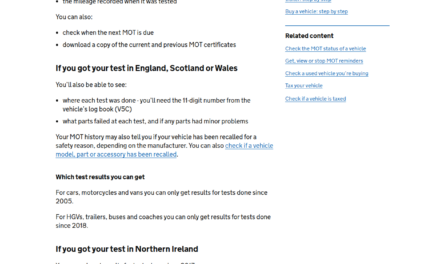
According to GOV.UK’s MOT guide, a vehicle fails if the test lists major or dangerous defects. Minor defects and advisories do not fail the car, but they are still items to monitor or fix. GOV.UK’s MOT history service also lets buyers see previous test results, advisories and certificate records.
That matters because a dealer’s legal position is broader than simply handing over a valid pass certificate. Business Companion’s used vehicle guidance, which supports Trading Standards, says used vehicles must be truthfully described and must be safe and roadworthy. It also warns that a valid MOT or service history should not be relied upon as proof that a vehicle is roadworthy. Under the Road Traffic Act 1988, it is illegal to supply a vehicle in an unroadworthy condition.
The first thing to understand: dealers do not have to fix every advisory
This is where buyers often get the wrong end of it. A dealer is not under a blanket rule that says every advisory on the MOT must be repaired before sale. If the car has passed, the dealer can offer it for sale with advisories still listed.
But that does not mean the dealer can shrug off everything on the sheet. The important questions are:
- does the advisory point to a genuine safety or durability risk
- has the car been described as being in excellent condition or ready to drive with nothing needed
- is the asking price in line with a car that still needs money spending on it
- is the same issue appearing again and again in the MOT history
If the answers look uncomfortable, the advisory stops being background noise and starts becoming part of the buying decision.
Which advisories are usually fair negotiation points
Some advisories are exactly what you would expect on a used car and do not automatically mean you should run away. Common examples include:
- tyres wearing but still legal
- brake pads or discs showing wear but not yet below limit
- light corrosion on older suspension or brake components
- slight misting from a shock absorber noted for monitoring
- wiper blades, bulbs or other small consumables nearing the point of replacement
These are usually best treated as cost items. Work out what they will cost in the next six to twelve months and decide whether the price still makes sense. If the dealer is firm on price, you can reasonably ask for evidence that the quoted retail standard already reflects those upcoming jobs.
Which advisories deserve a harder line
Other advisories should make you push harder, especially on a retail dealer car rather than a bargain private sale. Examples include:
- repeated corrosion notes getting worse year after year
- tyre advisories across more than one corner, suggesting you may soon be buying a full set
- brake pipe, hose or structural corrosion comments
- fluid leaks, heavy oil contamination or repeated underbody deterioration notes
- suspension play, worn bushes or steering-related wear that is close to becoming an MOT failure
- advisories that sit alongside patchy service history or signs the car has been maintained on the cheap
At that point you should stop thinking only in terms of a discount. Sometimes the right answer is to insist on the repair being done properly before collection, with invoices, or to leave the car alone and buy a cleaner example.
Read the MOT history, not just the latest certificate
This is the step too many buyers skip. A single advisory can be manageable. The same advisory appearing three MOTs in a row tells a different story.
Use the MOT history to look for patterns such as:
- the same tyre, brake or suspension note repeated over successive years
- corrosion that moves from light surface mention to a more serious warning
- failures that turned into advisories rather than evidence of a thorough repair
- a fresh pass after a heavy fail sheet, with no paperwork showing what was actually done
A dealer might say, "it passed, so it’s fine". That is not enough. A pass only tells you it met the standard on test day. It does not tell you whether the car is about to need £800 to £1,500 of catch-up work.
When you should ask for the dealer to fix it before sale
Insisting on repair makes most sense when the advisory is closely tied to safety, roadworthiness or an imminent MOT failure. It also makes sense when the dealer is asking strong money and presenting the car as prepared to a high standard.
Ask for repair before sale when:
- the item affects brakes, tyres, steering, suspension or structural corrosion
- the wording suggests deterioration rather than routine wear
- the dealer claims the car has been fully inspected or fully prepared
- the issue has shown up before in the MOT history
- you would struggle to verify the repair quality yourself after purchase
If the dealer agrees, ask exactly what will be done. "We will sort that" is too vague. You want the work listed on the order form or invoice.
When a discount is better than a promised repair
Not every promised fix is worth accepting. If the advisory is relatively straightforward, such as tyres with decent brand choices, front discs and pads, or minor service items, a discount can be better than letting the seller choose the cheapest possible parts to protect margin.
A discount often makes more sense when:
- you have a trusted local garage
- you want control over part quality
- the work is easy to price up in advance
- the dealer is vague about what brand or standard of repair will be used
The important part is doing the maths honestly. A £150 gesture does not help much if the real bill will be £600.
When it is smarter to walk away
Walking away is usually the correct call if more than one of these applies:
- the dealer downplays obvious risk items
- the MOT history shows a pattern of neglect
- the advisory list is paired with missing invoices or weak service records
- the car is being sold at full retail money despite obvious catch-up costs
- the seller refuses either a meaningful price adjustment or a documented repair
- your instinct says you are being rushed past the paperwork
There are too many used cars on the market to talk yourself into a borderline one. A fresh MOT is useful, but it is not a substitute for preparation history, honest description and common sense.
What your rights actually look like if a problem appears later
This is another point buyers often misunderstand. A dealer can sell a used car with advisories, but they still have obligations under the Consumer Rights Act 2015. Business Companion’s car trader guidance says dealer-sold cars must be of satisfactory quality, fit for purpose and as described, taking account of things like age, mileage, price and history.
That means an advisory does not automatically excuse a later problem. If the car was sold in a condition that fell below what a reasonable buyer should expect, or the dealer glossed over a defect that mattered, you may still have a claim. The same guidance also notes that within the first six months, if you pursue repair, replacement, price reduction or the final right to reject, it is generally assumed the fault was present at delivery unless the trader can prove otherwise.
The practical point is this: if a dealer clearly draws your attention to a minor defect, prices the car accordingly and the rest of the car matches the description, that is very different from advertising it as spotless and then handing over a car with unresolved braking, tyre or suspension concerns.
A simple buyer checklist before you say yes
Before paying a deposit, do these checks:
- read the full MOT history online, not just the current pass
- ask which advisories have already been rectified and request invoices if available
- price the unresolved items with a real garage, not a guess
- compare the asking price with similar cars that have cleaner histories
- get any agreed repair or discount written onto the paperwork
- check whether the service history supports the dealer’s story about careful upkeep
- walk away if the answers become slippery once you mention the advisories
Bottom line
MOT advisories on a dealer car are not an automatic deal-breaker, but they are absolutely a reason to pause. The smart move is to separate normal used-car wear from signs of neglect, then decide whether the right answer is a negotiation, a proper pre-sale repair or a polite exit.
If a dealer wants retail money, they need to do better than pointing at a pass certificate and saying everything is fine.