If you are looking at a used car in the UK, a quick MOT history check can save you from buying someone else’s expensive problem. It only takes a minute on GOV.UK, it is free, and it gives you a surprisingly useful picture of how a car has been treated over time.
The trick is knowing what you are actually looking for.
A car that has failed once is not automatically a bad buy. A car with a clean MOT history is not automatically a good one either. What matters is the pattern. Repeated advisories, odd mileage jumps, and the same faults coming back year after year can tell you far more than a seller’s advert ever will.
Why MOT history matters when you buy used
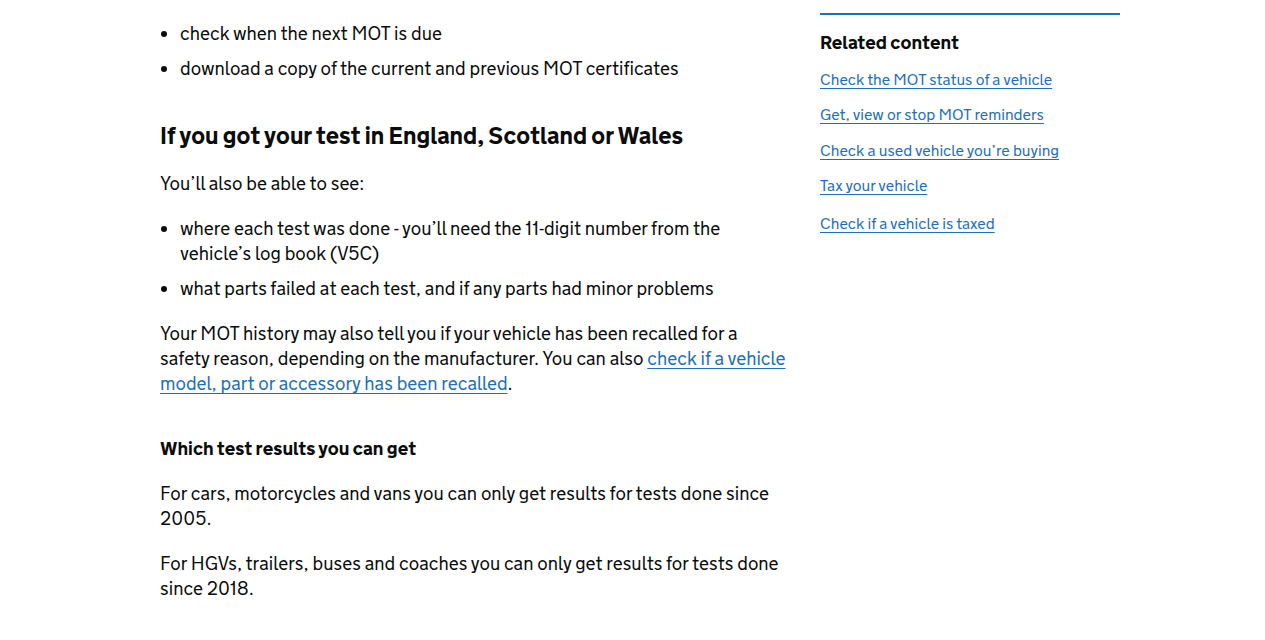
An MOT test is not a full health check, but it does create an official record of the car’s roadworthiness and basic condition. On the GOV.UK MOT history service, you can check whether a vehicle passed or failed, see the recorded mileage, check when the next test is due and download current or previous certificates.
For cars, vans and motorcycles, GOV.UK says results are available for tests since 2005. If the vehicle was tested in England, Scotland or Wales, you can also see what parts failed and whether there were minor defects or advisories. In some cases the record may also flag a safety recall.
That makes MOT history especially useful for buyers because it helps you answer a few simple questions fast:
- Has the car been driven a normal amount for its age?
- Has it been looked after, or just patched up for test day?
- Are the same issues coming back again and again?
- Is there anything that should change your offer, or make you walk away?
How to check a car’s MOT history in under a minute
Start with the seller’s registration number and go to the official MOT history checker. You do not need to pay anyone just to see the MOT record.
Once you are in, check these basics first:
-
Expiry date
See when the current MOT runs out. A car being sold with only a few weeks left is not necessarily a bad buy, but it does shift risk onto you. -
Mileage at each test
The numbers should rise steadily over time. Big jumps can be fine if the car changed use, but a drop or a strange gap deserves questions. -
Passes, failures and advisories
Do not just look at the latest result. Open several years of records and look for patterns. -
Certificate downloads
If you want a proper paper trail, GOV.UK lets you download the current and previous MOT certificates.
If the seller has the V5C log book, you can also cross-check where tests were carried out for vehicles tested in England, Scotland or Wales. That is useful if the story around the car does not quite add up.
The MOT red flags smart buyers watch for
1. The same advisory keeps coming back
A one-off advisory for tyres or brake wear is normal on an older car. What you do not want to see is the same warning repeated year after year with no sign it was properly sorted.
Examples include:
- tyre wear on the same axle every year
- brake pipes or brake corrosion noted more than once
- suspension wear that keeps returning
- oil leaks that are always described as minor
That usually suggests the car has been maintained to the minimum, not looked after properly.
2. Failures just before sale, then a quick pass
A fresh MOT can reassure buyers, but it can also hide a rushed pre-sale tidy-up. If the car failed on several items and then passed a day or two later, ask exactly what was replaced and ask to see invoices.
A recent pass is good. A recent pass with no paperwork after a long list of failures is less convincing.
3. Mileage that does not make sense
The recorded mileage at each MOT should form a believable story. A low-mileage older car is possible, but you want the dates, service history and general condition to support it.
Be cautious if you see:
- mileage that falls between tests
- unusually long periods with almost no use
- heavy annual mileage that does not match the seller’s description
An MOT history check is not the same as a full provenance check, but it is one of the easiest ways to spot something that needs further explanation.
4. Corrosion warnings on an ordinary family car
Surface corrosion is not rare on older cars, especially underneath, but repeated structural corrosion advisories should ring alarm bells. Welding can be done well or badly, and corrosion around suspension mounting points, subframes or brake lines can get expensive quickly.
If the MOT history mentions corrosion more than once, get underneath the car or pay for an inspection before buying.
5. Brake, tyre and suspension advisories together
One advisory can be routine. A cluster of them often tells a different story.
If a car repeatedly throws up advisories for tyres, brakes and suspension components at the same time, it may simply have been run on a tight budget. That matters because neglected maintenance rarely stops with those items alone.
6. Emissions-related fails on diesel cars
On older diesels, repeated emissions issues can point to bigger bills ahead. DPF, EGR and injector problems do not always appear by name on an MOT record, but smoke and emissions failures can still tell you something is not right.
If you are buying a diesel, especially for short urban journeys, pay close attention to any history of smoke-related or emissions-related failures.
7. Long gaps in the record
According to GOV.UK, car MOT history is generally available from 2005 onwards, so very old cars will not show everything. But for a normal modern used car, the record should still feel continuous.
A long unexplained gap in testing does not always mean trouble, but it is something to ask about. Was the car off the road? In storage? Repaired after damage? The seller should have a credible answer.
What an MOT history check does not tell you
This is where some buyers get caught out. An MOT record is useful, but it is not a full background check and it is not proof that the car is problem-free.
It will not tell you everything about:
- outstanding finance
- theft markers
- previous insurance write-off status
- crash repairs
- whether servicing was done on time
- clutch, gearbox or engine wear that had not yet shown up on the test
That is why GOV.UK’s own buy a vehicle checklist also tells buyers to check the vehicle details, MOT history and recall status before purchase.
The other free checks you should run before paying a deposit
A proper used-car check should include more than just the MOT record.
Check the MOT status and due date
Use the official MOT status checker to confirm the car currently has a valid MOT and when it expires.
Check the recall status
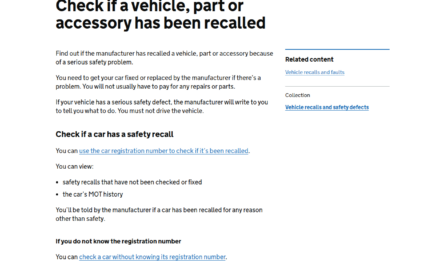
Use the vehicle recall checker to see whether the car has an outstanding safety recall. This is easy to skip, but it is exactly the kind of thing you want to know before handover.
Check the details match the V5C
GOV.UK’s buy a vehicle guide says you should see the V5C log book and check the details you have been given match DVLA information. Make sure the registration, make, model and other key details line up.
Check whether the car is taxed
It is not a condition report, but the official vehicle tax checker is another easy way to confirm the basics stack up.
Questions to ask the seller after you read the MOT history
A good MOT check does not just help you reject cars. It helps you ask better questions.
Try these:
- I can see repeated advisories for the rear brakes. What was actually replaced?
- The car failed last year on tyres and suspension. Do you have invoices for the repair work?
- Why did the mileage barely move for two years?
- There is a corrosion advisory here. Has any welding been done?
- Was the car ever taken off the road for repairs or storage?
A genuine seller should not be fazed by this. If the answers are vague, defensive or inconsistent, treat that as information too.
When to walk away
You do not need a perfect MOT history to buy a good used car. Plenty of honest cars have had the odd failure. What you want is evidence of problems being fixed properly rather than dragged from one test to the next.
Walk away, or at least get an independent inspection, if you see:
- repeated structural corrosion warnings
- mileage that looks inconsistent
- the same serious advisories appearing over several years
- a recent failure followed by a pass with no proof of repair
- MOT history that does not match the seller’s story
Bottom line
A free MOT history check is one of the best-value checks in UK motoring because it gives you official evidence before you spend real money. It will not replace a proper inspection or a full history check, but it can quickly tell you whether a used car looks cared for, neglected or simply not worth the risk.
Before you buy, run the MOT history, check the recall status, compare the details with the V5C and ask questions about anything that does not look right. One minute on GOV.UK can save you a lot more than that on your first repair bill.