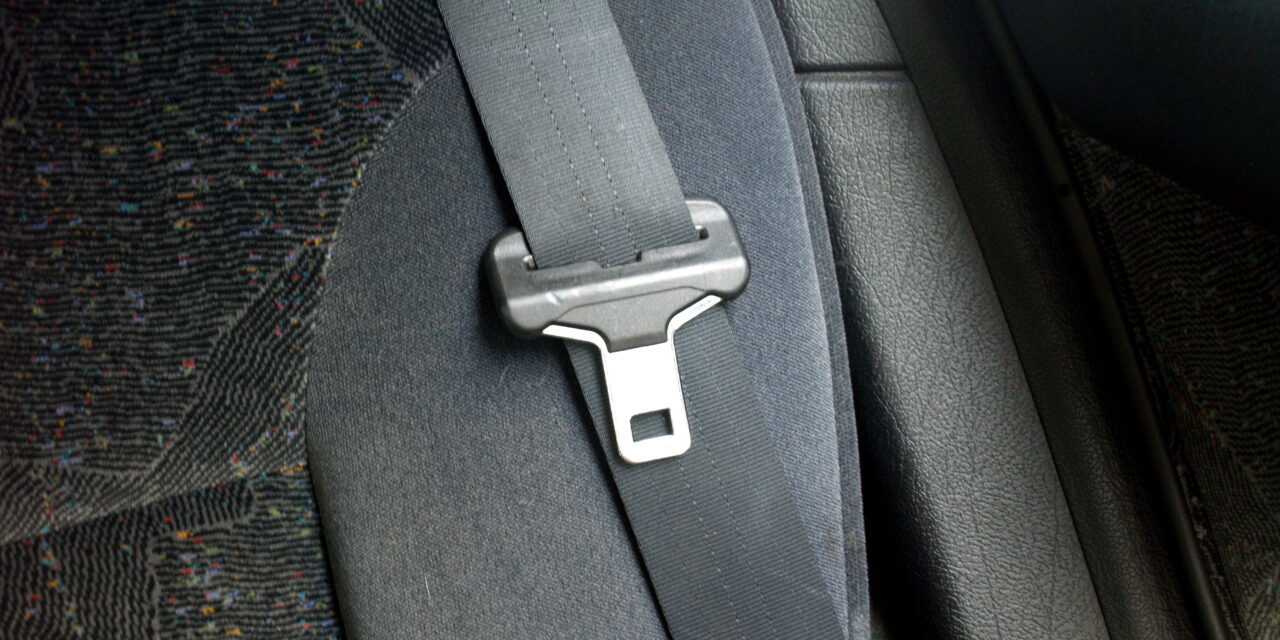
If your seatbelt is not retracting properly, do not ignore it and hope the MOT tester misses it. A belt that stays slack, hangs loose or will not wind back into the retractor can easily turn into a fail if it is no longer functioning as intended.
The important detail is that not every slow-moving belt is judged in exactly the same way. The DVSA manual tells testers to check that excess webbing winds back into the retractor with the belt fastened and the seat unoccupied, but it also notes that some retracting belts may need manual help before they retract. That is why a belt that is a little lazy is different from one that clearly will not take up slack properly.
Quick answer
Yes, a seatbelt that is not retracting properly can fail an MOT. In the current DVSA MOT inspection manual, both a seat belt not functioning as intended and a seat belt retractor not functioning as intended are major defects.
In practice, that means you are at real risk of failing if:
- the belt stays loose instead of taking up excess webbing
- the retractor jams or sticks badly
- the buckle does not latch or release properly
- the webbing is cut, frayed, stretched or weakened
- the anchorage is loose
If the belt is only slow because the webbing is twisted, trapped behind trim or fed through at a bad angle, you may be able to sort it before the test.
Will a slow or lazy seatbelt always fail?
Not automatically, but this is where people often get caught out.
The MOT is not really judging whether the belt feels a bit old. It is judging whether it still works as a restraint system. A belt that needs a light hand to guide the last bit of webbing home is not the same as one that leaves a big loop across your chest or will not sit snugly against the body.
DVSA says testers should check that excess webbing is wound into the retracting unit with the mechanism fastened and the seat unoccupied. If the belt clearly cannot do that, expect trouble. If it only seems slow because the seat is too far forward, the belt is twisted or the webbing is rubbing on trim, the outcome may be very different once the fault is corrected.
What does the MOT tester actually check?
1. Retraction
The tester checks whether excess webbing winds back into the retractor. If the retractor is not functioning as intended, that is a major defect.
2. Buckle operation
The buckle must latch securely, stay locked when pulled, and release when the button is pressed. A damaged or non-functioning buckle is also a major defect.
3. Webbing condition
The belt webbing is checked for cuts, fraying, fluffing, damage and signs of stretching. The DVSA manual says cuts over 2mm on the edge of the webbing are likely to weaken it significantly, and obvious damage over 4mm away from the edge can also count as a defect.
4. Anchorage security
Loose seat belt anchorages are a major defect. So even if the webbing itself looks fine, a loose mounting point can still fail the car.
Why seatbelts stop retracting
The most common causes are usually simple:
- twisted webbing inside the upper guide
- dirt or sticky contamination on the belt
- the belt rubbing on trim or the seat
- the seat position putting the belt at an awkward angle
- a tired or damaged retractor spring
- an internal fault in the retractor mechanism
On some cars, previous interior work or crash repair can also leave the belt routed badly or trapped behind trim.
Checks you can do before the MOT
Untwist the belt fully
Pull the belt all the way out and check for a twist near the shoulder guide, lower mounting point or buckle stalk. A half-turn in the webbing can make retraction much worse.
Move the seat through its range
The DVSA manual says retraction is checked with the seat base in its rearmost position. If the seat is too far forward, the webbing can rub or feed badly. Slide the seat back and test the belt again.
Clean the webbing carefully
If the belt feels grimy, wipe it with a mild fabric cleaner or diluted upholstery cleaner on a soft cloth, then let it dry fully before testing it again. Dirt can stop the webbing sliding smoothly through the guide. Do not soak the retractor and do not use anything that leaves the belt greasy.
Check the buckle and locking action
Click the buckle in, pull firmly to make sure it holds, then press the release button to confirm it releases cleanly. If the latch sticks or feels inconsistent, do not assume it will pass just because the belt retracts.
Look for damage, not just slow movement
If the belt is frayed, cut, stretched or shiny from wear, cleaning it will not solve the real problem. At that point you are into replacement territory.
What not to do
Do not try to disguise the problem with clips, knots or homemade stops. Do not grease the webbing, and do not spray lubricant into the belt fabric to make it slide more easily.
A belt is a safety-critical part, and a quick bodge can make the restraint worse rather than better. If the retractor spring or mechanism is failing, the proper fix is repair or replacement.
When the belt probably needs replacing
Replacement is usually the sensible answer if:
- the belt will not retract even after untwisting and cleaning
- the webbing is damaged or stretched
- the buckle is unreliable
- the retractor locks up or jams randomly
- the car has been in a crash and the restraint system may have deployed
Be careful with modern cars that use pre-tensioners. If the seat belt assembly is tied into the supplementary restraint system, a warning light on the dash can become a separate MOT problem in its own right.
Can you drive with a seatbelt that is not retracting?
If the belt still fastens and holds you properly, the car may still be driveable in the short term, but it is not something to leave for long. A slack belt will not control body movement as well in a sudden stop, and a sticking mechanism often gets worse rather than better.
If the belt will not latch, will not stay latched, or will not sit snugly against you, stop using the seat until it is fixed.
A simple pre-MOT seatbelt checklist
Before test day, make sure:
- the belt pulls out smoothly
- excess webbing retracts properly
- the buckle latches and releases cleanly
- the webbing is not cut, frayed or stretched
- the anchorages feel secure
- no trim or seat movement is trapping the belt
If the belt still feels wrong after those checks, book the repair before the MOT rather than gambling on it. If you are budgeting for a few fixes at once, our guide to MOT repair costs UK can help you set expectations.
Final word
A seatbelt that does not retract is not just an annoyance. In DVSA terms, it can be a major defect if the retractor is no longer functioning as intended.
The good news is that some cases are caused by something simple, such as twisted or dirty webbing. Check the easy stuff first, but if the belt is damaged or the retractor itself is failing, treat it as a proper repair job and get it sorted before the test.