If your diesel has failed its MOT smoke test, the answer is not to just rev it harder and hope for the best. The MOT measures exhaust opacity, which is a way of checking how much soot is in the exhaust gas. A hard run can help if the car has only been doing short trips and the system is full of loose soot, but it will not fix a split boost hose, a sticking EGR valve, a bad injector or an overloaded DPF.
The useful approach is simple. Get the engine fully hot, check for obvious intake and exhaust leaks, make sure the air and fuel systems are healthy, and deal with any warning lights or poor running before the retest. If the car is still smoking when warm, there is usually a fault behind it.

If you want the wider cost picture, our guide to MOT repair costs in the UK explains what common failures can turn into once the car reaches a garage.
What the MOT diesel smoke test actually checks
For diesel vehicles first used on or after 1 January 1980, the tester uses a diesel smoke meter. The test is done with the engine at normal operating temperature and the result is compared with either the manufacturer plate value or the default MOT limit for the age of the vehicle.
The current default limits in the MOT manual are:
- before 1 July 2008: 2.5m-1 for non-turbo diesels and 3.0m-1 for turbo diesels
- 1 July 2008 to 31 December 2013: 1.5m-1
- 1 January 2014 onwards: 0.7m-1
Cars with a manufacturer plate value can be tested to an even lower figure. On DPF-equipped cars, visible smoke during the metered check is also a separate major failure point.
Why diesels fail the smoke test
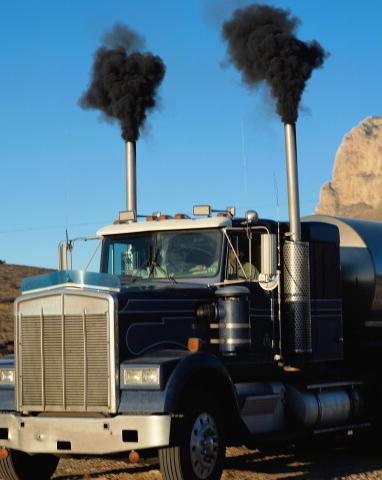
A diesel smoke test fail usually means one of two things. Either the engine is making too much soot, or the exhaust after-treatment is no longer catching it properly.
The most common causes are:
1. The engine never gets hot enough
Diesels that only do school runs, stop-start town driving or short cold journeys can build up soot in the intake and exhaust system. If the engine has not fully warmed through before the test, opacity can spike.
This is one reason some cars pass comfortably after a proper motorway run and a fully hot retest. It helps clear loose soot, but only if the car is otherwise healthy.
2. A clogged air filter or intake restriction
A diesel needs enough clean air to burn fuel properly. If the air filter is badly blocked, the intake is restricted or there is a collapsed hose, combustion becomes richer and soot output rises.
This is cheap to check and worth doing before you start chasing more serious faults.
3. Split boost hoses or intercooler leaks
Turbo diesels rely on boost pressure. If a hose has split, a clip has loosened or the intercooler is leaking, the engine may get less air than the ECU expects. The result can be black smoke under load, flat performance and a smoke test result that climbs fast.
Oil mist around boost pipe joints is often a clue. So is a noticeable loss of pulling power.
4. EGR valve problems
An EGR valve that is stuck open, sticking or heavily carboned up can upset the air-fuel balance and increase smoke. Some cars will also feel hesitant at low speed or idle poorly.
On modern diesels, an EGR fault often overlaps with DPF trouble because both systems are dealing with soot and combustion temperatures.
5. Injector wear or poor fuel atomisation
If an injector is dribbling rather than spraying correctly, fuel does not burn as cleanly. That can push up smoke, roughen the idle and worsen fuel economy.
Injector problems are more likely if the car is hard to start, knocks more than usual or smells strongly of unburnt diesel.
6. DPF blockage or failed regeneration
A partly blocked diesel particulate filter can trigger repeated regenerations, poor throttle response, high fan activity after shutdown or warning lights. If the filter is overloaded, the car may dump smoke during the test or fail because visible smoke is coming from a DPF-equipped exhaust.
A motorway run may help a mildly loaded DPF complete a regeneration. It will not rescue a cracked DPF, a heavily ash-loaded filter or a car that has another fault stopping regeneration in the first place.
7. MAF, MAP or other sensor issues
Modern diesels rely on accurate airflow and pressure readings. If a MAF or MAP sensor is dirty or reading wrongly, the ECU can overfuel. That often shows up as smoke, sluggishness and inconsistent power delivery.
8. Oil burning or turbo wear
Blue smoke points more towards oil burning than simple soot. Worn turbo seals, engine wear or crankcase breathing problems can all push oil into the intake or exhaust. That is not something to mask before a retest. It needs proper diagnosis.
If your issue is on a petrol car rather than a diesel, our guide to lambda reading too high at MOT covers the usual causes of a different emissions failure.
What to do before a diesel smoke test retest
A useful retest plan looks like this.
Start with the easy checks
Before booking another MOT, inspect or ask a garage to inspect:
- air filter condition
- boost hoses and intercooler pipework
- obvious exhaust leaks
- engine oil level and condition
- fuel filter service history
- warning lights, especially engine management and DPF warnings
If the car is overdue a service, catching up on oil, filters and basic inspection work can genuinely help. Old oil loaded with soot is not the sole cause of an opacity fail, but it is not helping either.
Get the engine properly hot
The MOT manual is clear that the engine needs to be at operating temperature. A quick drive around the block is often not enough.
If the car is mechanically sound, a decent run with sustained road speed can help warm the engine, exhaust and DPF properly before the retest. That is especially relevant if the car normally lives on short trips.
Scan for fault codes
Even if the dashboard light is not on, stored codes can point you towards EGR, boost, sensor or DPF issues. A smoke fail with poor performance is often easier to solve once you know what the ECU has been seeing.
Fix the cause, not the smoke
Fuel additives, injector cleaners and DPF cleaners can sometimes help at the margins, especially on a lightly sooted car that is otherwise healthy. They are not a substitute for repairing a split hose, a faulty sensor or a blocked filter.
If the car is leaving a visible cloud under acceleration, assume there is a fault to find rather than a bottle to pour in.
Is an "Italian tune-up" a good idea?
Sometimes, yes. Sometimes, absolutely not.
A hard run can help if the car has been underused, the engine is fully warm and the main problem is soot build-up from gentle short-trip driving. That is why some diesels scrape through on the second attempt after a proper hot drive.
But you should not thrash a diesel in the hope of clearing the fault if:
- the oil level is low or overfilled
- there is abnormal engine noise
- the turbo is whining badly
- there is heavy blue smoke
- the DPF or engine warning light is on
- the car has a boost leak or limp mode
In those cases you risk making the problem worse, not better.
When a smoke fail means garage time
Book it in before another MOT attempt if you have any of the following:
- repeated smoke test failures
- visible smoke even when fully hot
- loss of power
- rough idle or difficult starting
- DPF, EGR or engine management warnings
- obvious oil use between services
A good garage will usually start with live data, fault codes, intake and boost leak checks, then work towards EGR, injector and DPF diagnosis. That is far cheaper than swapping parts on guesswork.
Quick answer: what usually fixes a diesel smoke test MOT fail?
The most common real fixes are restoring airflow, stopping boost leaks, sorting EGR or injector faults, and dealing properly with DPF problems. If the car has simply been doing lots of short cold trips, a full warm-up and clean retest can be enough. If it still smokes when hot, there is usually a mechanical or sensor fault behind it.
FAQ
Can a diesel pass the MOT smoke test after a motorway run?
Yes, sometimes. If the car has been doing mostly short journeys, a proper hot run can clear loose soot and help a partial regeneration complete. It will not fix hardware faults like leaking boost hoses, bad injectors or a worn turbo.
Will a DPF warning light fail an MOT?
A diesel engine malfunction light indicating a fault is a major issue in the MOT. On DPF-equipped cars, visible smoke during the metered check is also a major fail.
Is black smoke the same as a DPF problem?
Not always. Black smoke often points to overfuelling or not enough air, which can mean intake leaks, boost issues, EGR trouble or injector faults. A blocked or damaged DPF can be part of the story, but it is not the only cause.
Can injector cleaner solve a smoke test failure?
Only occasionally, and usually only when the problem is mild. If the car has a clear fault, visible smoke or poor running, additives are unlikely to be the real answer.
Bottom line
If your diesel has failed its MOT smoke test, think in terms of airflow, fuelling, soot control and temperature. Warm it properly, check the basics, scan it for faults and fix the root cause before the retest. That gives you a far better chance than trying to blast the smoke out at the last minute.