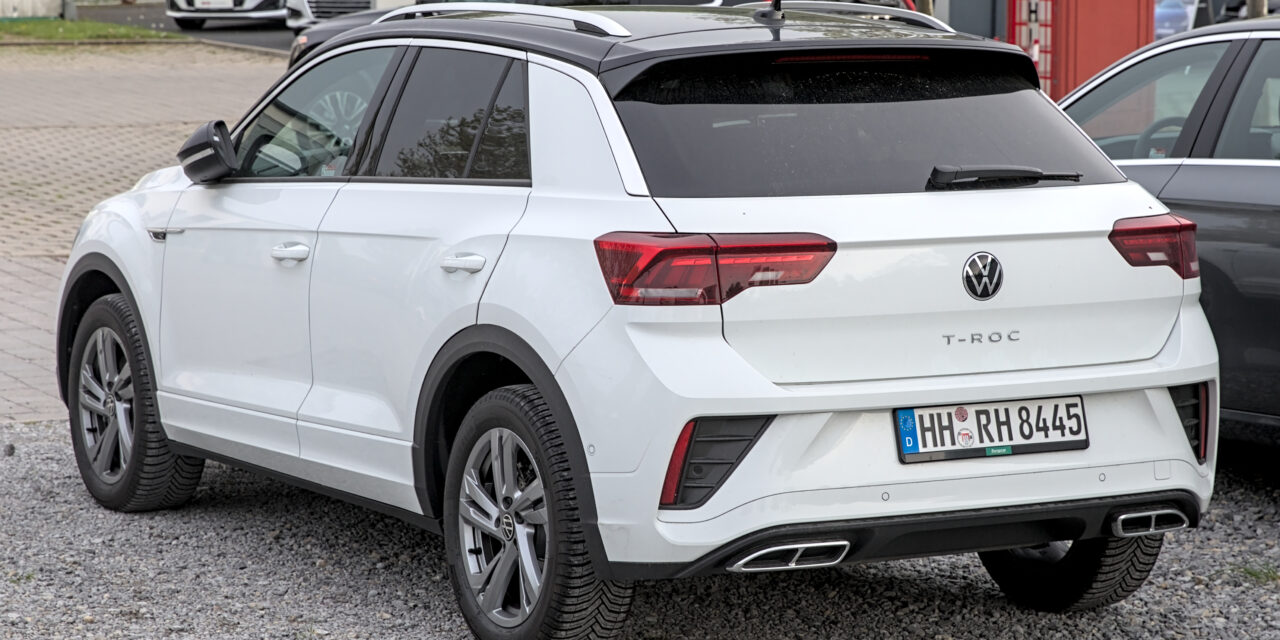
If you want a used family SUV that feels a bit more polished than the average crossover without jumping all the way into Audi Q2 money, the Volkswagen T-Roc deserves a place on your shortlist. It has the raised driving position many UK buyers want, Golf-based underpinnings, broad engine choice and strong used supply.
That supply matters. Parkers currently shows used T-Roc prices starting at £7,222 and running to £29,848, with more than 1,500 examples listed for sale. That means you can be choosy, and with a car like this, being choosy is the whole game.
The T-Roc is not a bad used buy at all, but it is one of those cars where the right engine, the right trim and the right history make a much bigger difference than the badge alone suggests.
The short answer
Yes, a used Volkswagen T-Roc can be a very smart buy, especially if you want something easy to place on UK roads, comfortable on longer runs and more upmarket inside than many mainstream small SUVs.
For most buyers, the sweet spot is a well-maintained 1.5 TSI petrol car with a full service record and sensible mid-spec trim. If you do high motorway mileage, the 2.0 TDI still makes a lot of sense. If you are looking at an early 1.0 TSI because it is cheap, make sure the price gap is worth the drop in performance.
The versions to approach more carefully are neglected DSG automatics, cars with patchy software update history, and any example showing signs of water ingress or electrical gremlins.
Why the T-Roc is worth considering
The T-Roc has always sold on style first, but there is more substance here than that. Parkers rates the 2017 to 2025 car at four stars out of five overall and highlights its low running costs, good driving experience and distinctive styling. It is also a useful size for British life. It feels easier to manoeuvre than a bigger SUV, yet still gives you proper family-car practicality.
Volkswagen’s current UK T-Roc range also shows why the model still has appeal. The latest car remains focused on everyday usability rather than gimmicks, with Life, Style and R-Line trims, mild-hybrid power and a 475-litre boot. If you buy a later facelifted used example, that more modern cabin feel is part of what you are paying for.
In other words, this is not just a fashion crossover. It sits in a sweet spot between supermini-based SUVs that can feel cheap and larger family SUVs that can feel bulky and expensive.
Which used Volkswagen T-Roc should you target?
Best petrol choice for most people
The 1.5 TSI is the version most people should start with. It gives the T-Roc the kind of effortless everyday performance the 1.0-litre car can struggle to match once you have passengers, luggage or motorway miles in the mix.
There is one catch. Autocar says the 1.5 petrol can suffer cold-start hesitation and "kangarooing", where the revs fluctuate as you pull away. That does not automatically make it a bad engine, but it does mean you should only buy one that drives cleanly from cold or has evidence the software update has already been done.
Best diesel choice for high-mileage drivers
If you cover big distances, a 2.0 TDI is still worth seeking out. Autocar recommends the 148bhp 2.0-litre diesel over the older 1.6 diesel and says it delivers plenty of shove while being capable of strong real-world economy.
For motorway users, company-car refugees and drivers who regularly head across the country, that is the T-Roc that can make the most sense.
Versions to be more cautious about
Autocar is fairly blunt here. It says it would avoid the 1.0-litre three-cylinder petrol and the 1.6-litre diesel if you have a choice, simply because both feel relatively flat next to the better options in the range.
That does not mean every 1.0 or 1.6 car is a bad buy. It means they need to be cheaper enough to justify what you are giving up.
Which trim is actually worth paying for?
This is where plenty of used buyers get it wrong.
The cheapest T-Roc on a classified site can look tempting, but equipment levels vary enough that you should not judge on mileage and colour alone. Autocar’s advice on earlier cars is to aim for at least SEL trim, because that brings the 8.0-inch touchscreen infotainment system and the 10.3-inch digital instrument cluster.
That is a useful rule of thumb. On pre-facelift cars, SE and SEL are usually safer starting points than bargain-basement cars, especially if you care about everyday usability rather than just getting into a Volkswagen badge for the lowest outlay.
On later facelift cars, the naming changes around Life, Style and R-Line, but the principle stays the same. Do not pay extra just for sportier trim if what you really want is parking sensors, better infotainment and a more pleasant daily cabin. Buy on equipment, not ego.
The common used T-Roc problems to check before you buy
This is the section that matters most on a viewing.
1. Cold-start hesitation on 1.5 TSI cars
As already mentioned, the 1.5 petrol can be hesitant from cold. Start the car from properly cold if you can, pull away gently and see whether it surges, stumbles or feels awkward at low speed. If it does, ask whether the Volkswagen software update has been carried out.
2. DSG gearbox hesitation or judder
On automatic cars, drive the car long enough for the gearbox to warm through. Autocar advises checking for judder between shifts. A smooth car is what you want. Any shuntiness, hesitation or awkward low-speed behaviour deserves more questions, especially if the service history is incomplete.
3. Electronic parking brake faults
The auto-release function should work cleanly as you pull away. If the brake seems slow to release or behaves unpredictably, Autocar says a software fix may be needed. It might be simple, but it is still worth using as a negotiating point.
4. Brake noise or uneven stopping
Groaning brakes or a car that does not feel smooth under braking should not be ignored. According to Autocar, worn discs and pads are common causes, though faulty calipers can also be behind it. Budget for a proper inspection rather than assuming it just needs a quick pad change.
5. Water leaks into the cabin or boot
This is one of the most important physical checks. Autocar advises inspecting the boot, footwells and headliner for signs of leaks or water staining. If a car smells damp, the carpets feel heavy or the roof lining looks marked, walk away unless the seller has a convincing explanation and evidence of repair.
6. Fuel-filler flap problems
Water can get into the fuel-filler flap actuator and stop it unlocking properly. Make sure the flap opens and closes cleanly. It is a small detail, but it is exactly the kind of annoyance that tells you how well a car has been looked after.
What paperwork should you insist on?
A used T-Roc should come with more than a nice advert and a fresh wash.
Look for:
- a full or near-full service history
- invoices showing routine maintenance, not just stamps
- proof of gearbox servicing where required on DSG cars
- evidence of software updates if the car had known drivability issues
- tyre brands that suggest the owner did not cut every corner possible
Also use the GOV.UK recall checker before you commit. The government service lets you use the registration number to check for outstanding safety recalls and view the car’s MOT history. Even if the car drives well today, you do not want to buy first and discover an unchecked recall afterwards.
Is the Volkswagen T-Roc reliable enough?
Broadly, yes.
Autocar cites What Car?’s most recent reliability survey, where the T-Roc finished sixth out of 22 cars in the small SUV class with an overall score of 98.4 per cent. That is a strong result, and it fits the T-Roc’s general reputation as a car that is usually solid when maintained properly.
But this is not the same as saying every used T-Roc will be trouble-free. The model’s weak spots are specific rather than catastrophic. Software quirks, gearbox behaviour, brake wear and water leaks are all manageable if you catch them early. They are expensive and frustrating only when buyers skip the checks and assume a Volkswagen badge guarantees perfection.
Should you choose a pre-facelift or facelift T-Roc?
If budget matters most, an earlier car can still be a very sensible buy. There is enough supply in the market that you can hold out for a tidy, well-specced example.
If you can stretch further, facelifted cars have the advantage of a fresher cabin and a more modern feel. Volkswagen’s current UK T-Roc page highlights softer-touch materials and a large 12.9-inch touchscreen on today’s car, and that newer-tech feel is part of the appeal of later used examples.
The smarter move is not to chase the newest plate at all costs. It is to compare condition, spec and history against price. A cared-for earlier SEL can be a better buy than a newer but poorer-spec car that has clearly had a harder life.
Verdict: is a used Volkswagen T-Roc worth it?
Yes, provided you shop carefully.
The Volkswagen T-Roc makes sense because it gives UK buyers exactly what many of them want: SUV looks, easy daily manners, sensible running costs and a cabin that feels a step above some mainstream rivals. There is also enough used stock on sale that you do not have to settle.
If you want the safest all-round recommendation, start with a 1.5 TSI petrol in mid-spec or better, test it from cold, inspect carefully for leaks and do not treat a patchy history as acceptable just because the car looks smart in photos.
Get that right and the used T-Roc is easy to recommend. Get it wrong and you risk paying Volkswagen money for a car that needs sorting straight away.