
Test-driving a used car should be simple. In practice, insurance is one of the easiest places for buyers and sellers to get caught out.
The risky assumption is that somebody else has it covered. Buyers assume their own comprehensive policy lets them drive anything. Sellers assume a serious-looking buyer must already be insured. Dealers often do have trade cover, but that does not mean every customer can just jump in and head out without asking what the policy actually allows.
If you are about to drive a used car on a public road, sort the insurance first and treat anything vague as a no.
The short answer
In the UK, you must have motor insurance to drive on public roads. GOV.UK says third-party cover is the legal minimum. If you are test-driving a used car, do not assume that your own fully comprehensive policy automatically covers you.
For a private sale, the safest answer is usually to arrange temporary test drive insurance in your own name, or to be added properly to the owner’s policy if that is an option.
For a dealer test drive, ask the salesperson to confirm exactly who is insuring the drive, what the excess is and whether there are driver restrictions before you leave the forecourt.
The legal rule is the simple part
The official GOV.UK vehicle insurance guide is straightforward. You must have motor insurance to drive your vehicle on UK roads, and third-party cover is the legal minimum.
That matters because a test drive is still normal road use. The fact that you are only borrowing the car for 20 minutes does not create a special exemption.
So the real question is not whether insurance is needed. It is whose policy covers that drive, and on what terms.
Why your own policy may not be enough
A lot of drivers still think fully comprehensive insurance means they can drive any car with the owner’s permission. That is not a safe assumption.
The AA’s guide to driving someone else’s car says that unless you are a named driver on the owner’s policy, you almost certainly will not be insured. Some policies do include driving other cars cover, but plenty do not, and where it does exist it often comes with tight conditions.
Typical restrictions can include:
- third-party only cover rather than cover for damage to the car you are test-driving
- minimum age limits
- limits on the type of vehicle you can drive
- a requirement that the other car is already insured in its own right
- no cover for vehicles you own, hire or keep regularly
The exact wording varies by insurer, which is the whole problem. If you have not checked your certificate and policy wording, you do not know that you are covered.
Private sale test drives: the safest route is usually temporary cover
A private sale is where mistakes happen most often.
The seller may have a valid policy on the car, but that does not normally insure every potential buyer who wants a spin round the block. And if a buyer says "I am fully comp", that still does not prove they are covered to drive your car.
That is why short-term cover is often the cleanest answer.
RAC says its test drive insurance product offers short-term cover from 1 hour up to 30 days, and describes test drive insurance as a short-term policy that covers you to take a car you do not own out for a test drive. It also notes that a potential buyer can insure themselves to test drive a privately sold car.
In plain English, that means the buyer can arrange cover for the specific car and specific period instead of gambling on a vague driving-other-cars clause.
If you are the buyer, that is usually the safest route.
If you are the seller, it is often the most reassuring route too, because it means the person driving should have cover arranged specifically for that test drive rather than leaning on assumptions.
Dealer test drives: ask the boring questions before you move
Main dealers and many independent dealers often have motor trade insurance in place for accompanied or authorised test drives. But "often" is not the same as "always", and the terms can vary.
Before you drive off, ask:
- is the test drive covered under the dealership’s policy, or do I need my own cover?
- am I covered fully comp, or only for third-party risks?
- what excess applies if there is damage?
- are there age or licence restrictions?
- is the drive only covered if a staff member comes with me?
If the answer is woolly, slow down. A serious dealer should be able to explain the cover clearly.
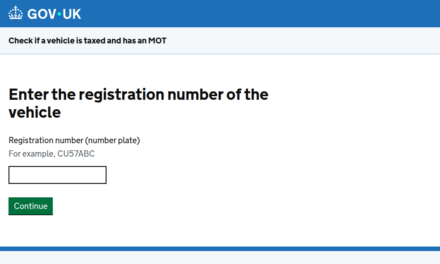
Do not use askMID as a shortcut for this question
The MIB Check Your Vehicle service is useful, but it does not answer the whole test-drive question.
MIB says the tool tells you whether a vehicle has a live insurance policy, and it says you can only use the service for vehicles you own or have the legal right to drive. It also makes clear that a result showing "insured" does not tell you whether the vehicle has the correct policy for what you are doing.
That is a big distinction.
A car can show as insured, but that does not prove that you, as the prospective buyer, are personally covered to drive it on a test drive. It only shows that some live policy exists against the vehicle.
A quick test-drive insurance checklist for buyers
Before you set off, make sure you can answer yes to these:
- Do I know exactly which policy covers this drive?
- Have I seen proof or wording that makes that clear?
- Do I know whether the cover is fully comp or third-party only?
- Do I know the excess if something goes wrong?
- Do I know whether the policy excludes certain drivers, ages or uses?
- Do I have the seller’s permission to drive the car?
- Have I checked that the car is otherwise road-legal enough for a test drive?
That last point matters too. Insurance is only one part of a lawful, sensible test drive. You should still be alert to the car’s tax, MOT status and overall roadworthiness.
What sellers should do before handing over the keys
If you are selling privately, do not let embarrassment make the decision for you.
You are allowed to ask the buyer how they are insured. In fact, you would be daft not to.
A sensible seller should ask the buyer to show:
- confirmation of temporary test drive insurance in their own name, or
- proof that they are a named driver on a policy that clearly covers this car
You should also keep the drive short, go with them if you are comfortable doing that, and hold onto their keys or driving licence details while they are out if that is part of your normal sale process.
The goal is not to be awkward. It is to avoid a very expensive misunderstanding.
What if you buy the car after the test drive?
Do not confuse test drive insurance with the cover you need to drive the car home after purchase.
Short-term test drive cover can sometimes also cover collection, but you need to check that specifically. RAC says its test drive insurance can also cover you to drive the car away from a forecourt or seller if you buy it.
If you are moving straight from test drive to purchase, make sure one of these is definitely true before you leave:
- your temporary cover continues after the sale and covers the drive home
- you have set up a new annual policy that starts immediately
- the dealer has arranged a valid drive-away insurance solution that you understand properly
If you are still sorting cover, stop there and sort it. This is not the moment to guess.
For that next step, our guide to setting up insurance before you buy a car is the useful companion read.
The mistake that causes the biggest mess
The biggest mistake is relying on the phrase "fully comp" as if it answers everything.
It does not.
For one driver, it may include restricted driving-other-cars cover. For another, it may include nothing of the sort. And even if it does exist, it may only be third-party only, which is not much comfort if you damage the car you are trying to buy.
That is why a clean, specific answer beats insurance folklore every time.
The bottom line
If you are test-driving a used car in the UK, the safest approach is to identify the exact policy covering the drive before the keys change hands.
For private sales, that usually means temporary test drive insurance is the cleanest answer. For dealer drives, it means asking direct questions and getting direct answers.
Either way, if you cannot clearly say who is insuring the drive and what that cover includes, you are not ready to leave the forecourt or the seller’s driveway.



Trackbacks/Pingbacks