The BMW 3 Series is one of those cars that keeps pulling sensible buyers back in, even when they promised themselves they would buy something less complicated next time. A good one still feels special in a way many rivals do not. The steering is tidy, the driving position is spot on and even ordinary versions have the sort of balance that makes a dull commute feel less dull.
That is exactly why it is worth being picky. A used 3 Series can be a brilliant long-term buy, but a neglected one can turn into an expensive lesson in timing chains, diesel emissions hardware and premium-brand running costs.
This guide focuses mainly on the F30 saloon and F31 Touring sold in the UK from 2012 to 2019, because that is the generation most used buyers are actually shopping for now.
Quick answer: what are the main used BMW 3 Series problems to look for?
The main things to check are timing chain noise on four-cylinder engines, high-mileage or clocked examples with patchy history, EGR and DPF trouble on diesel cars, worn brakes and suspension, differential whine, clutch and flywheel issues on manuals, and missed recall work.
Before you buy, start with these checks:
- full service history with invoices, not just a stamped book
- a cold start with no rattles, warning lights or smoky hesitation
- smooth gearchanges from both manual and automatic cars
- quiet running from the rear axle with no diff whine
- evidence that recall work has been completed
- diesel cars that pull cleanly with no EGR or DPF warning signs
- tyres and suspension that suggest the car has not been driven on a shoestring
For most buyers, the safest route is a well-maintained later car with strong paperwork, a clean MOT history and an engine that suits the way you actually drive.
Why the BMW 3 Series is still such a tempting used buy in the UK
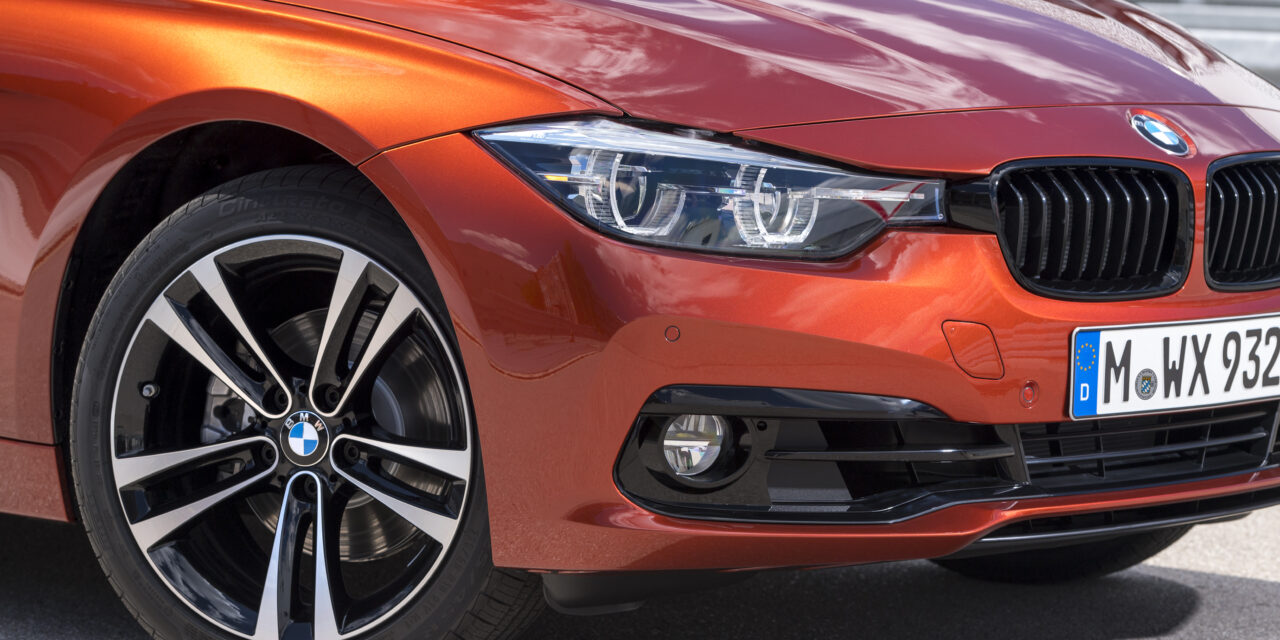
There is a reason the 3 Series has been such a default choice for company car drivers, commuters and private buyers for years. It does the basics really well. The F30 saloon still looks sharp, the F31 Touring remains one of the most usable premium estates of its era and the cabin is solid enough to age well if the car has been looked after.
Parkers still rates the F30 as a great used buy, and that makes sense. The range is broad, parts support is strong, there are loads on the market and even now the car still feels more polished to drive than many ordinary family hatchbacks and crossovers.
Safety is another plus. BMW highlighted the model’s five-star Euro NCAP result when the sixth-generation 3 Series was new, which still matters if you are choosing a used family car today.
The catch is simple. Because these cars were so popular, there are plenty of tired examples around. Some have done huge motorway mileages, some have been maintained properly by specialists, and some have been run on a budget by owners who liked the badge more than the bills.
Which used BMW 3 Series does this guide focus on?
If you are shopping in the real-world used market, you will usually be looking at:
- F30 saloon models built from 2012 to 2019
- F31 Touring estate models built over the same period
- four-cylinder petrol and diesel cars such as the 316d, 318d, 320d, 318i and 320i
- six-cylinder cars such as the 330d, 335d and 340i at the more expensive end
- manual cars, but also plenty of examples with BMW’s excellent eight-speed automatic
The 2015 facelift matters. Later facelift cars got updates across the range, and they are often the better place to start if your budget allows because you are more likely to get improved infotainment, fresher trim and later engines.
The used BMW 3 Series problems that matter most
1. Timing chain trouble on four-cylinder engines
This is one of the biggest reasons not to buy blindly. Parkers flags timing chain issues on F30 3 Series models and specifically warns that the four-cylinder N20 petrol engines are among the most troublesome if oil changes have been neglected.
Early four-cylinder diesels also deserve caution. Honest John has directly linked the N47 diesel used in some BMW models, including early F30-era 316d examples, with known timing chain trouble. That means any early 316d, 318d or 320d needs a proper cold start and a service history that inspires confidence.
Listen for rattles or whines on start-up and idle. If the seller tells you that a slight chain noise is normal, walk away. On these cars, vague reassurance is not worth much.
2. High-mileage cars that do not admit they are high-mileage cars
This sounds harsh, but it is a realistic UK used-car warning. The 3 Series spent years as a fleet and company car favourite, which means plenty of them have covered serious distances. Parkers explicitly warns buyers to watch for clocked examples and to cross-check the mileage against MOT and service records.
A high-mileage 3 Series is not automatically a bad buy. In fact, a genuinely maintained motorway car can be a better bet than a low-mileage urban diesel with a blocked DPF and a weak battery. The problem is buying a car whose wear no longer matches the dashboard number.
Check the steering wheel, seat bolsters, pedals, iDrive controller and stone-chipping on the nose. If the interior says 140,000 miles but the odometer says 74,000, trust your eyes.
3. Diesel EGR and DPF trouble
This is the other big watch point for mainstream UK buyers. Parkers notes that diesel F30 models can suffer EGR and DPF problems, especially if they have spent their life on short trips. That matters because a lot of used 3 Series diesels look appealing precisely because they offer strong fuel economy and long-legged motorway ability.
A diesel 3 Series still makes sense if you do proper distance. It makes far less sense if your life is school runs, town traffic and short cold journeys. On a test drive, watch for warning lights, limp-home behaviour, rough running, hesitant acceleration or signs that the cooling fan has been working overtime to force regenerations.
You should also check recall history carefully. BMW 3 Series models from this era were covered by various recall campaigns, and diesel buyers should be especially strict about documented EGR-related recall work.
4. Differential whine and driveline noise
Parkers also highlights differential damage as something worth listening for. This is not the first issue most casual buyers think about, but it can get expensive quickly.
On the test drive, listen for a whining or droning noise from the rear of the car as speed rises. If the car sounds smooth under power but starts humming in a way that does not match tyre roar, ask harder questions. A premium badge does not make differential repairs cheap.
5. Brake wear can turn a cheap deal into a pricier one
There is nothing unusual about a heavy, quick executive car wearing brakes, but the 3 Series does have a reputation for getting through discs and pads. Parkers specifically advises buyers to inspect them closely.
Look for lipped discs, tired pads and any steering vibration under braking. This is not usually a reason to reject an otherwise good car, but it is absolutely a reason to price the car correctly. A supposedly bargain 3 Series can stop looking like a bargain once it needs brakes all round.
6. Manual gearbox, clutch and flywheel problems
Manual cars can still be worth buying, especially if you want a simpler, cheaper car than an equivalent automatic. The catch is that clutch and flywheel wear matters on torquey diesels and hard-used cars.
Parkers points buyers toward failing flywheels on manual models, with vibration and poor gearchanges being key clues. On a test drive, the clutch should take up cleanly, the pedal should not feel odd or inconsistent, and the drivetrain should not shudder when pulling away.
If a manual car feels cheap for the age and mileage, there is often a reason.
7. Automatic gearboxes should be smooth, not lazy or thumpy
The eight-speed automatic is one of the best things about many used 3 Series models. It suits the car, it is easy to live with in traffic and it helps the diesels feel more relaxed. But you should still drive it properly before buying.
Shifts should be clean when cold and when warm. Any banging into gear, flaring between gears or obvious hesitation deserves caution. Evidence of attentive maintenance is a plus, especially on higher-mileage examples.
8. Electrical niggles and infotainment faults
The F30 is not a disaster for electronics, but it is not immune either. Parkers mentions Bluetooth problems, often fixable with software updates, and that fits the usual used-car pattern for this generation.
Check everything. Pair a phone. Test parking sensors, climate control, central locking, screen functions, USB ports, electric windows and mirrors. Premium cars are rarely cheap to put right when lots of small faults pile up.
9. Modified cars are often the wrong used buy
A remapped 320d or lowered 330i may sound tempting, but most private buyers are better off with a standard car. Parkers also warns about bad modifications, and it is easy to see why.
Poor aftermarket wheels, bargain suspension kits and tuning boxes can leave you inheriting somebody else’s experiment. If you want a quick 3 Series, it is usually smarter to buy the right engine in the first place rather than a modified version of the wrong one.
Which BMW 3 Series engine is the safest used buy?
There is no perfect answer, but there is a sensible one.
If you mainly cover longer distances, a later well-maintained diesel can still be a very good car. If your mileage is mixed or mainly urban, a petrol makes more sense and removes a lot of diesel emissions-related risk.
For many buyers, the sweet spots are:
- a later facelift petrol with strong service history
- a later diesel that has clearly been used for longer trips and maintained properly
- a car with the eight-speed automatic, standard specification and no suspicious modifications
If you are choosing between a cheaper early diesel with vague history and a slightly dearer later car with proper invoices, the later car is usually the better bet.
Is the BMW 3 Series Touring a better used buy than the saloon?
For a lot of UK buyers, yes. The F31 Touring keeps the core appeal of the saloon but adds a genuinely useful boot and better family-car flexibility. If you carry a dog, a pushchair, DIY gear or holiday luggage, the Touring is the one that tends to make owners happiest over time.
The saloon is still easier to find and often a bit cheaper. But if two cars are equally good, the Touring is often the more versatile choice.
What to check before buying a used BMW 3 Series
If you are viewing one in person, use this checklist:
- start the engine from cold and listen carefully for timing chain rattle
- check the MOT history for repeated advisories and mileage consistency
- make sure service history includes real invoices and not just stamps
- on diesels, look for signs of DPF or EGR trouble and ask how the car has been used
- test the automatic gearbox properly, not just around the block
- listen for rear differential whine at road speed
- inspect discs, pads, tyres and suspension for signs of cost-cutting
- run through every electrical feature, including Bluetooth and infotainment
- confirm recall work has been completed
- avoid cars that feel modified, mismatched or suspiciously cheap
Should you buy one?
A good F30 or F31 BMW 3 Series is still a deeply satisfying used car. It looks smart, drives with real polish and can cover huge distances comfortably. That is why so many buyers still want one.
Just do not buy on badge alone. The right 3 Series is a car with proof behind it: proper servicing, clean running, honest mileage and a seller who can answer sensible questions without getting defensive.
If you shop that way, the 3 Series still earns its reputation. If you shop by price alone, it can get expensive quickly.