If you are offered a speed awareness course, it usually means you can avoid the standard £100 speeding fine and 3 penalty points for that offence by completing the course instead. The catch is that the offer is entirely up to the police force handling the case, you cannot demand one, and the course fee can still be close to the fixed penalty. One current local-authority example is £82, while the course itself normally lasts about three hours.
What is a speed awareness course?
The best-known version is the National Speed Awareness Course, part of the National Driver Offender Retraining Scheme, or NDORS. It is designed for drivers who have committed a lower-level speeding offence and are offered education instead of prosecution.
According to UKROEd, the course is designed to help drivers identify speed limits, recognise the pressures that lead to speeding and avoid repeating the offence. UKROEd says it takes three hours and can be completed online or at a venue, depending on what is available in your area.
What happens after you are caught speeding?
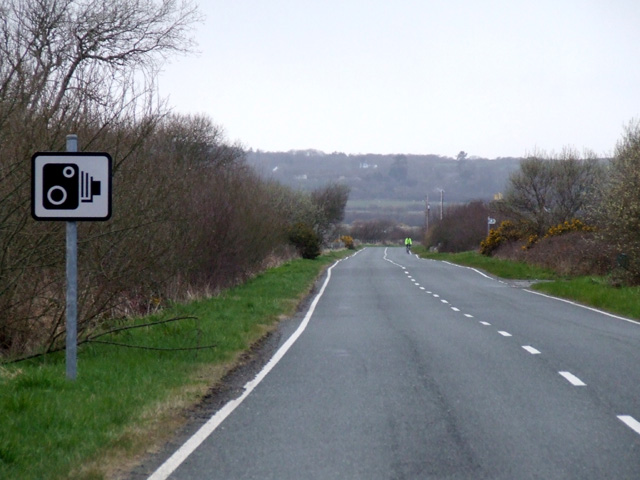
GOV.UK says the minimum penalty for speeding is a £100 fine and 3 penalty points. If a speed camera caught the offence, the registered keeper will usually receive a Notice of Intended Prosecution within 14 days, along with a Section 172 notice asking who was driving. That Section 172 form must normally be returned within 28 days.
After that, the case usually goes one of three ways:
- you receive a fixed penalty
- you are offered a speed awareness course
- you are told the case is going to court
If you were stopped by the police at the roadside, the process can move more quickly, but the same basic outcomes apply.
Can you ask for a speed awareness course?
No. That is one of the biggest misconceptions around speeding offences.
Ask the Police is clear that you cannot suggest a course for yourself. If you are eligible, the police will tell you. The same source also says criteria differ slightly from one force to another, which is why drivers should treat any forum advice with caution.
In practice, a course offer will usually depend on things such as:
- how far over the limit you were
- whether the police think the offence is suitable for education rather than prosecution
- whether you have completed a similar course in the last 3 years
- whether you dealt with the paperwork on time
What speed can still qualify for a course?
There is no single national promise that applies in every case, but Ask the Police publishes an example set of guidelines used by one force. Under that example, course offers may be considered in these bands:
| Speed limit | Typical awareness-course band example |
|---|---|
| 20 mph | 24 to 31 mph |
| 30 mph | 35 to 42 mph |
| 40 mph | 46 to 53 mph |
| 50 mph | 57 to 64 mph |
| 60 mph | 68 to 75 mph |
| 70 mph | 79 to 86 mph |
That table is useful because it shows the rough kind of offence that may still be treated as low-level speeding. It is not a guarantee. If the police force handling your case does not think a course is appropriate, you can still end up with points or a court hearing even if your speed falls inside a commonly quoted range.
How much does a speed awareness course cost?
There is no single UK-wide price. Fees vary by provider and area.
One current example comes from Hartlepool Borough Council, which lists the National Speed Awareness Course at £82 for drivers in County Durham and Cleveland, while also noting that fees may vary elsewhere.
That means a course can cost a similar amount to the standard £100 fixed penalty, and sometimes the decision is less about saving money than it is about protecting your licence from 3 points.
For many drivers, especially those already carrying points, that is the real value.
What happens on the course?
The course is not a driving test and it is not a simple box-ticking video. UKROEd says it mixes information, discussion and reflection to help drivers understand speed limits and the reasons people end up speeding.
The TTC Group describes it as a behavioural-change course and says attendance is not a conviction. TTC also says the session lasts three hours including registration and breaks.
In other words, it is meant to change behaviour, not just punish it.
Do you get points if you do the course?
If you are offered the course and complete it properly, you would normally avoid the points and fixed penalty for that offence.
Hartlepool Borough Council says that if you attend and complete the course successfully, no further action is taken for that offence. It also notes that your completion is recorded on a national database, which is why you should not expect to be offered the same type of course again if you reoffend within 3 years.
What if you are a new driver?
This is where the stakes get higher.
GOV.UK says your licence will be revoked if you build up 6 or more points within 2 years of passing your test. Because a standard speeding fixed penalty usually brings 3 points, a course offer can matter a lot for newly qualified drivers.
If you are in that position, it is worth reading Motoring Mojo’s wider guide to UK driving laws and, if you are trying to keep overall running costs under control, our look at whether black box insurance is worth it in the UK.
When will you still get points or go to court?
A speed awareness course is not a get-out clause for every speeding offence.
You are more likely to end up with the standard penalty, or a court case, if:
- your speed was too high for a course to be considered
- you have already taken a similar course in the last 3 years
- you ignore the paperwork or miss the 28-day driver-identification deadline
- there were other offences involved
- the police force decides prosecution is the better option
GOV.UK also warns that court penalties can go much further than the standard fixed penalty. Depending on the limit and the speed involved, the fine can be based on your weekly income, and a disqualification is possible in more serious cases.
The bottom line
For most drivers, a speed awareness course is best thought of as a one-off second chance after a lower-level speeding offence. It is not automatic, it is not free, and it does not make the matter disappear until you complete it. But if it is offered, it can be the difference between walking away with a three-hour lesson or carrying 3 more points on your licence.