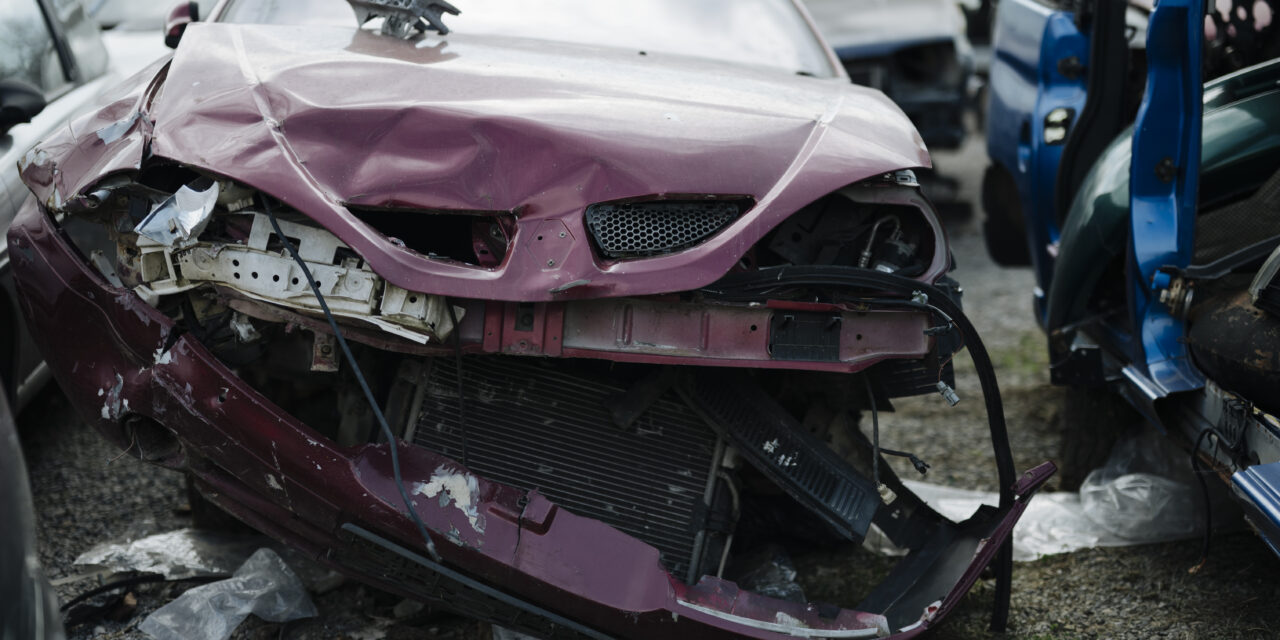
A Cat S or Cat N marker does not automatically make a used car a bad buy. It does mean you need to be far more careful than you would be with a standard used car.
In the UK, these categories are used when an insurer decides a damaged vehicle is a total loss. That usually means the repair cost, storage, labour and associated costs make fixing the car uneconomical compared with paying out its market value. Some of those cars are then repaired and sold back into the used market.
That is where buyers can get caught out. A Cat N car is often described as a harmless cosmetic write-off. A Cat S car is often dismissed as one to avoid at all costs. Real life is messier than that.
Some Cat N cars are perfectly decent repaired buys. Some are badly repaired headaches with electrical faults, airbag issues or poor panel alignment. Some Cat S cars have been repaired properly and priced fairly. Others are not worth the risk, especially if the paperwork is thin and the saving is small.
Here is what the categories actually mean, how they affect value and insurance, and what to check before you hand over any money.
What Cat S and Cat N actually mean
According to GOV.UK and the ABI salvage code used by UK motor insurers, written-off vehicles fall into four broad categories:
| Category | What it means | Can it go back on the road? |
|---|---|---|
| Cat A | Vehicle must be crushed in full | No |
| Cat B | Body shell must be crushed, though some parts may be salvaged | No |
| Cat S | Repairable vehicle with structural damage | Yes, if repaired to a roadworthy condition |
| Cat N | Repairable vehicle with non-structural damage | Yes, if repaired to a roadworthy condition |
The key point is this: both Cat S and Cat N cars can legally return to the road after repair.
The difference is the type of damage that led to the insurance write-off.
Cat S meaning
Cat S stands for structural damage. That means the car has suffered damage to a structural part of the vehicle. In simple terms, this is damage that affects the car’s structure rather than bolt-on exterior panels alone.
That does not automatically mean the car is unsafe forever. It does mean the repair quality matters a lot more. If the structure was repaired badly, you could end up with poor wheel alignment, uneven tyre wear, doors that do not shut properly, water leaks or worse.
Cat N meaning
Cat N stands for non-structural damage. This is often misunderstood.
Non-structural does not mean minor. It only means the damage is not to the car’s structural shell or chassis areas. A Cat N car can still need expensive parts and serious work, including suspension components, steering parts, wiring looms, sensors, lights, bumpers, doors, cooling parts or airbags.
So if a seller describes a Cat N car as just a scratch or a scuff, do not take that at face value.
Why insurers write cars off when they are still repairable
A lot of buyers assume a write-off means the car was too damaged to fix. That is not always true.
GOV.UK’s consumer guidance explains that many Cat S and Cat N vehicles are constructive losses. In other words, they could be repaired, but the total cost of doing so was higher than the insurer thought made financial sense compared with the car’s pre-accident value.
That can happen because:
- labour rates are high
- genuine manufacturer parts are expensive
- storage and recovery charges add up quickly
- paint and calibration work are costly on modern cars
- courtesy-car and claim-handling costs push the bill up further
That is why even fairly ordinary damage can trigger a total-loss decision on an older or lower-value car.
Which is riskier: Cat S or Cat N?
In general, Cat S is the riskier buy because structural damage raises the stakes if the repair was poor.
But that does not mean every Cat N is a safe bargain.
A badly repaired Cat N can still be troublesome if it involves:
- airbag deployment
- ADAS sensors and camera calibration
- hidden wiring damage
- cooling-system damage after a front-end hit
- suspension or steering components that were replaced poorly
- water ingress after damage to doors, seals or glass
Think of it this way:
- Cat S usually brings the bigger structural risk
- Cat N often brings the bigger false-confidence risk
That second point matters. Buyers are often more cautious with Cat S cars, but too relaxed with Cat N ones.
How much cheaper should a Cat S or Cat N car be?
There is no fixed national percentage, because the right discount depends on the car, the quality of the repair, the age and mileage, and how desirable that model is in the used market.
Still, the category marker should mean a meaningful discount.
If a repaired write-off is priced only a little below an equivalent clean-history car, it usually stops making sense. You are taking on more resale difficulty, a smaller pool of insurers and more due-diligence work. That needs to be reflected in the price.
As a rule of thumb:
- a Cat N car should usually be noticeably cheaper than an equivalent non-recorded car
- a Cat S car should usually be cheaper again
- if the discount looks tiny, walk away and buy the cleaner car instead
The exact number matters less than the logic. The saving needs to cover the extra risk, harder resale and the possibility that some future buyers will not touch the car at all.
Will a Cat S or Cat N car be harder to insure?
Often, yes.
The GOV.UK consumer guide says written-off vehicles can cost more to insure and that not all insurers will automatically offer cover. That is one of the most important practical checks to do before you buy.
Do not assume you can arrange cover on the day with no drama. Get quotes first.
Ask the insurer the exact question clearly:
- will you insure this vehicle with a Cat S marker?
- will you insure this vehicle with a Cat N marker?
- do you need any engineer’s report or repair evidence?
A cheap purchase price can be a false economy if the insurance premium jumps or your preferred insurer refuses the car.
What happens to the V5C after a car is written off?
This is another area where buyers get confused.
GOV.UK says that if an owner keeps a Cat S vehicle, the complete V5C log book must be sent to the insurer and a free duplicate log book must be applied for. DVLA then records the category in the log book.
For a Cat N vehicle, the owner can keep the log book if they keep the car.
That means you should not treat the presence of a V5C alone as proof that everything is straightforward. You still need to verify the vehicle’s history properly.
The checks you should always do before buying a Cat S or Cat N car
If you are seriously considering one, do more than the usual used-car checks.
1. Run a proper history check
A paid vehicle history check can reveal whether the car has been written off, whether it has outstanding finance, whether it has been stolen and whether there is a mileage discrepancy.
This matters because an MOT history check alone will not tell you everything.
2. Check the MOT history
Use the free GOV.UK MOT history service and read several years back, not just the latest pass.
Look for:
- repeated advisories after the recorded repair
- uneven tyre wear that could hint at alignment issues
- suspension or steering faults returning repeatedly
- lighting, electrical or airbag-related warnings showing up later
- long periods off the road with no clear explanation
3. Ask for before-and-after photos
This is one of the best filters.
If the seller has no photos of the original damage, no invoices and no clear explanation of what was replaced, treat that as a warning sign.
For a Cat S car especially, you want evidence that shows:
- where the damage was
- who repaired it
- what parts were replaced
- whether the car was measured, aligned or inspected afterwards
4. Check the panel fit and shut lines carefully
Stand back and look at the car in daylight.
Check whether:
- the bonnet sits evenly
- the gaps around the headlights and grille match
- the doors shut cleanly
- the boot lines up properly
- paint shades differ from panel to panel
- there is overspray on rubbers or trim
Poor alignment does not always mean disaster, but it can tell you the repair was rushed or cheap.
5. Inspect the tyres for clues
Uneven tyre wear can be a useful shortcut on a previously damaged car.
If one side is wearing faster, or the steering wheel sits off-centre on a test drive, ask questions. On a Cat S car especially, that can point to alignment problems that were never fully resolved.
6. Check warning lights and driver-assistance systems
Modern cars are full of sensors, cameras and active safety kit.
On a Cat N car, that can be where the real trouble sits. Make sure everything works as it should, including:
- parking sensors
- reversing camera
- lane-keeping or emergency braking warnings
- air-con
- infotainment and steering-wheel controls
- every dashboard warning light on startup and after driving
A cheap repair can get the car looking tidy without properly sorting the electronics underneath.
7. Get an independent inspection
If you are spending meaningful money, this is usually worth it.
GOV.UK’s consumer guide suggests having the vehicle inspected by an engineer. That is especially sensible for Cat S cars, but it can also be money well spent on Cat N examples with front-end or side-impact damage.
When a Cat S or Cat N car can make sense
A repaired write-off can make sense if all of these are true:
- the price discount is strong enough
- the repair evidence is convincing
- the car drives properly with no obvious warning signs
- insurance is available at a sensible cost
- you plan to keep it long enough for the lower resale value to matter less
This is often where the best cases live: older mainstream cars, bought at the right money, with honest paperwork and no mystery around the damage.
When you should walk away
Walk away if:
- the seller is vague about the original damage
- there are no repair invoices or photos
- the discount versus a clean car is small
- insurance quotes are awkward or expensive
- the car pulls to one side or feels wrong on the road
- warning lights are on, or recently cleared
- the story does not match the paperwork
A write-off only makes sense when the numbers and the evidence line up.
Cat S vs Cat N: the bottom line for UK buyers
If you want the safer default answer, buy the equivalent clean-history car.
If you are considering a repaired write-off because the saving is meaningful, a Cat N usually feels like the easier sell later and the lower-risk route, but only if you verify the repair properly. A Cat S can still be a sound buy, yet the burden of proof needs to be higher because structural damage is involved.
The mistake is not buying a Cat S or Cat N car. The mistake is buying one because the advert looks tidy and the price looks tempting.
Check the history, read the MOT record, get insurance quotes before you commit and insist on evidence of the repair. If the seller cannot make the car’s story stack up, let someone else take the gamble.