
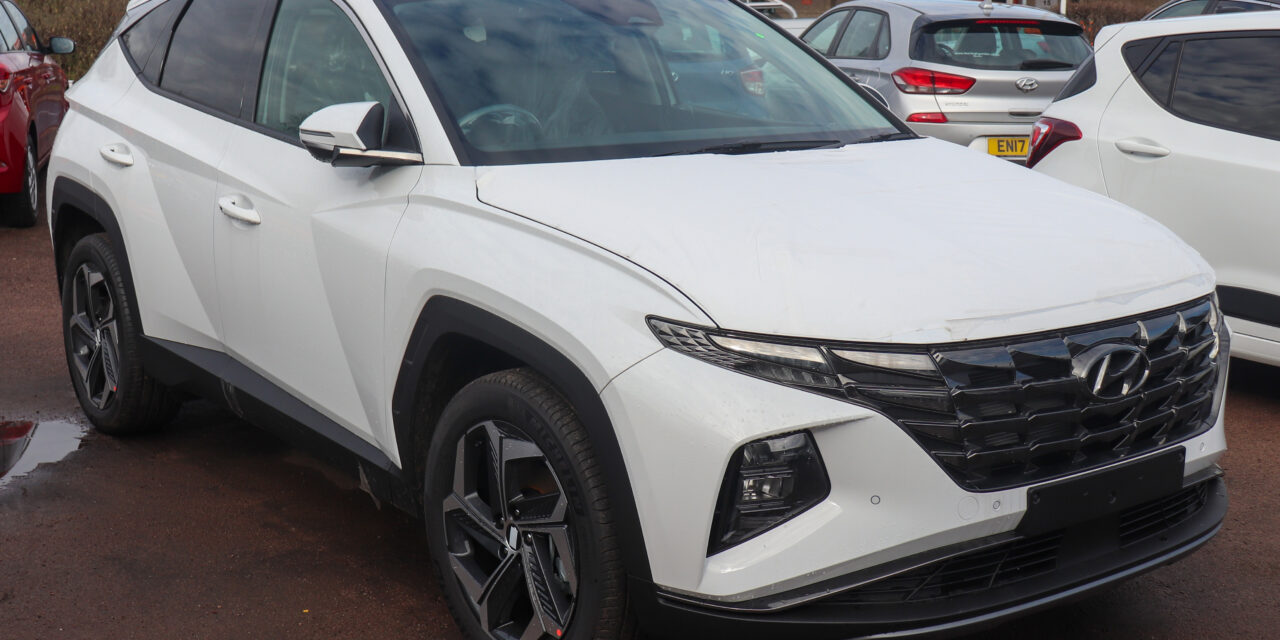
If your Hyundai Tucson has the amber tyre-pressure warning light on, do not ignore it before an MOT. But do not assume it is an automatic fail either.
The key question is whether the warning is pointing to a simple pressure issue or a fault with the tyre pressure monitoring system itself. Under the current UK MOT rules, that distinction matters.
Quick answer
A Hyundai Tucson can fail its MOT if the TPMS is malfunctioning or obviously not working. On cars first used on or after 1 January 2012, that is a Major defect under the MOT inspection manual.
If the light is there because one or more tyres are under-inflated, the position is softer. The official guidance says testers should only fail the car when it is clear the lamp indicates a system malfunction rather than a low-pressure warning.
In plain English:
- a clear TPMS system fault can mean an MOT fail
- low tyre pressure should still be sorted, but it is not the same thing as a failed TPMS system
- a dangerous tyre defect can fail the car separately, regardless of the warning light
Which Hyundai Tucson models does this affect?
The MOT TPMS inspection applies to M1 passenger vehicles first used on or after 1 January 2012. That covers the vast majority of Hyundai Tucson models UK drivers are likely to be taking for test in 2026.
Older pre-2012 cars can sit outside the TPMS inspection rule, but most Tucson-badged cars on UK roads are newer than that. If your Tucson has factory TPMS, the safest assumption is that the system needs to behave properly on test day.
What the tester is actually checking
An MOT tester is not doing a full Hyundai diagnostic session. They are checking whether the warning lamp behaves normally and whether the system appears to be malfunctioning or obviously not working.
Normally, the TPMS lamp should illuminate briefly at start-up and then go out. If it stays on, flashes and then remains on, or the display clearly points to a system fault, that is where MOT trouble starts.
The official MOT manual also separates an under-inflated tyre from a TPMS malfunction. That matters because a pressure warning after a cold snap or a slow puncture is not the same thing as a failed sensor or dead system.
Low tyre pressure vs TPMS malfunction
This is the bit that catches a lot of Tucson owners out.
A steady warning can simply mean one or more tyres are low on pressure. Hyundai’s own guidance says that after the lamp comes on, you should reduce speed, stop safely and check the tyres as soon as possible.
A system malfunction is more likely when the warning light blinks for a period at start-up and then stays on, or when the warning keeps returning even after pressures have been corrected.
That usually points to a fault such as:
- a failed wheel sensor
- a weak or flat TPMS sensor battery
- a damaged valve-stem sensor
- a wheel change where the system has not relearned properly
- wiring, receiver or control-module issues
- damage after tyre sealant or previous repair work
Common Hyundai Tucson causes of a TPMS light
On the Tucson, the usual reasons are fairly predictable.
Seasonal temperature drop
A cold morning can be enough to push one tyre below the threshold. This is one of the most common reasons the light appears before an MOT even when nothing is actually broken.
Slow puncture or kerb damage
If one tyre keeps losing pressure, the system is doing its job. The underlying problem may be a screw in the tread, a damaged valve or a tyre that has been clipped on a kerb.
Sensor trouble after a tyre change
Tucson owners often see TPMS warnings after new tyres, wheel swaps or sensor replacement. If the system has not stored the new sensor information properly, the warning can stay on.
Spare wheel use
Hyundai notes that a spare wheel may not carry a TPMS sensor. If you drive on the spare, the warning lamp may flash and then remain on.
Sealant damage
Tyre sealant can be useful in an emergency, but Hyundai warns that non-approved sealant may damage the pressure sensor. That can turn a simple puncture into a proper TPMS fault.
What to check before the MOT
If your Tucson’s TPMS light is on, this is the sensible pre-test routine.
1. Check all four tyre pressures when cold
Use the pressures on the driver’s door sticker or handbook, not a guess. Correct all four tyres properly, then drive the car for a short distance to see whether the warning clears.
2. Inspect the tyres themselves
Look for a screw, obvious puncture, sidewall damage or one tyre that looks visibly softer than the rest. A tyre problem can fail the MOT on its own even if the TPMS system is not faulty.
3. Think about recent tyre or wheel work
If the light appeared after tyre replacement, wheel refurbishment, rotation or sensor work, there is a decent chance the system needs checking or resetting rather than the tyre being at fault.
4. Do not ignore a flashing TPMS light
On Hyundai systems, flashing before staying on is a stronger clue that the system itself is malfunctioning. That is the version most likely to cause MOT trouble.
5. Get the fault read if the light stays on
A tyre specialist or independent garage with Hyundai-capable diagnostics can usually tell you whether the problem is pressure-related or whether one sensor is not communicating.
Will it fail if the light is still on?
If the tester can clearly tell the TPMS is malfunctioning, yes, your Hyundai Tucson is likely to fail its MOT.
If the issue appears to be simple low tyre pressure rather than system failure, the outcome is less black-and-white. But turning up with the warning still on is still asking for trouble, because you are leaving the tester to make that judgement on the day.
The smart move is to sort it before the appointment rather than hope the light is interpreted kindly.
Typical repair costs in the UK
Costs depend on whether the problem is the tyre or the system.
Typical ballpark figures are:
- pressure check and puncture repair: often £20 to £40
- replacement rubber valve or valve service: usually modest
- single TPMS sensor replacement and coding: often around £50 to £120 per wheel
- deeper diagnostic work for a receiver or module fault: potentially more
If the light arrived straight after new tyres were fitted, go back to the fitter first. A missed sensor issue or relearn problem is often cheaper to sort there than starting from scratch elsewhere.
Tucson-specific tips owners often miss
A few practical points are worth knowing before MOT day.
- Each road wheel normally carries a pressure sensor behind the valve stem, so careless tyre fitting can create the fault.
- The spare wheel may not have a sensor, depending on the car and wheel supplied.
- Sealant can interfere with sensor operation.
- If the car has had suspension, ABS or ESC work, it is worth checking whether the TPMS now needs resetting or relearning.
If you are already doing a broader once-over on the car, our guide to used Hyundai Tucson problems to look for is a useful companion read. It is also worth understanding wheel alignment vs tracking if the warning followed a pothole hit or tyre wear issue.
FAQ
Is a TPMS light an automatic MOT fail on a Hyundai Tucson?
No, not automatically. The important issue is whether the light shows a genuine TPMS malfunction or a simple low-pressure warning.
Does the 2026 rule change anything?
No major change here. For 2026, the UK MOT rule still treats a malfunctioning TPMS on an eligible car as a Major defect.
Can I just top the tyres up and hope it clears?
Yes, if the cause is low pressure. No, if the light keeps returning or flashes before staying on, because that suggests a system fault rather than a pressure issue.
Can a puncture cause the TPMS light to come on?
Absolutely. In that case the system may be working properly by warning you that a tyre is losing pressure.
Verdict
A Hyundai Tucson TPMS light is not something to ignore before an MOT, but it is not always an instant fail either.
If the system is genuinely malfunctioning, expect MOT trouble. If the warning is being triggered by simple low pressure, puncture loss or recent tyre work, you may be dealing with a much easier fix.
The safest approach is straightforward: check the pressures cold, inspect the tyres, think about any recent wheel work, and get a proper diagnosis if the light stays on. That is far cheaper than wasting an MOT appointment on a fault that could have been sorted first.





Trackbacks/Pingbacks