
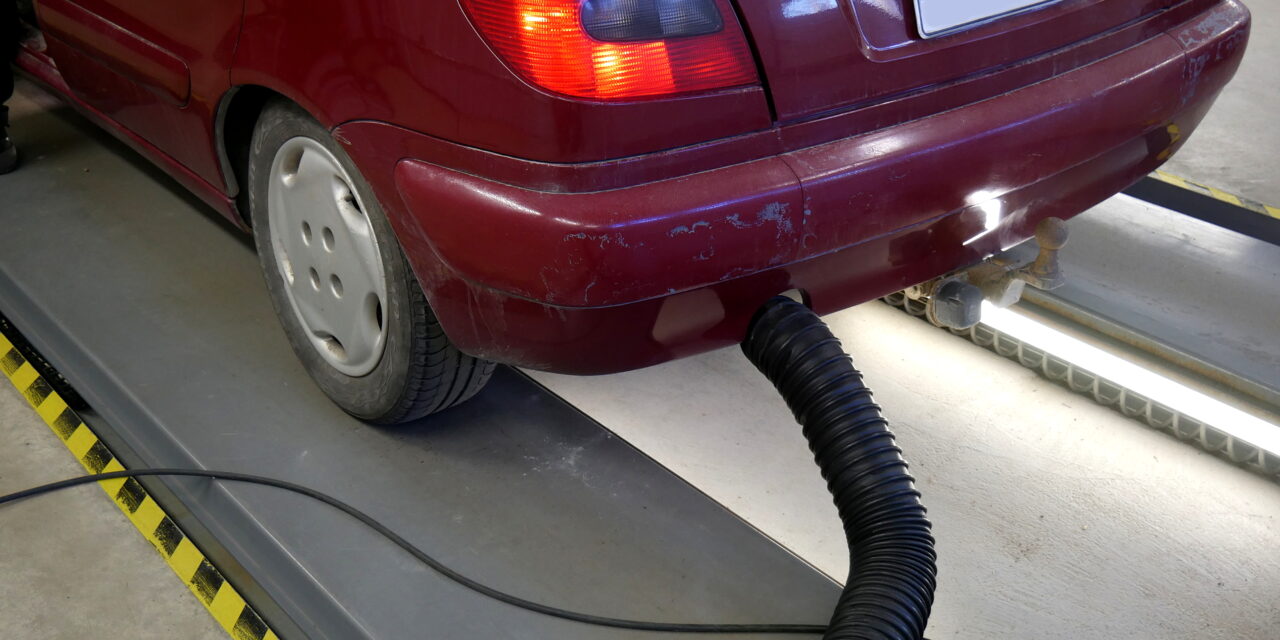
If your MOT printout says the lambda reading is too high, the tester has usually found that your petrol engine is running too lean during the fast-idle emissions check, or that extra air is getting into the exhaust stream and skewing the result. In plain English, the analyser is seeing too much oxygen compared with what it expects.
For the standard petrol emissions test, the DVSA basic limit is a lambda reading between 0.97 and 1.03 at fast idle. If your car is above that range, it can be recorded as a major MOT failure. The good news is that the cause is often something more straightforward than "it needs a new catalytic converter".
Quick answer: what does a high lambda reading mean?
A high lambda reading normally means one of two things:
- the engine is running lean, so there is too much oxygen in the exhaust gases
- air is leaking into the exhaust system and the analyser is reading a false lean condition
That is why the first checks should be for exhaust leaks, intake leaks, sensor issues and engine warm-up, not just expensive parts swapping.
What the MOT test is actually checking
During the petrol emissions test, the car is held at fast idle and the analyser records:
- carbon monoxide (CO)
- hydrocarbons (HC)
- lambda
According to the DVSA MOT inspection manual, the basic petrol test uses a lambda limit of 0.97 to 1.03 at 2,500rpm to 3,000rpm. The same manual also says a vehicle can fail if the lambda coefficient is outside the default limits or the manufacturer’s specified range.
The tester will also fail the car if there is:
- an induction or exhaust leak that could affect emissions
- an engine management light that is inoperative or showing a malfunction
- emissions control equipment that is missing, obviously modified or obviously defective
So a high lambda number is usually part of a wider emissions picture, not a random standalone reading.
The most common reasons lambda is too high
1. Exhaust leak before or around the lambda sensor
This is one of the most common causes. If the exhaust flexi, manifold, gasket or a joint ahead of the analyser point is leaking, fresh air can be drawn in and make the reading look leaner than it really is.
Typical clues include:
- a blowing noise on startup or under throttle
- soot marks around a joint
- a recent advisory for an exhaust leak
This matters because the DVSA manual specifically allows an MOT fail for an exhaust leak that could affect emissions.
2. Vacuum leak or intake leak
Split hoses, loose intake pipework, a leaking intake gasket or a PCV issue can all let unmetered air into the engine. That leans out the mixture and can push lambda high.
Common signs:
- uneven idle
- hesitation when pulling away
- fuel trim fault codes
- a whistle or hissing noise under the bonnet
3. Faulty or ageing oxygen sensor
The lambda sensor itself may be slow, contaminated or simply worn out. If it is not reading the exhaust gases accurately, the engine ECU can over-correct or fail to correct properly.
If the sensor heater circuit or signal is faulty, you may also get an engine management light, which can create a separate MOT fail point on many petrol cars.
4. Engine not fully hot at test time
A marginal car often fails emissions when it has not fully warmed through. The catalytic converter works best when properly hot, and the DVSA manual tells testers to make sure the engine is at normal operating temperature before carrying out the test.
If your car only does short trips, this is worth remembering before a retest.
5. Airflow or fuelling faults
A dirty MAF sensor, weak fuel pressure, tired injectors or poor live data from another engine sensor can push the engine lean enough to upset the lambda figure.
This is especially likely if the car also has:
- lean mixture fault codes
- poor cold starting
- flat spots under load
- worse fuel economy than usual
6. Misfire or incomplete combustion
A misfire does not always show up as a simple rich problem. If combustion is inconsistent, extra oxygen can pass into the exhaust and distort the emissions result.
That means old spark plugs, weak coils or ignition faults can sometimes sit behind a high lambda fail.
7. Catalytic converter problems
The catalytic converter is not always the first culprit, but it can be part of the story if the car has persistent emissions problems, previous catalyst-related fault codes or a cheap aftermarket converter that never quite gets readings back where they should be.
If your printout shows awkward CO and HC figures as well as high lambda, the catalyst may deserve closer attention.
For a model-specific example, our guide to Toyota Yaris exhaust emissions fail: what usually causes high MOT readings shows how these readings can point to different faults.
What to check before buying parts
If you want the best chance of passing the retest without wasting money, work through the cheap checks first.
Start with the MOT printout
Look at the whole result, not just the lambda figure.
Ask:
- was lambda only slightly high, or well out?
- were CO or HC also high?
- did the tester note any visible exhaust leak?
- is the engine management light on?
That will tell you whether you are chasing a simple leak, a fuelling issue or a bigger catalyst problem.
Make sure the engine is properly hot
Before a retest, give the car a decent run rather than just driving around the block. A fully hot engine and catalytic converter can make the difference on a borderline result.
Check for exhaust leaks
Pay special attention to:
- manifold area
- flexi section
- joints before the catalytic converter
- any repairs done with paste or clamps
A small leak here can be enough to ruin the reading.
Scan for fault codes and live data
Even a basic OBD reader can be useful. Look for:
- oxygen sensor faults
- lean mixture codes
- misfire codes
- unusually positive fuel trims
If the live fuel trims are strongly positive, the ECU is usually adding fuel to compensate for a lean condition.
Inspect intake hoses and breather pipes
Loose clips and split hoses are cheap faults that cause expensive guesswork. On many cars, a cracked breather hose can be enough to upset emissions.
Rule out overdue service items
If plugs, filters or ignition parts are tired, fix those basics first. It is a much better starting point than assuming the catalytic converter has failed.
If catalyst trouble is suspected, our Peugeot 208 catalytic converter MOT fail guide explains the usual warning signs and when replacement becomes more likely.
Can you still drive if lambda is too high?
Usually yes, but you should not ignore it.
A high lambda reading can mean the engine is running lean, and a prolonged lean-running fault can lead to:
- poor drivability
- overheating of exhaust components
- catalytic converter damage over time
- worse fuel economy and higher emissions
If the engine management light is flashing, the car is misfiring badly or the exhaust is obviously leaking, get it checked sooner rather than later.
Is it always an expensive fix?
No. That is the encouraging part.
Many high-lambda MOT fails turn out to be one of these:
- a leaking flexi pipe
- a split vacuum hose
- an old lambda sensor
- a car that arrived for test not fully hot
- a basic service issue
Catalytic converters and more involved fuelling faults do happen, but they should come later in the diagnosis, not at the start.
How to improve your chances before the retest
Before going back for the MOT retest:
- fix any intake or exhaust leaks first
- clear the root cause of any engine warning light
- make sure the engine reaches full operating temperature
- avoid turning up with a car that has only done a two-minute trip
- keep the original emissions control hardware intact and properly fitted
That last point matters because the MOT rules also allow a fail where emissions control equipment is missing, obviously modified or obviously defective.
Final verdict
If your MOT says the lambda reading is too high, think lean running or extra air, not just new catalyst.
Start with the simple stuff:
- exhaust leaks
- intake leaks
- lambda sensor faults
- service basics
- engine warm-up
That approach gives you the best chance of getting through a retest without spending money in the wrong place.
And if your car has failed on emissions more generally, it is worth comparing the pattern with our guides on Kia Sportage emissions fail: petrol vs diesel and Toyota Yaris exhaust emissions fail to narrow down what is most likely going on.




Trackbacks/Pingbacks