
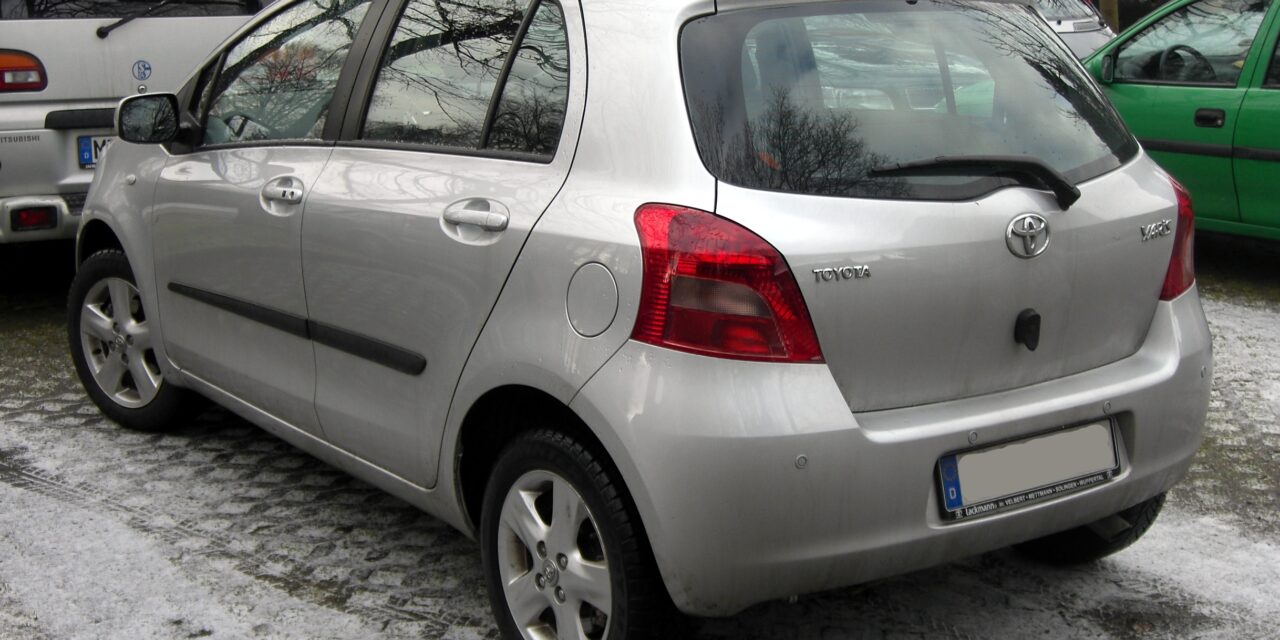
If you are searching for a Toyota Yaris exhaust CO2 emissions fail, the first thing to know is that MOT testers do not usually fail a petrol Yaris because of a single published CO2 limit. In the UK MOT exhaust test, the key petrol readings are normally carbon monoxide (CO), hydrocarbons (HC) and lambda, alongside checks for exhaust leaks, missing emissions equipment and warning lights. So in practice, a Yaris that "fails on CO2" usually has a broader emissions or exhaust problem behind it.
Quick answer
A Toyota Yaris can fail its MOT emissions test if it has an exhaust leak that affects emissions, a faulty catalytic converter, a lambda sensor problem, a misfire, an engine management light issue, or visible defects in the emissions-control system. If your car is a Yaris Hybrid, the position is slightly different: hybrids are generally not given the normal tailpipe emissions test, but they can still fail for issues such as an emissions-related warning light or obvious defects.
Why “CO2 emissions fail” is usually the wrong question
Owners often use “CO2” as shorthand for any exhaust-test failure, but that is not how the MOT is normally framed for petrol cars. The official MOT manual sets pass limits for CO, HC and lambda in the basic petrol emissions test, and it also allows a fail where there is an induction or exhaust leak that could affect emissions levels.
That matters because chasing the wrong idea can waste time and money. If your Yaris has failed or looks likely to fail, the job is not to hunt for a mysterious “CO2 sensor”. It is to find the fault that is upsetting combustion, catalyst performance or the exhaust system.
Does every Toyota Yaris get the same emissions test?
No.
Petrol Yaris models
A non-hybrid petrol Yaris is normally subject to the usual spark-ignition MOT emissions test. That means the tester may look at:
- CO at fast idle and idle
- HC at fast idle
- lambda at fast idle
- whether the engine management light behaves properly
- whether there is an exhaust or induction leak that could affect the result
- whether visible emissions-control equipment is missing, modified or obviously defective
Yaris Hybrid models
This is the important exception. The MOT inspection manual says hybrid vehicles with electric and combustion engines do not need the tailpipe emissions check in the same way. But that does not mean a hybrid Yaris gets a free pass. If the engine management light is on, or emissions-control equipment is clearly defective, the car can still run into MOT trouble.
So if you own a Yaris Hybrid, the phrase “CO2 emissions fail” is even more likely to be a misunderstanding of what the tester is actually looking at.
What usually causes a Toyota Yaris to fail emissions?
1. Catalytic converter problems
A tired, damaged or contaminated catalytic converter is one of the most common reasons a petrol Yaris ends up with poor emissions readings. If the catalyst is no longer cleaning up the exhaust gases properly, the car may struggle on CO or HC.
Typical clues include:
- a persistent engine management light
- poor fuel economy
- a sulphur smell or unusual exhaust smell
- a failed emissions test after other basic items have already been checked
If the catalyst itself is the issue, the repair bill is usually much higher than for a simple sensor or service item.
2. Lambda sensor faults
The oxygen sensors help the engine adjust its fuel mixture. If one goes bad, the Yaris may run too rich or too lean, which can push emissions outside the acceptable range.
Possible warning signs include:
- uneven idle
- hesitation
- worse fuel economy
- an engine warning light
- emissions readings that are inconsistent or only just out of range
3. Exhaust leaks
The MOT manual is clear that an exhaust leak that could affect emissions is a major defect. On a Yaris, a leak near the front pipe, flexi section, manifold joint or catalytic converter is especially risky because it can distort the test readings and make the car noisier too.
If you can hear blowing, see black soot around a joint, or smell fumes, deal with that first. Our guide to Honda Jazz exhaust leak MOT fail explains why even a small-looking leak can become a proper MOT problem.
4. Misfires and poor ignition performance
Old spark plugs, weak ignition coils or other combustion faults can send unburnt fuel into the exhaust. That can raise HC readings and, if ignored, damage the catalytic converter as well.
A Yaris with a slight misfire may still feel usable on the road, but it can still fail the emissions part of the MOT.
5. Intake or vacuum leaks
Not every emissions issue comes from the exhaust side. A split hose or intake leak can upset the air-fuel mixture enough to affect lambda or idle quality. Because the manual also mentions induction leaks, this is one of those faults that should not be overlooked.
6. Engine management light problems
For many petrol cars, including later Yaris models, the MOT includes checking that the engine malfunction indicator lamp illuminates correctly and then goes out. If it stays on, you may have an emissions-related failure even before the gas readings are considered.
What should you check on a Toyota Yaris before the MOT?
If you are trying to avoid an emissions fail, start with the simple checks first.
Warm the car up properly
A fully warm engine and catalyst tend to produce cleaner readings than a cold engine that has only done a short trip to the test station.
Listen for exhaust noise
A blowing noise, ticking from the manifold area, or a rasp from underneath can point to a leak. MOT testers also assess exhaust noise separately, so one fault can cause trouble in more than one part of the test.
Look for warning lights
If the engine management light is on, do not assume it will clear itself. Read the fault codes before test day.
Check for rough idle or hesitation
If the engine shakes at idle, stumbles under load or smells excessively rich, emissions may be off even if the car still drives.
Look for obvious soot or failed repairs
Black marks around a joint, cheap paste repairs that have broken down, or visibly corroded pipework are all red flags.
Think about the car’s recent use
Short trips are hard on petrol emissions systems too, especially if the engine rarely gets properly hot. A Yaris that mostly does school runs and town driving may be more prone to catalyst and combustion-related issues than one that sees regular longer journeys.
What do the MOT limits usually look like on a petrol car?
For the basic petrol emissions test, the MOT manual lists these benchmark limits:
- CO up to 0.2% at fast idle
- HC up to 200ppm at fast idle
- lambda between 0.97 and 1.03 at fast idle
- CO up to 0.3% at idle
Some cars are tested to different vehicle-specific standards, but the main point is the same: the official pass/fail framework is not usually based on a single stand-alone “CO2 limit” for the owner to chase.
Is a Toyota Yaris hybrid safer from emissions-test failure?
In one sense, yes: the hybrid avoids the normal tailpipe emissions test. But it can still fail for warning-light issues or visible emissions-equipment defects, so it is not totally exempt from emissions-related MOT concerns.
That makes the right advice slightly different depending on which Yaris you own:
- petrol Yaris: focus on catalyst health, sensors, misfires and exhaust leaks
- Yaris Hybrid: focus on warning lights, engine condition when it does run, and obvious defects in the emissions system
Typical fixes and likely repair paths
The eventual repair depends on what has caused the bad reading.
The usual outcomes are:
- spark plugs or ignition parts if the problem is combustion-related
- a lambda sensor if the mixture control is wrong
- an exhaust repair if there is a leak at a joint, flexi or pipe section
- catalytic-converter replacement if the catalyst has failed
- further diagnosis if the engine management light points to a deeper fuelling issue
If you are deciding whether the fault is more likely exhaust-related or combustion-related, our guide to Kia Sportage emissions fail: petrol vs diesel gives a useful overview of how emissions problems usually develop on petrol cars.
Should you drive it if you suspect an emissions problem?
If the car still runs normally and you are only heading to a garage, many owners do. But if the Yaris is misfiring, smells strongly of fumes, feels down on power, or has a serious exhaust leak, leaving it can turn a small repair into a catalytic-converter bill.
A persistent misfire is the one to take especially seriously, because unburnt fuel can quickly damage the catalyst.
Bottom line
A Toyota Yaris exhaust CO2 emissions fail is usually not really about CO2 on its own. On a normal petrol Yaris, the real MOT risks are CO, HC and lambda readings, plus exhaust leaks, warning lights and defective emissions equipment. On a Yaris Hybrid, the usual tailpipe emissions test does not apply, but warning-light and equipment issues can still cause problems.
If your Yaris sounds blowy, idles badly, shows an engine light or has gone into the MOT with a half-warm engine, those are the things to sort first. In most cases, finding the underlying exhaust, ignition or catalyst fault matters far more than the phrase used on the internet search bar.




Trackbacks/Pingbacks