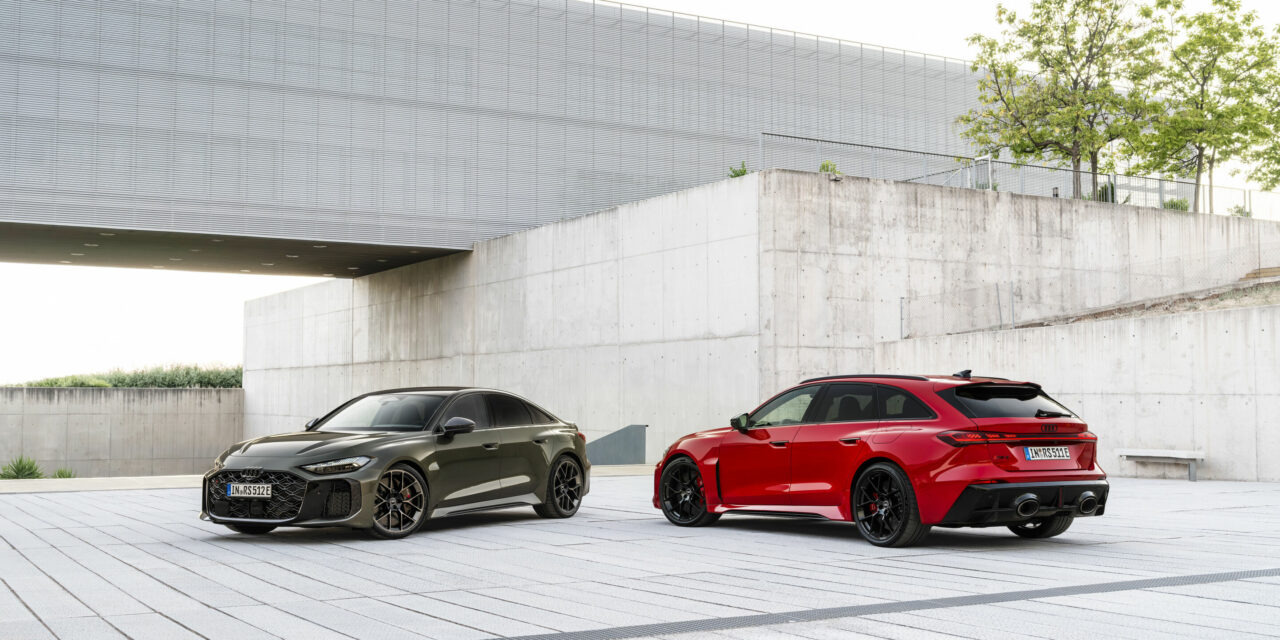
The new Audi RS 5 has landed with the sort of headline number that guarantees attention: 639PS, 825Nm and a claimed 0-62mph time of 3.6 seconds. That is enough on its own to get the usual fast-estate and fast-saloon crowd arguing.
But the more revealing part of this week’s RS 5 coverage is not the power output. It is the fact that Audi has turned one of its core RS cars into a plug-in hybrid and, crucially, given it a battery big enough to matter in daily use rather than just on a test cycle.
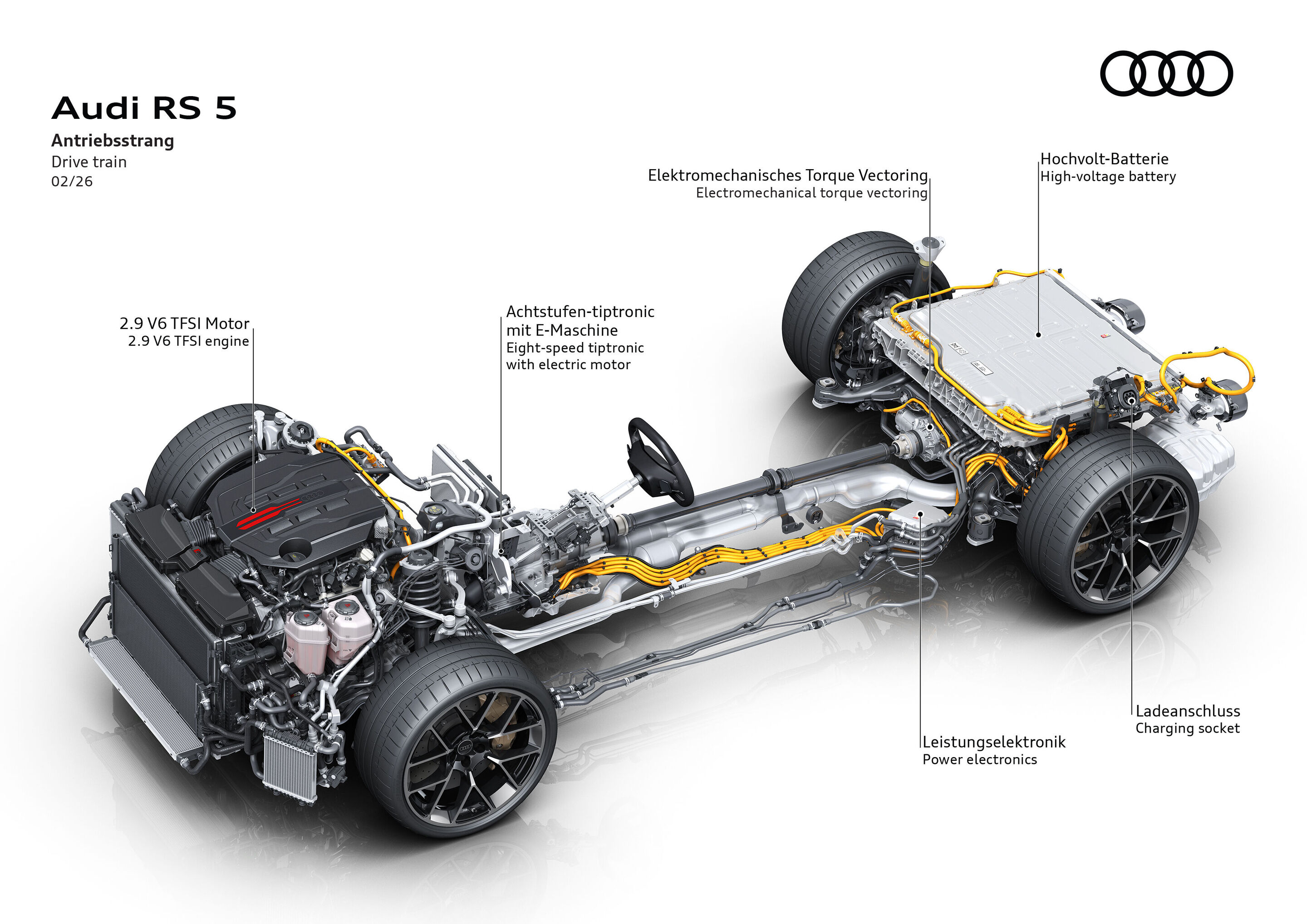
Audi’s own technical release makes clear what has changed. The new RS 5 pairs an updated 2.9-litre twin-turbo V6 with a 130kW electric motor integrated into the gearbox, for a total system output of 470kW, or 639PS. The battery is a 25.9kWh pack with 22kWh usable, mounted under the boot floor, and Audi claims up to 84km of electric range.
That last figure is the bit worth slowing down for. In old-school RS terms, the electric side of the car might have been treated as a compliance add-on. Here it looks much more central to the brief. Audi is effectively trying to build two cars into one: a big-output RS model that still does the theatre expected of the badge, and a performance car that can handle a fair chunk of ordinary driving without waking the V6 at all.
That matters because the RS 5 is arriving at a slightly awkward moment for fast executive cars. Buyers still want pace and identity, but the segment is being pulled in several directions at once: emissions pressure, urban restrictions, rising weight, and a growing expectation that even expensive performance cars should have some everyday electric usefulness. Audi’s answer is not to go fully electric just yet. It is to make the hybrid system do more than trim a lab figure.
There is another detail in Audi’s announcement that deserves more attention than it will probably get in quicker rewrites: charging is AC-only, at up to 11kW, and Audi says a full charge takes around two and a half hours. That is fine for home or workplace top-ups, but it also tells you what this car is really designed to do. This is not a plug-in hybrid built around rapid public charging or electric-only road trips. It is built around repeatable short-distance electric running, then full-fat performance when the battery and V6 are working together.
In other words, Audi wants the owner to treat the battery as part of the RS experience, not as a novelty. The company says the car holds a high state of charge in its more aggressive drive modes so full electric support is ready when needed. That includes the new torque-vectoring rear setup and the extra shove off the line. So the battery is not just there to make the brochure look greener; it is part of how the car is supposed to feel when driven hard.
There is still a trade-off, of course. A battery this size, plus the hardware around it, is not weight-free. That is the tension sitting underneath the new RS 5. Audi is chasing breadth here: electric commuting ability, big straight-line pace, quattro traction, rear-axle cleverness and long-distance usability in one package. The risk is obvious too. Performance-car buyers are usually very good at spotting when a car has become more impressive on paper than it is engaging on the road.
That is why this RS 5 matters a bit more than another six-figure fast Audi normally would. It looks like a test case for where Audi Sport thinks its core road cars need to go before a full electric takeover is acceptable to this audience. If the formula works, expect this sort of large-battery plug-in hybrid thinking to spread further across the upper end of the market. If it does not, the objections will be familiar: too heavy, too complicated, not special enough.
For now, the early details suggest Audi knows exactly what argument it is trying to win. The new RS 5 is not asking buyers to accept electrification as a necessary evil. It is asking them to see electrification as the thing that lets an RS car keep its V6, keep its numbers, and still fit the way performance motoring is changing.
That is a much bigger story than 639PS on its own.