If your car has just passed its MOT with advisories, the result is better than a fail but not something to shrug off. An advisory is the tester’s way of saying there is a part worth watching, repairing soon or budgeting for, even though it was not serious enough to fail the car on the day. Ignore the wrong advisory for too long and next year’s easy pass can turn into an expensive fail, or worse, a car that is simply not safe to use.
The short answer
An MOT advisory does not mean your car has failed. You can still drive the car after a pass with advisories, but you should treat the notes as an early warning rather than free reassurance. Some advisories are low urgency. Others are only a small amount of wear away from becoming a major defect next time.
The important point is that an MOT certificate is not a guarantee that the car will stay roadworthy until the next test. If a tyre, brake, suspension joint or another safety-critical part deteriorates after the test, you are still responsible for the condition of the vehicle.
What the DVSA and GOV.UK say
The official MOT inspection manual used by testers splits defects into four broad outcomes: advisory, minor, major and dangerous. The DVSA manual says a vehicle with only minor defects will still pass and get a certificate, while any major or dangerous defect means a fail. The same manual also says minor defects must be recorded where appropriate, while advisory items are used to flag issues that are close to the failure point, oddities found during the inspection or defects on non-testable items.
GOV.UK also makes the wider legal position clear. Even when a vehicle can be taken away after an MOT result, it must still meet the minimum standards of roadworthiness at all times. That matters because plenty of drivers see a pass certificate as a one-year safety shield. It is not.
Advisory vs minor defect: what is the difference?
This is where a lot of the confusion starts. Since the MOT system moved to the current defect categories, some results include both minor defects and advisories. They are not the same thing.
Minor defect
A minor defect is an issue the tester has judged to have no significant effect on safety or the environment at the time of the test. It still goes on the official MOT result and, according to the DVSA manual, it is a formal category the tester should use where appropriate.
Advisory
An advisory is more like a warning note. It can mean a component is worn but not worn enough to fail, or that something should be monitored because it may need attention soon. It can also cover defects on items that are not part of the MOT test itself.
In practical terms, many drivers will read both as a sign the car needs work soon. That is often the right instinct.
Can you drive with an MOT advisory?
Yes. A pass with advisories is still a pass. There is no separate offence of driving a car just because it has an advisory note.
What matters is whether the car is actually roadworthy. If the advisory relates to something that gets worse quickly, such as tyre condition, brake wear, steering play or corrosion, it would be reckless to use the pass certificate as an excuse to wait months. The legal risk comes from driving an unroadworthy vehicle, not from the wording of the MOT note itself.
That is why two cars with the same advisory can deserve very different responses. A lightly worn tyre that still has legal tread and no damage may simply need monitoring. A tyre with sidewall cracking or a brake component already close to the limit is usually worth sorting quickly, even though it scraped through this time.
Which MOT advisories should you treat as urgent?
Not every advisory needs same-week action, but some deserve immediate attention or at least a proper garage inspection. The ones to move up the list are usually the advisories tied to safety-critical systems.
1. Tyres
Anything mentioning low tread, cracking, cuts, bulges or uneven wear should go near the top of your list. Tyres can deteriorate quickly and an advisory about wear can become a fail well before next year’s MOT, especially if you cover big motorway miles. Uneven wear can also point to alignment, suspension or pressure problems rather than just an old tyre.
2. Brakes
Advisories for brake pads, discs, pipes, hoses or corrosion around brake components are not ones to leave until the next service by default. Brakes often worsen gradually, then suddenly become expensive once discs, calipers or pipes are involved.
3. Suspension and steering
Bushes, ball joints, links, springs and dampers often appear as advisories before they become major defects. They also affect how the car drives long before they trigger a fail. If the car is knocking, wandering or wearing tyres oddly, book it in sooner rather than later.
4. Corrosion
Surface corrosion can sit harmlessly for a while, but corrosion noted near structural areas, brake pipes, suspension mounts or seat belt anchorages deserves closer attention. Rust gets cheaper to manage when it is still small.
5. Fluid leaks
A slight leak may only attract an advisory, but the direction of travel is obvious. Oil can contaminate bushes, coolant leaks can turn into overheating, and brake or power steering fluid leaks should never be brushed aside.
Advisories that are often less urgent
Some advisories are genuinely low drama. Light misting from an older component, a mildly worn non-critical part, or a note about an item to monitor may not need immediate repair if a trusted garage agrees it is stable.
The sensible approach is not to panic, but also not to self-diagnose from the MOT sheet alone. If the wording is vague, ask a garage to explain exactly how much wear is present and how quickly it is likely to worsen.
How to decide what to fix first
If your MOT result has a handful of advisories, work through them in this order:
- Safety first – tyres, brakes, steering, suspension, lights and anything that could make the car unsafe.
- Fast-moving wear next – parts that are near the legal limit or likely to deteriorate quickly.
- Faults that can damage other parts – alignment issues, oil leaks, coolant leaks and worn bushes can all create a bigger bill if left alone.
- Budget items after that – lower-risk notes can be grouped with a service or next repair visit.
A good garage should be able to tell you which advisories need action now, which can wait a month or two, and which are simply worth monitoring.
Why advisories matter when buying a used car
This is where advisories become especially useful. A single old advisory is not automatically a reason to walk away from a used car. A pattern of repeated advisories absolutely can be.
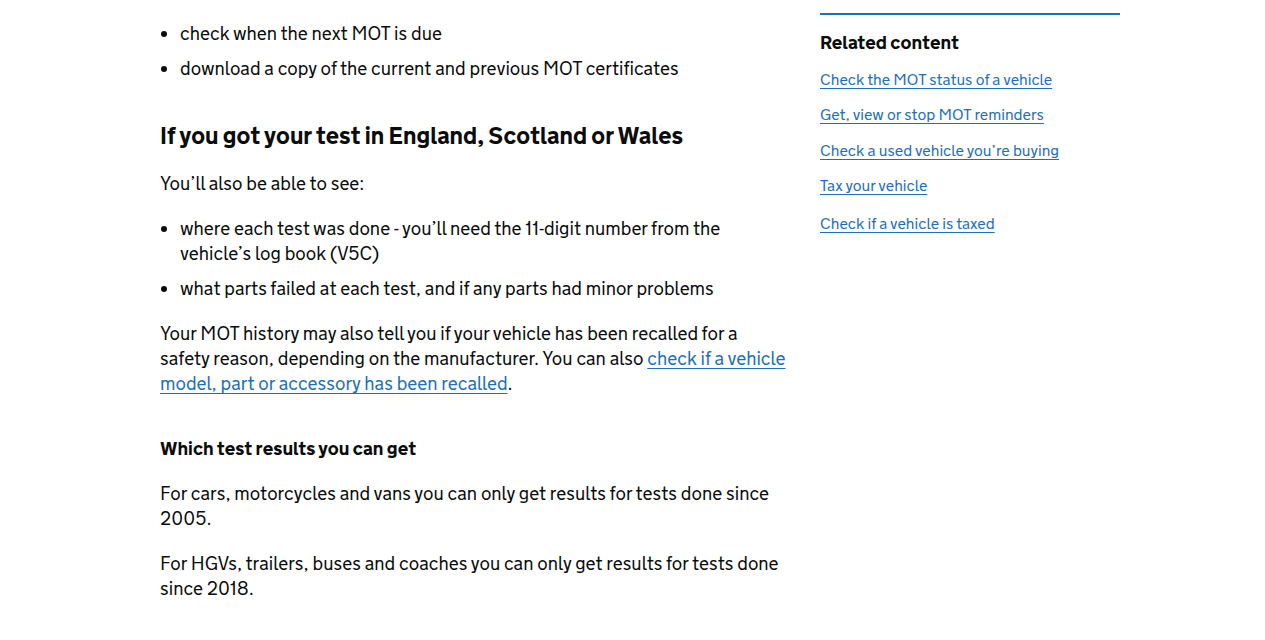
GOV.UK’s MOT history service shows what parts failed at each test and whether any parts had minor problems. Use that record to look for repetition. If you keep seeing the same notes on tyres, suspension wear, corrosion or fluid leaks year after year, it can suggest the owner has been doing the bare minimum to scrape through tests.
Equally, a car with advisories one year and evidence they disappeared next year can be a much better sign. That usually means the problems were repaired properly rather than ignored.
Should you clear MOT advisories before selling a car?
If you are selling privately, fixing obvious advisories can make the car easier to sell and reduce awkward renegotiation later. Buyers who check the MOT history will spot the notes anyway, so pretending they do not matter is pointless.
That does not mean every advisory must be repaired before sale. But if the car has advisory notes on tyres, brakes or suspension and you leave them unresolved, expect buyers either to walk away or price the job into their offer.
The mistake drivers make most often
The common mistake is to read a pass with advisories as a green light for another year of normal motoring. That is not what the advisory system is for. It is there to tell you where the next problem is likely to come from.
Sometimes that next problem is months away. Sometimes it is a matter of weeks. If the advisory touches safety-critical parts, the cheapest move is often to sort it while it is still a controlled repair rather than waiting for a fail, recovery bill or emergency booking.
Bottom line
An MOT advisory means your car passed, but it also means the tester saw something worth your attention. Treat advisories as an early warning list, not a footnote. Prioritise tyres, brakes, steering, suspension, corrosion and leaks, use the GOV.UK MOT history record to spot repeat issues, and remember that roadworthiness matters every day, not just on test day.