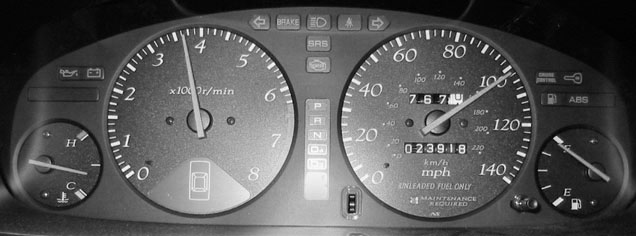
If your battery warning light comes on while you are driving, assume you have a charging problem rather than a battery problem. In plain English, the car may now be running on stored battery power alone. That can leave you with dim lights, failing electrics, heavy steering on some cars and eventually an engine that cuts out and will not restart.
For most UK drivers, the safest move is simple. If the red battery light stays on, head somewhere safe as soon as you reasonably can and get the car checked before carrying on with normal use.
What the battery warning light actually means
That little battery symbol does not simply mean "buy a new battery". More often, it means the charging system is not doing its job.
RAC says the light can indicate the battery is not charging or that there is a fault in the electrical system. The AA is even blunter, saying a red battery light while driving is not safe to ignore because the battery is not charging. Volkswagen UK’s own warning-light guide also tells drivers to stop the car as soon as it is safe when the red 12-volt battery light appears.
That matters because modern cars depend on stable voltage for far more than starting. If the charging system drops out, you can start to lose:
- headlights and interior electrics
- blower motor and heated screens
- infotainment and charging ports
- warning systems and sensors
- normal starting power once you switch off
On some cars, you may also notice the steering become heavier if voltage drops badly enough.
Can you keep driving with the battery light on?
Treat it as a get-to-safety warning, not a carry-on-as-normal warning.
If the engine is still running smoothly and you are in an awkward place, such as a smart motorway, do not panic-stop. Get somewhere safe, avoid extra electrical load if you can, and do not switch the engine off until you are in a sensible place to stop.
Once safe, the usual advice is to stop using the car until you know why the light is on. The risk is not just that it will fail to restart. If the alternator, auxiliary belt or a main electrical connection has failed, the car can run out of charge quite quickly.
Stop sooner if you also notice any of these
- headlights suddenly dimming
- blower fan slowing down
- electric windows moving sluggishly
- multiple warning lights appearing together
- burning smells from the engine bay
- squealing from the auxiliary belt area
- a battery light plus steering or brake-assist warnings
If the car is already struggling electrically, carrying on is a gamble.
The most common causes in UK cars
1. Faulty alternator
This is one of the big ones. The alternator keeps the battery charged while the engine is running. If it fails, the car starts eating through the battery’s stored energy.
A failing alternator often brings more than just the battery light. You might notice weak lights, odd electrical glitches or a car that eventually stalls once the battery voltage drops too far.
If that turns out to be the issue, our guide to alternator replacement cost UK explains what the bill usually looks like.
2. Weak or failing battery
The warning light is usually about charging, but the battery itself can still be part of the problem. Older batteries, damaged cells and poor cold-weather performance can all upset the system.
Garage.co.uk notes that low battery voltage is a common trigger. As a rough check, a healthy 12-volt battery should usually sit around 12.6 volts with the engine off. A much lower reading can suggest the battery is tired, discharged or both.
If you suspect the battery itself is at the end of its life, our car battery replacement cost UK guide covers the typical price range.
3. Loose, corroded or damaged battery connections
A battery can be perfectly decent and still fail to charge properly if the terminals or main cables are loose, dirty or damaged. Corrosion around the terminals is a classic cause of poor electrical contact.
This is one of the cheaper fixes if caught early, but it still needs proper checking. Randomly wiggling cables at the roadside is not a substitute for diagnosis.
4. Auxiliary belt or tensioner problem
If the belt that drives the alternator slips, squeals or snaps, the battery warning light can appear because the alternator is no longer being driven properly.
This is the sort of fault that can show up suddenly. A squeal from the front of the engine, especially in wet weather or just before the light appears, is a useful clue.
5. Wiring, earth or fuse faults
Modern charging systems are not just battery plus alternator. They also rely on good earths, healthy cabling, sensors and control modules. A bad connection or electrical fault elsewhere can trigger the light even when the battery itself is not the true culprit.
That is one reason guessing and swapping parts can get expensive.
What to check first if the battery light comes on
You do not need to diagnose the whole car at the roadside, but there are a few sensible first checks.
If you are still driving
- stay calm and get somewhere safe
- switch off non-essential electrical loads if practical
- avoid repeated stop-starts or idling for ages
- do not turn the engine off until you are parked somewhere sensible
Once the car is safely stopped
- look for obvious battery terminal corrosion or looseness
- listen for belt squeal or signs the auxiliary belt has failed
- check whether lights and electrics seem unusually weak
- avoid restarting the car over and over again
If you have a multimeter and know how to use it, a quick battery-voltage check can be useful. But for most drivers, the next real step is a proper battery and charging-system test.
Battery light on, but the car still starts fine?
That can happen.
A car can start normally while the battery still has enough charge left, even if the alternator is no longer replenishing it properly. That is why the "it started, so it must be okay" logic catches people out.
You might only be at the beginning of the failure. The car can seem mostly normal for a while, then suddenly refuse to restart after a short stop, or begin throwing up extra electrical faults as voltage drops.
Battery light on after a jump start
If the light appears after a jump start, do not assume the jump start caused it. More often, it means the car already had a weak battery, poor connection or charging-system fault, and the jump start only got it going temporarily.
If the battery light stays on after the engine is running, the car still needs checking.
Is it the battery, the alternator or the starter motor?
These faults get mixed up all the time.
A weak battery often shows itself when the car struggles to crank, especially first thing on a cold morning.
A charging fault or alternator issue is more likely when the car starts, the battery light comes on during driving, and the electrics gradually get weaker.
A starter motor problem is different again. That is more about the engine not cranking properly even though lights and accessories may still work. If that sounds closer to your symptoms, our starter motor replacement cost UK guide may help.
How much does diagnosis usually cost?
Many garages and mobile mechanics can run a battery and charging-system test fairly quickly. Some offer free battery tests, while others wrap diagnosis into a call-out or labour charge.
The important part is getting the fault confirmed before paying for parts. A new battery will not fix a dead alternator. Equally, an alternator quote is wasted money if the real issue is a loose earth lead or an ageing battery that is no longer holding charge.
The smart next step for most drivers
If the battery warning light stays on, book a diagnostic check rather than guessing. A decent test should look at battery condition, charging voltage and obvious wiring or belt issues.
That gives you a much better chance of fixing the actual problem first time, instead of buying the wrong part and ending up with the same red light a day later.
Quick answers
Does the battery warning light always mean I need a new battery?
No. Very often it points to a charging-system problem, especially the alternator, belt or wiring.
Is a red battery light an MOT fail?
The light itself is not something to shrug off, but the real issue is roadworthiness and reliability. If the charging system is failing, the car needs attention regardless of the next MOT date.
How far can I drive with the battery warning light on?
There is no safe universal distance. Some cars may keep going for a while, others can lose charge surprisingly quickly. Think in terms of getting to safety, not squeezing in the rest of the week’s journeys.
Can cold weather trigger the battery light?
Yes, cold weather can expose a weak battery, but do not assume winter is the only explanation. A charging fault, bad connection or failing belt may still be the real cause.
Should I just replace the battery first?
Only if testing shows the battery is actually the problem. Blindly replacing parts is how a small electrical fault turns into an expensive guessing game.
If you want the short version, it is this: a battery warning light is usually your car telling you the charging system needs attention now, not eventually.