If you are trying to work out whether a child can sit in the front seat of a car in the UK, the short answer is yes, sometimes, but only if the restraint and airbag setup are right.
That is where many parents get caught out. The front seat is not automatically illegal for children, but it is the position that creates the most avoidable mistakes, especially with rear-facing baby seats and active passenger airbags.
The basic UK rule
In the UK, children must normally use a child car seat until they are either 12 years old or 135cm tall, whichever comes first. After that, they must use an adult seat belt. That applies whether they are travelling in the front or the rear.
The law does not ban children from the front passenger seat outright. What matters is whether the child is using the correct restraint for their size and whether the front seat is a safe place to put it.
RoSPA also notes that the driver is responsible for making sure children under 14 are restrained correctly. So even if a seat physically fits, you still need the legal and safety side covered.
When can a child sit in the front seat?
A child can sit in the front passenger seat if all of the following are true:
- they are using the correct car seat or adult belt for their age and height
- the seat is fitted properly
- the car’s seating and airbag setup allow it safely
- you are not breaking one of the specific restrictions on rear-facing seats and airbags
For older children who have outgrown a child seat, that usually means using the adult seat belt correctly. For babies and younger children, it means the correct child restraint has to be compatible with both the child and the car.
The biggest rule parents must not miss: rear-facing seat plus active airbag
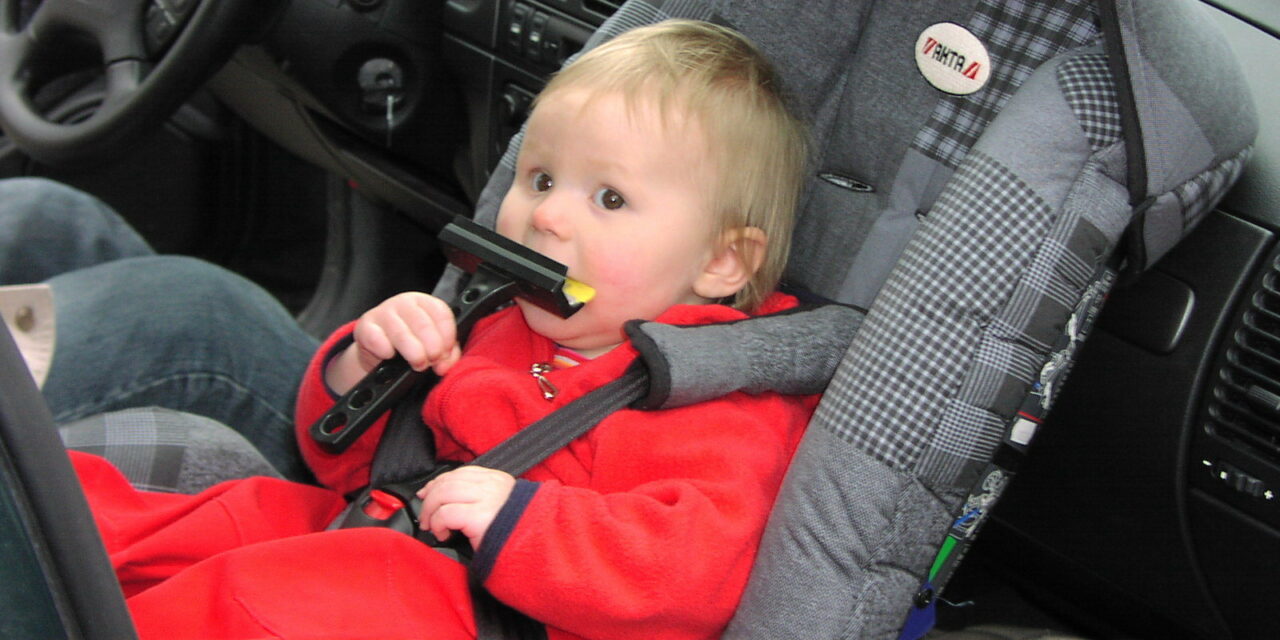
This is the one that matters most. You must deactivate the front passenger airbag before fitting a rear-facing baby seat in the front seat.
If the airbag is active, do not put a rear-facing baby seat there. A deploying front passenger airbag can strike the back of the child seat with serious force.
In practical terms, that means:
- check whether your car has a passenger airbag deactivation switch
- confirm in the handbook exactly how the system works
- only use the front seat with a rear-facing child seat if the airbag is definitely switched off
- if you cannot deactivate the airbag, use a rear seat instead
This is also why the rear seats are usually the simpler and safer default. You remove one of the main front-seat risks before you even set off.
What about a forward-facing child seat in the front?
A forward-facing child seat in the front is not automatically banned, but it is usually a second-choice setup rather than the best one. Child car seat safety guidance says children should travel in the rear if possible.
If you do use a forward-facing child seat in the front:
- move the passenger seat as far back as possible
- make sure the child seat is securely installed
- make sure the harness or seat belt fits the child properly
- check the vehicle handbook for any model-specific warnings
That matters because even when a front airbag is allowed to remain active with a forward-facing seat, the child should still be kept as far from the dashboard as practical.
Is the front seat ever the only realistic option?
Yes. There are real-life situations where the front seat becomes the legal workaround rather than the first choice.
One of the clearest examples is when there is no room for a third child car seat across the back. Under UK rules, children under 3 must still be in a child car seat. If there is no room for that third seat in the back, the child must travel in the front seat using the correct child car seat.
That is one reason families with three young children often end up checking not just boot space and legroom, but rear-seat width, ISOFIX positions and whether three restraints will genuinely fit side by side.
What if there is no child seat available?
This is where the exceptions matter, because they are narrower than many parents assume.
In a taxi or minicab
If the driver does not provide the correct child car seat, children can travel without one only in the rear seat. Children aged 3 or over must wear an adult seat belt. Children under 3 can travel without a seat belt, but still only in the rear.
So if you are in a taxi, the front seat is not the easy loophole many people think it is.
On an unexpected short journey
If the correct child car seat is not available, a child aged 3 or older can use an adult seat belt only if the journey is unexpected, necessary and over a short distance.
That exception does not cover children under 3 in an ordinary car. For them, the main exception is a licensed taxi or minicab, and again that is on a rear seat.
In older vehicles or unusual seating layouts
GOV.UK also says you must only use a child car seat if the seat belt has a diagonal strap, unless the child seat is designed for a lap belt or fitted using ISOFIX anchor points. Child seats must not be fitted to side-facing seats.
That can become relevant in older cars, some vans and certain occasional seats where the belt layout is the real problem, not the child’s age.
Is the front seat actually safe for children?
Usually, the rear is still the better answer.
RoSPA’s guidance is blunt on this point: children should travel in the rear of the car if possible. That does not mean the front seat is always unsafe, but it does mean you should treat it as a setup that needs checking rather than assuming.
The front seat can make sense when:
- you need space for three child seats
- your car’s rear seating layout is genuinely awkward
- you have correctly managed the passenger airbag issue
- the child restraint fits the front position properly
It makes less sense when you are simply using the front for convenience and have a safer rear-seat option available.
A quick checklist before you put a child in the front
Before using the front passenger seat, run through this list:
-
Check the child’s size
Confirm whether they still legally need a child seat or can use an adult belt. -
Check the type of seat
Rear-facing and forward-facing seats create different airbag risks. -
Check the passenger airbag
If the child seat is rear-facing, the front passenger airbag must be deactivated. -
Check the handbook
Some cars have specific warnings about front-seat child restraint use, seat position or airbag settings. -
Move the passenger seat back
If the setup allows it, increase the distance from the dashboard. -
Check belt or ISOFIX compatibility
Make sure the restraint is approved and correctly installed for that seating position. -
Ask whether the rear would solve the problem more simply
In many cases, it will.
Common mistakes that cause trouble
The errors tend to be boring rather than dramatic, but they are exactly what lead to unsafe setups:
- assuming the front seat is fine because the child is only going round the corner
- using a rear-facing baby seat in front without properly deactivating the airbag
- moving a child into an adult belt too early
- assuming a taxi exception applies to the front seat
- believing any child seat will fit any car and any seating position
- forgetting that three-across family setups often need measuring, not guesswork
The practical answer for most UK drivers
If you have the choice, put children in the rear with the correct restraint and fit the seat exactly as the car seat maker and vehicle handbook say.
If you need to use the front passenger seat, it can be legal and safe, but only when the setup is right. The non-negotiable part is the airbag rule for rear-facing seats. Get that wrong and you are into the highest-risk mistake on this whole subject.
So yes, a child can sit in the front seat of a car in the UK. Just do not treat that as permission to improvise. Treat it as a rule-based decision, check the restraint, check the airbag, and use the rear whenever it is the better option.