If your tyre-pressure warning light comes on and you discover you are on run-flat tyres, the good news is that you usually do not need to stop on the hard shoulder and change a wheel there and then. The bad news is that many drivers assume that means the tyre is easily repairable and safe to keep using. That is where expensive mistakes start.
Run-flat tyres are designed to let you keep moving for a limited distance after a loss of pressure, but they are not a free pass to carry on as normal. Whether the tyre can be repaired, whether you should replace one or a pair, and how far you can safely drive all depend on the tyre maker, the damage and what happened after the puncture.
The first thing to know after a puncture
Most mainstream run-flat systems rely on reinforced sidewalls so the tyre can continue supporting the car for a short distance after pressure loss. Continental says its self-supporting run-flat tyres can typically continue for up to 50 miles at up to 50mph after a puncture. Michelin gives the same broad limit for its ZP tyres, and Pirelli says run-flat tyres generally allow around 50 miles at no more than 50mph.
That does not mean you should treat 50 miles at 50mph as a target. It is an emergency allowance, not a cruising instruction. Load, temperature, road surface and the exact tyre all matter. If the car feels unstable, the tyre has obvious sidewall damage, the wheel itself is damaged or more than one tyre has lost pressure, stop and call for help.
Can a run-flat tyre be repaired?
This is the part that catches people out. The honest answer is: sometimes, but very often no.
Pirelli says punctured run-flat tyres should generally be replaced rather than repaired, because secondary internal damage can be hard to spot even if the visible puncture looks minor. Kwik Fit takes an even firmer retail position and says it does not carry out permanent puncture repairs on run-flat tyres.
Michelin takes a more nuanced line. It says its run-flat tyres can be repaired once by a professional under the same inspection and repair procedure as non-ZP tyres, unless the sidewall marking states otherwise. Goodyear also says some of its RunOnFlat tyres can be repaired, but only after a qualified tyre professional carries out a thorough inspection and considers the tyre’s history.
So if one garage says no and another says maybe, that does not automatically mean one of them is wrong. Different tyre brands publish different rules, and many fitters choose the conservative answer because they cannot verify how long the tyre was driven with low or zero pressure.
When replacement is the safer call
In practice, replacement is usually the right answer when any of the following apply:
- the puncture is in or near the sidewall
- the tyre was driven any meaningful distance while fully deflated
- there is visible sidewall creasing, scuffing or heat damage
- the inner structure may have been compromised
- the tyre has already had a previous repair
- the fitter cannot confirm the tyre maker allows a repair
British Standard guidance on tyre repair, referenced by Pirelli, is already strict about where an ordinary puncture can be repaired. Once a run-flat has been driven on with little or no pressure, the risk calculation changes again.
What you should do instead of guessing
If you suspect a puncture on a run-flat tyre, this is the sensible UK playbook:
- Slow down and avoid sudden steering or braking inputs.
- Check your handbook or the tyre manufacturer’s guidance if you can do so safely.
- Drive only far enough to reach a trusted tyre fitter or safe location.
- Tell the fitter it is a run-flat tyre and how far you drove after the warning appeared.
- Ask for a proper internal inspection, not a quick look at the tread from the outside.
Do not rely on a DIY plug kit or tyre sealant unless your vehicle maker specifically says that approach is suitable for your setup. Many run-flat-equipped cars were designed around the idea that you would drive to a workshop rather than attempt a roadside repair.
Do you need to replace one tyre or both on the axle?
Not always both, but do not assume a single-tyre replacement is automatically fine either.
If the matching tyre on the same axle is still relatively fresh and the replacement is exactly the same make, model, size and rating, one tyre may be acceptable. But if the remaining tyre is significantly more worn, replacing the pair can be the better move for balance, grip and predictable handling. That matters even more on heavier cars, powerful rear-wheel-drive models and cars with xDrive, quattro, 4MATIC or similar four-wheel-drive systems that can be sensitive to rolling-radius differences.
If you are unsure, ask the fitter for the tread-depth difference and compare that with the vehicle maker’s guidance rather than accepting a vague yes or no.
How to tell if your car has run-flat tyres
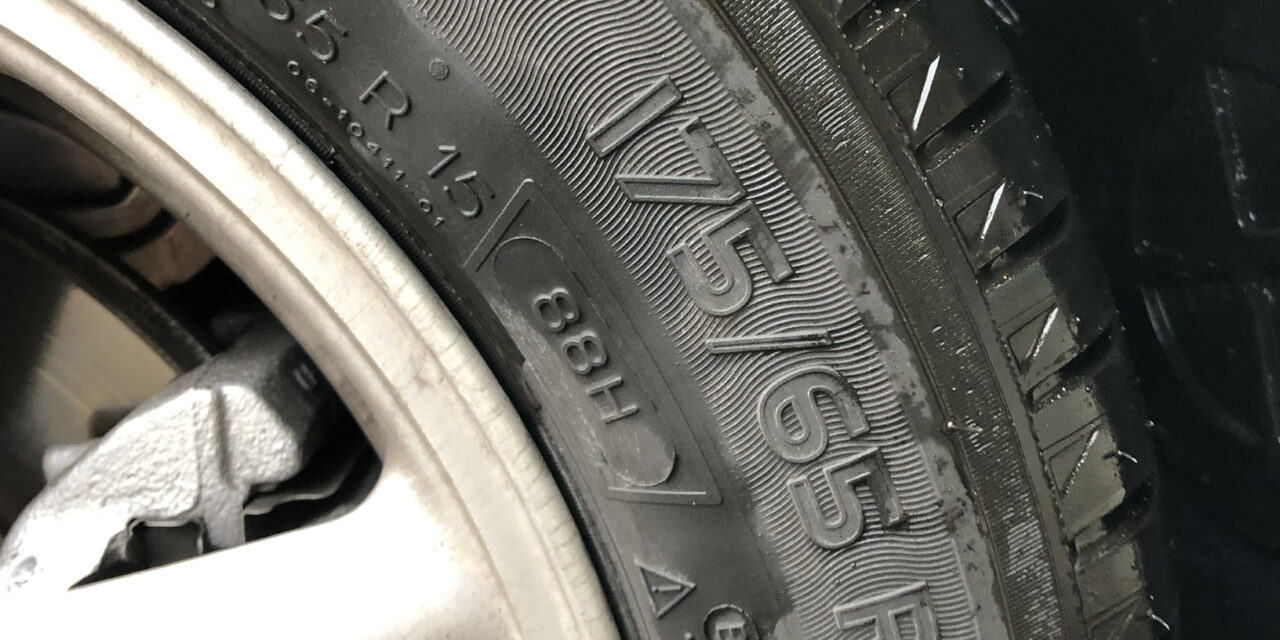
A lot of drivers do not realise they are on run-flats until the first puncture. Check the sidewall and your handbook. Michelin uses ZP on some tyres, while Pirelli says run-flat tyres are also identified by an ISO RSC symbol on the sidewall. Cars factory-fitted with run-flats also usually have a tyre-pressure monitoring system, because you may not get the dramatic flat-tyre feel you would expect from a conventional tyre.
That is also why the featured image matters here: sidewall markings are often the quickest way to work out what you are dealing with before you order the wrong replacement.
Are run-flat tyres worth sticking with?
They still make sense for plenty of UK drivers. If your car was tuned around them and has no spare wheel, staying with the original type keeps the car as intended and avoids roadside wheel changes in bad places or bad weather. They are particularly useful for motorway-heavy driving and for cars where boot space is tight.
The trade-off is usually higher replacement cost, a firmer ride on some cars and less flexibility when puncture damage happens. That is why it pays to know your tyre type before you need one in a hurry on a Sunday afternoon.
The short version
A run-flat tyre can sometimes be repairable, but you should never assume it will be. Follow the tyre maker’s rules, keep the post-puncture journey as short as possible and expect many UK fitters to recommend replacement rather than repair. If there is any doubt about internal damage, sidewall damage or how far the tyre was driven while deflated, replacement is the safer answer.
That may not be the answer drivers want, but it is the one most likely to keep an awkward puncture from turning into a second, much more expensive problem.