
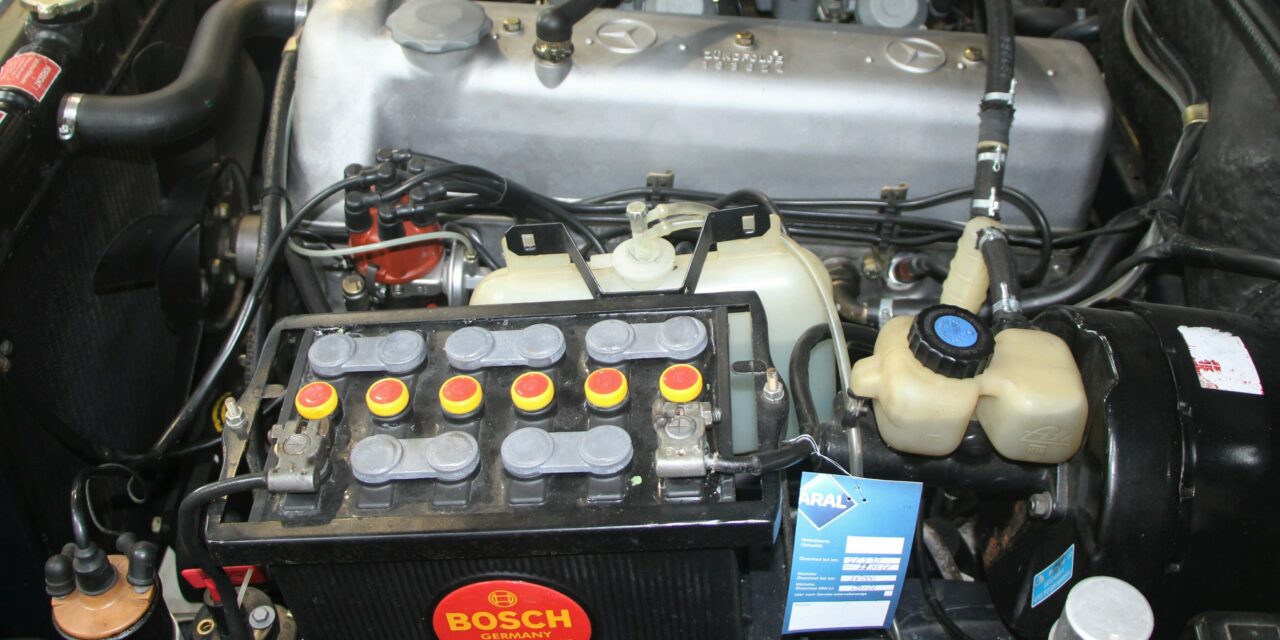
If you are worrying about a battery securement MOT failure, the key point is simple: an insecure car battery can fail an MOT. In the current DVSA MOT inspection manual, a battery that is insecure but not likely to fall from its carrier is listed as a minor defect, while a battery that is insecure and likely to fall from its carrier or cause a short circuit is a major defect. A leaking battery is also a major defect.
That matters because battery problems often look minor from above. A clamp can be missing, a tray can be cracked, or a replacement battery can be the wrong size even though the car still starts normally. As of 15 April 2026, the public GOV.UK MOT manual section covering batteries shows a last updated date of 10 December 2025, so this is the current UK test position for cars and light vans in England, Scotland and Wales.
Quick answer
- Yes, battery securement can affect your MOT result.
- If the battery is insecure but not likely to fall from its carrier, the DVSA manual lists it as a minor defect.
- If it is likely to fall from its carrier or likely to cause a short circuit, it becomes a major defect and the car fails.
- A battery that is leaking is also a major defect.
- If your battery can move noticeably in its tray, it is worth fixing before test day rather than hoping it will be waved through.
What MOT testers are looking for
The MOT is not judging battery age or battery performance on its own. The test is looking at whether the battery is securely mounted and safe in the car.
In plain English, the tester is trying to decide whether the battery is:
- sitting properly in its tray or carrier
- held down by the correct clamp, bracket or strap
- stable enough not to shift under normal driving
- positioned so it is not likely to short against surrounding metalwork
- free from obvious leaking electrolyte
The DVSA manual uses short defect descriptions rather than workshop examples, so some of the practical interpretation comes down to common sense. If a battery rocks, lifts, tilts or slides when pushed by hand, it is hard to argue that it is properly secure.
Minor defect vs major defect
This is the part most drivers want clarified.
When it is likely to be a minor defect
The current DVSA wording lists a minor defect where the battery is insecure but not likely to fall from its carrier.
That suggests a battery may still stay in place well enough to avoid an immediate fail, but it has not met the standard the tester expects. In practice, that can mean there is some movement or the hold-down arrangement is not as firm as it should be, even though the battery is not on the verge of coming loose.
A minor defect does not fail the test, but it is still a warning that the issue needs putting right.
When it becomes a major defect
The same DVSA section moves the defect to major if the battery is insecure and likely to fall from its carrier or likely to cause a short circuit. The manual also treats a leaking battery as a major defect.
That means the fail point is not just about movement. It is about risk. If the battery is loose enough to shift significantly, damage nearby components, pull on the terminals, or contact metal parts in a way that could short out, the tester has solid grounds to fail it.
Is there an advisory for battery securement?
For battery securement itself, the current DVSA defect list is framed around minor and major outcomes rather than a specific advisory line.
So if you are searching for the battery equivalent of a soft warning, the official wording does not really work that way. Either the tester considers it insecure but not likely to fall, which is a minor defect, or the risk is high enough for a major defect.
That said, testers can still add useful notes elsewhere when they see early deterioration around the battery area. The main securement decision, though, sits in the defect categories above.
Common reasons a battery securement issue shows up at MOT time
Most battery MOT problems come from one of a few very ordinary causes:
Missing or loose hold-down clamp
This is the classic one. A battery may have been replaced quickly and the clamp not tightened properly, or the clamp bolt may have worked loose over time.
Wrong-size replacement battery
If a previous owner or garage fitted a battery with the wrong dimensions, it may sit awkwardly in the tray and never clamp down correctly.
Broken tray or mounting point
A cracked battery tray, rusty mounting point or damaged bracket can leave the battery supported, but not truly secure.
Too much movement at the terminals
Even if the battery seems mostly in place, excessive movement can strain the leads or raise the risk of contact where it should not happen. That is where the short-circuit concern starts to matter.
Battery leakage or heavy corrosion
Visible leakage is a clear problem in its own right. Heavy crusting around the terminals can also be a sign that the battery area needs attention before the test.
Quick checks to do before your MOT
If you want to avoid an easy battery-related defect, do these checks a day or two before the test.
1. Try a gentle push test
With the engine off, press the battery carefully from the side. It should feel firmly planted. A little surface flex from trim is one thing. Actual rocking or sliding is another.
2. Check the hold-down hardware
Look for the clamp, strap or top bracket that is supposed to keep the battery in place. If something is missing, bent or obviously loose, sort it before the MOT.
3. Look at the tray underneath
If the tray is cracked, badly corroded or pulling away from its mounting points, tightening the clamp alone may not solve the problem.
4. Check for leaks and severe corrosion
Any sign of wetness, white deposits or green-blue crust around the battery area deserves attention. A leaking battery is not something to leave until test day.
5. Make sure terminal protection is sensible
This is partly a practical safety point. If the positive terminal is exposed and close to metalwork, the risk of shorting is harder to ignore.
What to do if your car fails for battery securement
The good news is that this is often one of the simpler MOT-related repairs.
In many cases, the fix is one of these:
- refit or replace the missing clamp
- tighten the correct hold-down bolt
- fit the correct size battery
- replace a damaged tray or bracket
- replace a leaking battery
- clean up corrosion and check the terminal area properly
If your car has failed on this point, it is worth asking the garage to show you exactly where the movement or risk is coming from. That usually makes the repair decision obvious.
Can you keep driving after a fail?
Use judgment here. A battery that has only attracted a minor defect has still passed the MOT, but it should not be ignored.
If the issue is serious enough for a major defect, the bigger question is safety rather than paperwork. A battery that can move heavily, short out or leak acid is not something to shrug off and drive around with for weeks. If the battery is clearly unstable, get it fixed before using the car more than necessary.
Why this matters beyond the MOT
Battery securement is easy to dismiss because it does not sound dramatic. But a heavy 12V starter battery moving around in the engine bay can damage cables, strike nearby components and create electrical trouble that costs far more than a clamp or tray repair.
That is why it makes sense to catch it early, just like other common pre-test faults such as a missing rear reflector, an electrical issue affecting the hazard warning system, or wear-related items such as the tyre checks that can catch drivers out at MOT time. If you are working through several small faults at once, our guide to a common brake-related MOT issue is also worth a look.
Final verdict
A battery securement MOT failure is very real, but it is also very avoidable.
Under the current DVSA MOT inspection manual, an insecure battery can be recorded as a minor defect if it is not likely to fall from its carrier. If it is likely to fall, likely to cause a short circuit, or leaking, it becomes a major defect and the car fails.
The smartest move is simple: if the battery does not feel firmly mounted, fix it before the test. It is cheaper, safer and far less annoying than turning up for an MOT only to fail on a part that should never have been loose in the first place.





Trackbacks/Pingbacks