
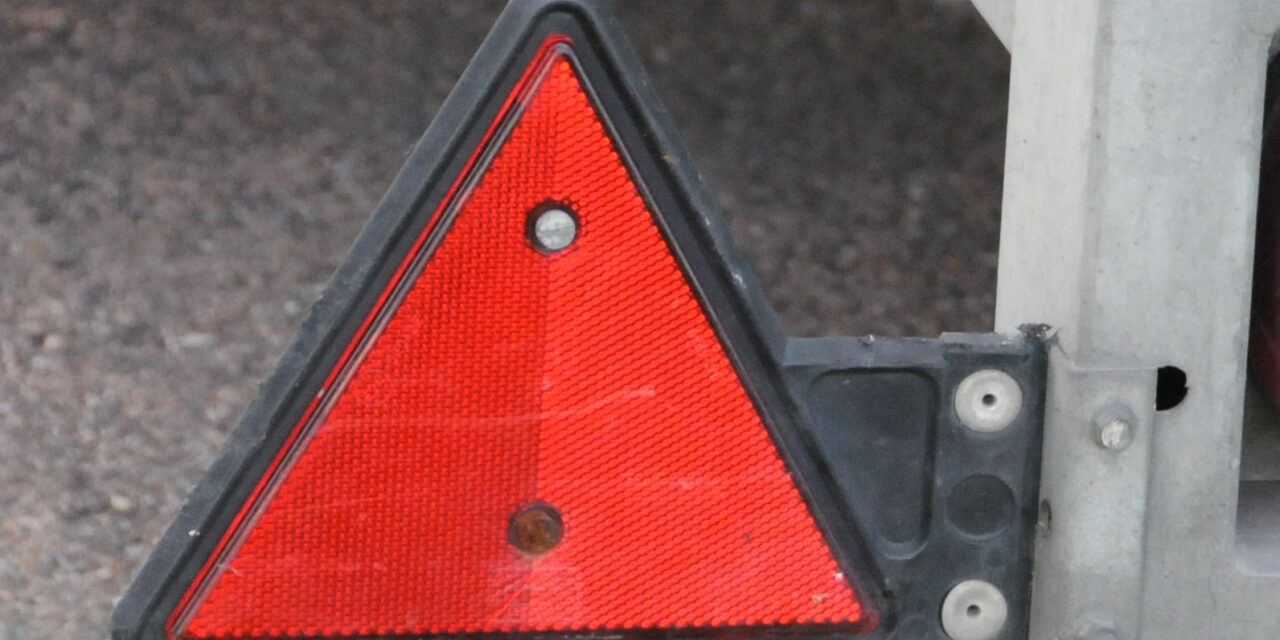
If your car is missing a rear reflector, there is a strong chance it will fail its MOT. For most cars first used on or after 1 April 1986, two rear reflectors are mandatory, and the DVSA MOT inspection manual treats a missing rear reflector as a major defect. That means the car fails the test until the problem is fixed.
The good news is that this is usually one of the simpler MOT issues to sort before test day. If you spot a cracked lens, a reflector that has fallen out, or a bumper trim panel that no longer reflects correctly, it is worth dealing with it before booking the test.
Quick answer
- Yes, a missing rear reflector can cause an MOT fail.
- On most modern cars, the defect is classed as major.
- A reflector can also fail if it is the wrong colour, not secure, badly deteriorated, or shows white to the rear.
- The usual fix is straightforward: replace the damaged reflector or the trim piece that contains it, then check the matching reflector on the other side as well.
What the MOT rules say about rear reflectors
The official UK rule is in section 4.8 of the MOT inspection manual for cars and passenger vehicles.
According to that guidance:
- cars first used on or after 1 April 1986 must have 2 rear reflectors
- the reflectors must be red
- they must be securely attached
- they must not be obscured
- they must not be badly deteriorated
- they must not reflect white light to the rear
The same manual lists "a mandatory rear reflector missing" as a major defect. In plain English, if one of the required rear reflectors is missing, the vehicle does not meet the MOT standard.
Why a rear reflector matters so much
Rear reflectors are a passive safety feature. They do not light up on their own, but they bounce light back toward drivers behind you when your car is parked, unlit, or seen at an angle in poor conditions.
That matters on dark roads, in rain, and in places where another driver might pick up the reflective surface before they clearly see the rest of the car. A missing reflector reduces rear visibility, which is why the MOT manual treats it more seriously than a purely cosmetic bumper defect.
When a rear reflector becomes an MOT fail
A rear reflector problem is likely to fail the MOT if any of these apply:
1. The reflector is missing completely
This is the clearest fail point. If the reflector has fallen out of the bumper or a lens unit has been removed and not replaced, the tester can record a major defect.
2. The reflector is damaged so badly that it no longer works properly
A light scratch or small cosmetic mark is not the same as a fail. The problem is when the reflector is cracked, heavily dulled, broken, or missing large sections, so it no longer performs as intended.
3. The reflector is insecure
If the reflector is loose, hanging out, or only held in place with temporary tape, it can be treated as insecure. That is risky even if it still appears red from a distance.
4. It reflects white to the rear
This catches some DIY repairs and poor-quality replacement parts. If the red surface is missing and white backing or white reflective material is visible from behind, that can trigger a fail.
5. It is obscured
Mud, road film, bumper damage, bike-rack fittings, stickers, or badly fitted accessories can all block the reflector enough to create a problem.
Does every car need two rear reflectors?
For most cars you see on UK roads, yes. The MOT manual says cars first used on or after 1 April 1986 need 2 rear reflectors. That covers the vast majority of modern passenger cars and small vans.
Older vehicles can sit under different lighting rules, so if you have a classic car or unusual imported vehicle, the exact requirement may be different. For a typical everyday hatchback, SUV, saloon or estate, the safe assumption is simple: if one rear reflector is missing, fix it before the MOT.
Common places rear reflectors go missing
On many cars, the rear reflector is built into:
- the lower bumper insert
- the corner bumper trim
- the rear lamp cluster on some models
- a separate reflector housing clipped into the bumper
The usual causes are:
- minor parking knocks
- cracked bumper trims after a low-speed impact
- poor previous repairs
- a reflector popping out after the retaining clips break
- water ingress and deterioration on older lamp units
If one side has failed, inspect the other side too. It is common for both reflectors to be in similar condition.
How to check your car before the MOT
A two-minute check can save a retest fee and some hassle.
Walk around the back of the car
Stand a few metres behind the vehicle in daylight and make sure both reflectors are present, red, and sitting properly in the bumper or lamp unit.
Compare left and right sides
If one side looks faded, cracked or loose compared with the other, that is your clue that it needs attention.
Clean the area
Wipe off dirt, polish residue and road grime. A reflector that looks dull when dirty may be fine once cleaned, but a badly damaged one will still be obvious.
Check for white backing showing through
If the red outer layer has broken away and white material is visible, do not leave it to chance. Replace it.
Make sure nothing blocks it
Check number plate surrounds, cycle rack hardware, bumper protectors and aftermarket trims. Even if the reflector is present, it still needs to be visible.
How much does it usually cost to fix?
In many cases, this is a low-cost repair. A simple bumper reflector can cost anywhere from around £10 to £40 for the part, although some model-specific trim pieces and lamp assemblies cost more. Labour can be minimal if the part clips in, but it may rise if bumper trims or lamp units have to come off.
If the reflector is moulded into a larger lamp or bumper section, the bill can increase quickly. That is why it is worth checking the exact part layout on your car before ordering anything.
Can you fix it yourself before the test?
Sometimes, yes.
If the reflector is a simple clipped or screwed-in bumper insert, a careful DIY replacement may be realistic. But if the bumper is cracked, the retaining points are broken, or the reflector is part of a larger light assembly, a proper repair is usually the better choice.
As a rule, avoid quick cosmetic bodges. Red tape, painted-over plastic and makeshift stick-on patches are the sort of fixes that can still leave you with a fail if the reflector is insecure, the wrong colour, or obviously not doing the job properly.
What to do if the car has already failed
If your MOT failure sheet lists a missing rear reflector, the route is simple:
- confirm which reflector the tester has flagged
- replace the damaged or missing part with a correct red reflector
- check the matching side and the nearby lamp cluster for damage
- clean the area and make sure the reflector is secure
- book the retest promptly
If there is wider bumper damage, get that assessed too. Sometimes the missing reflector is only the visible part of a larger rear-end repair issue.
Useful next reads
If you are working through other likely MOT niggles, these Motoring Mojo guides may help:
- Skoda Octavia rear light cluster moisture: can it cause an MOT failure?
- Audi A3 wiper motor failure MOT: common failure points
- Mazda CX-5 sticky brake caliper MOT: how to make sure it passes
- Volvo XC40 electronic parking brake MOT fail: what it means and what to check
FAQ
Is a cracked rear reflector always an MOT fail?
Not always. The key issue is whether it is still secure, still red, not badly deteriorated, and still functioning as a reflector. A badly cracked or missing section is much more likely to fail than a light surface mark.
Can I pass an MOT with one rear reflector missing?
For most modern cars, no. If a mandatory rear reflector is missing, the MOT inspection manual treats that as a major defect.
Will red tape get a car through an MOT?
It is not something to rely on. A tester is looking for the correct reflector in proper condition, securely attached, and not showing white to the rear. Temporary cosmetic fixes are risky.
Do rear bumper reflectors count for the MOT?
Yes, if they are the vehicle’s mandatory rear reflectors. On many cars, the reflector is built into the bumper rather than the main lamp cluster, but it still forms part of the MOT check.
Bottom line
If your rear reflector is missing, assume it needs sorting before the MOT. For most cars first used on or after 1 April 1986, two red rear reflectors are mandatory, and a missing one is a major defect under the UK MOT inspection manual.
This is usually an easier fix than many other MOT failures, so it makes sense to deal with it before test day rather than gamble on a fail and a retest.





Trackbacks/Pingbacks