For most UK drivers, the short answer is no. If your car is designed for regular 95 RON petrol, paying extra for premium petrol or super unleaded usually will not transform performance, slash fuel bills or suddenly make the engine healthier.
There are, however, a few clear cases where premium petrol does make sense. If your handbook says the engine needs 97 or 98 RON, if your car is not compatible with E10, or if the manufacturer specifically recommends a higher octane fuel, the pricier pump can be the right choice.
That matters now because regular unleaded in Great Britain is E10, while super unleaded is commonly an E5 grade. Many drivers know premium costs more, but far fewer know what they are actually paying for.
The quick version
Use premium petrol if one of these applies:
- your car’s handbook says it requires or recommends 97 or 98 RON petrol
- your petrol car is not compatible with E10 and needs an E5 grade instead
- you drive a performance car that is tuned to take advantage of higher octane fuel
Stick with regular petrol if:
- your handbook says 95 RON is fine
- you are hoping for a dramatic improvement in mpg from a normal family hatchback or crossover
- you are paying extra purely because it sounds better
What premium petrol actually is in the UK
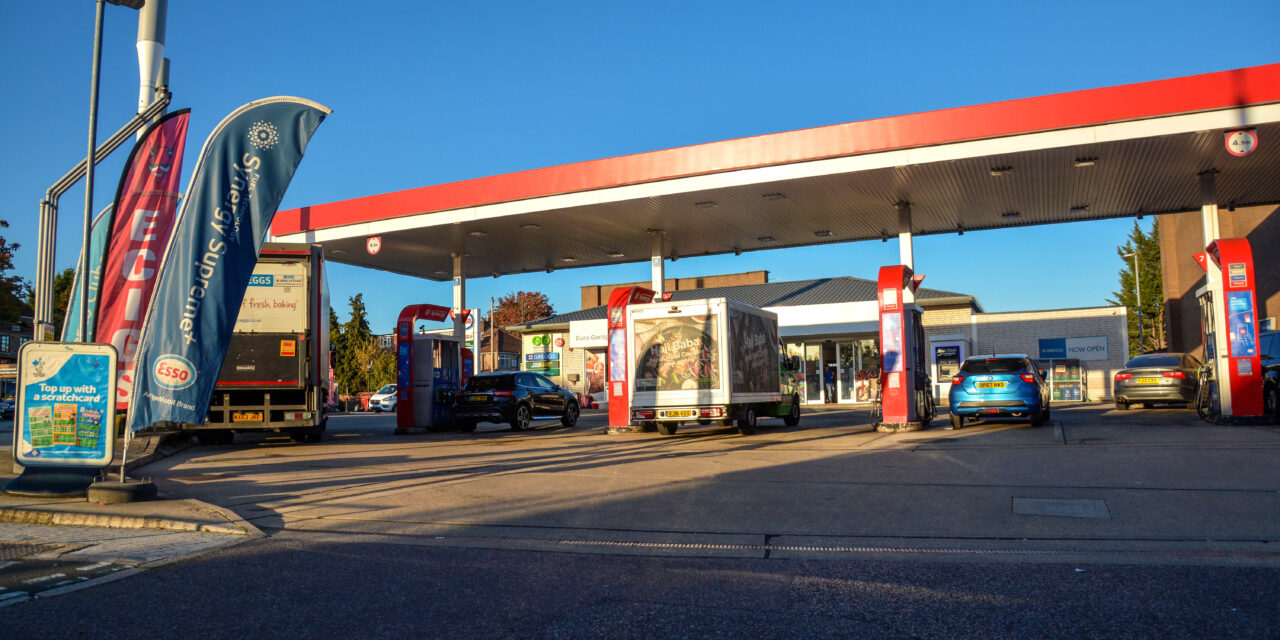
At a UK forecourt, regular unleaded is usually 95 RON petrol. Since the switch to E10, that standard grade can contain up to 10% ethanol.
Premium petrol, often sold as super unleaded, is usually a higher octane fuel at 97, 98 or 99 RON. It is also commonly an E5 grade, which means it contains up to 5% ethanol rather than up to 10%.
That does not automatically make it the better buy for every car. The key difference is octane rating, not a magic jump in quality.
Octane is a measure of a fuel’s resistance to knocking or pre-ignition. Engines designed to run higher compression, more boost or more aggressive ignition timing can benefit from higher octane fuel. Engines designed for 95 RON often cannot use that extra headroom in any meaningful way.
When paying extra is worth it
1. Your manufacturer asks for it
This is the main reason to buy premium petrol.
If the handbook says the engine requires or recommends 97 or 98 RON, that is the answer. A lot of turbocharged hot hatches, older performance cars and some premium-brand petrol models are calibrated with higher octane in mind.
The RAC’s fuel guide notes that super unleaded at 97 or 98 RON is required for some high-performance cars and preferable for others, while using a lower-octane fuel than recommended can risk problems. In plain English, if the car was engineered around higher octane, it is false economy to ignore that.
2. Your car cannot use E10
This is the second big reason.
GOV.UK says most petrol vehicles will be able to use E10, but not all of them. Older petrol cars are the main watch-out. The government’s E10 checker exists for a reason, and if your car is one of the exceptions, super unleaded can be the practical answer because it commonly remains an E5 grade.
That does not mean premium is being used for more power. It may simply be the compatible fuel your car needs.
3. Your car genuinely responds to higher octane fuel
Some engines can adjust ignition timing based on the fuel they detect. In those cars, a higher octane petrol may allow the engine to run closer to its intended calibration, especially under load.
That can sometimes mean slightly smoother performance, slightly better throttle response or a small efficiency gain. The important word is slightly. For a normal commuting car designed around 95 RON, any change is often too small to justify the cost difference.
When premium petrol is usually a waste of money
If you drive an ordinary petrol hatchback, small SUV or family saloon and the handbook says 95 RON is suitable, premium fuel is usually an optional extra rather than a necessity.
That does not mean premium petrol is bad value for everyone. It means the case has to be proven by your car, not by the pump branding.
A lot of drivers assume three things that are not always true:
- that premium petrol always gives noticeably better mpg
- that premium petrol always gives more power
- that a more expensive pump must always be better for the engine
In reality, most of the real-world benefit depends on whether the engine is tuned to use the extra octane. If it is not, your wallet feels the difference long before the car does.
What about the lower ethanol content?
This is where the UK fuel change matters.
Regular unleaded is now E10, while super unleaded is commonly E5. That makes premium petrol more relevant for drivers of older petrol cars, cars stored for long periods, or vehicles where the manufacturer is cautious about higher ethanol blends.
RAC guidance on E10 notes that the old standard grade was E5 and that super unleaded has effectively become the fallback option for older petrol cars that should not use E10.
If your only reason for buying premium is to avoid E10, that can be sensible. Just make sure your car actually needs that lower-ethanol option before you pay extra for every fill.
Can you mix premium and regular petrol?
In most cases, yes. If both are petrol and both are suitable for your car, mixing them in the tank is not usually a problem.
What you end up with is simply a blend somewhere between the two octane ratings and ethanol levels. So if you top up regular petrol with super unleaded, you do not get the full benefit of a tank made entirely of higher-octane fuel, but you are not doing damage just because the two grades have mixed.
The big exception is obvious but worth stating anyway: never confuse petrol with diesel. If you put the wrong fuel in the car, do not start the engine.
Do premium brands contain different additives?
Major fuel brands often market their premium grades as having stronger cleaning or protective additive packages than their standard petrol. For example, Esso says its Synergy Supreme+ 99 petrol has a higher octane rating than its regular 95 product and contains up to a maximum of 5% ethanol, while also promoting engine-cleaning benefits.
That does not mean every car will show a dramatic result from one tank. It does mean premium fuel is not just regular petrol with a higher price sticker. The blend and additive package can differ too.
Still, the sensible way to look at it is this: additives may be a bonus, but the real buying decision should start with your car’s fuel requirement.
How to decide in two minutes
If you want a simple rule, use this checklist:
Buy premium petrol when:
- the handbook requires or recommends 97 or 98 RON
- your car is not E10 compatible and needs E5
- you have a performance petrol engine designed to run best on higher octane fuel
Save your money when:
- the handbook says 95 RON is fine
- you have never noticed any measurable improvement over several tanks
- you are only buying premium because it feels safer, cleaner or more premium in name alone
The bottom line
Premium petrol is not a scam, but it is not a universal upgrade either.
For some UK drivers it is the correct fuel, either because the engine needs higher octane or because the car should stay on E5. For many others, regular 95 RON E10 petrol is exactly what the car was built to use, and paying extra for super unleaded is unlikely to deliver enough benefit to justify the cost.
If you are unsure, check the handbook first and use the GOV.UK E10 compatibility checker for peace of mind. That answer is worth far more than guesswork at the pump.