
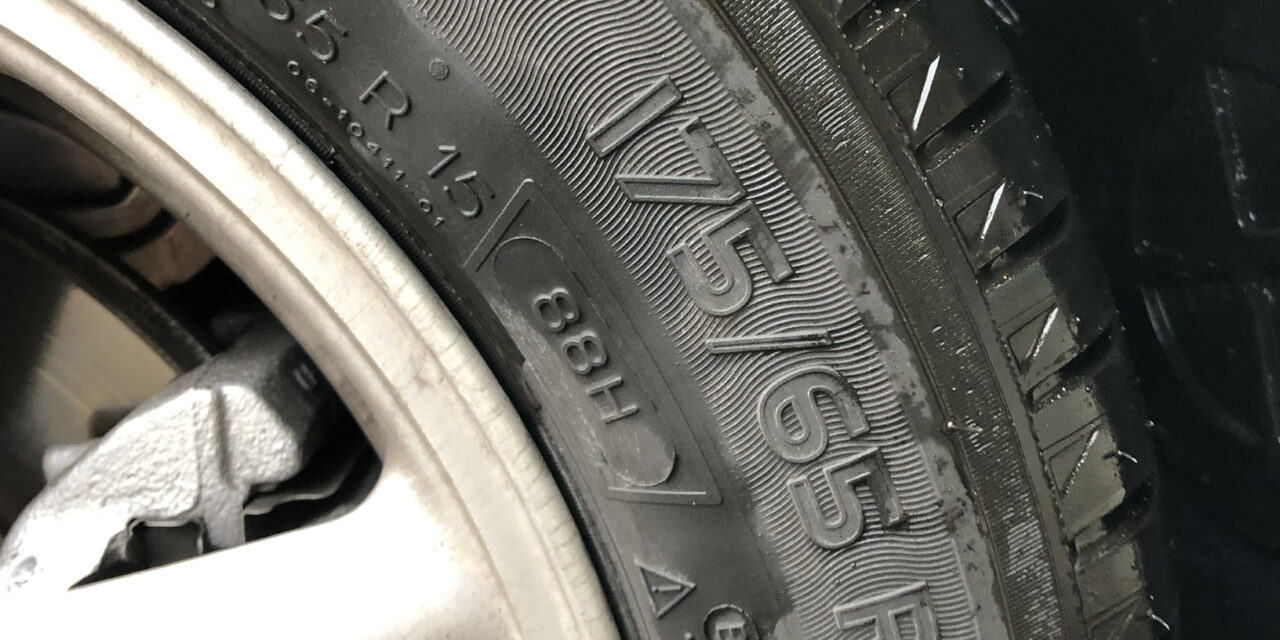
Most drivers only look at tyres when one is worn out, punctured or suddenly expensive. That is exactly when the sidewall code matters. If you order the wrong size, the wrong load rating or a lower speed rating than your car requires, you can turn a simple replacement into a return, a bad drive or an MOT problem.
The good news is that the basics are easy once you know what you are looking at. A typical sidewall line might read 205/55 R16 91V. Here is what each part means, and what UK drivers should check before clicking buy.
What the tyre size code actually means
Using 205/55 R16 91V as the example:
- 205 is the tyre width in millimetres.
- 55 is the aspect ratio, meaning the sidewall height is 55 percent of the tyre width.
- R means radial construction, which is what modern passenger cars use.
- 16 is the wheel diameter in inches.
- 91 is the load index.
- V is the speed rating.
If you are replacing tyres like for like, the safest route is to match the full code shown on the car now, then double-check it against the driver’s door shut label, fuel flap sticker or handbook.
The part buyers get wrong most often: load index and speed rating
Tyre shoppers often focus on width and wheel size, because those are the easy bits to spot. The trap is the last part of the code. The load index and speed rating are not optional extras. They are part of the tyre specification.
The load index tells you how much weight each tyre is approved to carry. The speed rating is shown as a letter and indicates the top speed the tyre is approved for under test conditions. As the AA points out, that rating is a safety standard, not permission to drive at that speed on a UK road.
Under the GOV.UK MOT inspection manual, a tyre with a load rating or speed rating below the vehicle’s minimum requirement is a major defect. In other words, choosing a cheaper tyre with a lower letter or lower load number can be more than a bad buying decision. It can be an MOT fail.
Do you need the exact same tyre brand again?
Not always. There is no UK law saying every replacement has to be the same brand as the tyre you took off. If your car is currently on Michelin, Goodyear or Hankook, you do not have to stay with that make forever.
What matters first is that the replacement tyre matches the correct size and meets the car’s required load and speed specification. After that, the quality of the tyre matters more than badge loyalty. A decent mid-range tyre that fits the right spec is usually a better choice than a premium badge in the wrong spec.
That said, tyre makers such as Michelin and Continental both advise keeping matching tyres across the same axle wherever possible. That means the two fronts should match each other, and the two rears should match each other. It helps keep handling and braking more predictable, especially in wet weather.
What UK rules matter if you are mixing tyres?
This is where many quick online guides get muddled. Mixing tyres is not automatically illegal, but there are some hard limits.
According to the MOT inspection manual on GOV.UK:
- tyres on the same axle must not be different sizes
- tyres on the same axle must not be of different structure, such as radial-ply and cross-ply
- a tyre below the vehicle’s minimum load rating or speed rating is a major defect
- a tyre fitted against its sidewall direction-of-use markings is also a defect
The same guidance notes that run-flat and conventional tyres can be mixed on the same axle, but that it is not recommended. In real-world ownership, if your car was designed around run-flats or staggered sizes front to rear, it is worth checking the handbook before making a cheap short-term decision.
Front and rear can be different, but only within reason
Many cars naturally wear the front and rear tyres at different rates, so it is normal for tread depth to differ. Michelin also notes that different brands or tread patterns front to rear are not banned by law.
That does not mean every combination is wise. If you fit two new tyres, many tyre manufacturers recommend putting the deeper-tread pair on the rear axle because it helps the car stay more stable in wet conditions. That advice applies even on front-wheel-drive cars.
Some performance cars and a few mainstream models leave the factory with different tyre sizes front and rear. If yours is one of them, do not assume an online tyre filter has understood that. Check the car itself.
What about all-season, winter and summer tyres?
You may see markings such as M+S or the three-peak mountain snowflake symbol on the sidewall. Those indicate different types of cold-weather capability.
Legally, you can see mixed seasonal setups on the road, but tyre manufacturers do not generally recommend mixing summer and winter-style tyres across axles on an everyday road car. The car can respond differently at each end, which is exactly what you do not want on a wet roundabout or an emergency lane change.
If you are switching tyre type, do it as a proper axle pair at minimum, and ideally as a full set.
Four common mistakes to avoid when ordering replacement tyres
1. Matching only the width and wheel size
A tyre that is 205 wide and fits a 16-inch wheel can still be wrong if the aspect ratio, load index or speed rating is different.
2. Going cheaper by dropping the speed rating
This is one of the most expensive false economies around. If the car requires a higher rating, you have not found a bargain. You have bought the wrong tyre.
3. Replacing a single tyre without checking the axle pair
If one tyre is damaged, look at the tyre on the other side of the same axle before ordering. If tread depth, wear pattern or brand is miles apart, the sensible answer is often a pair.
4. Ignoring what the car manufacturer originally specified
Door stickers, handbooks and sometimes tyre-pressure labels exist for a reason. They are the fastest way to avoid guesswork, especially on heavier cars, SUVs and EVs.
A quick sidewall check before you buy
Before ordering tyres online or saying yes at the fitting bay, check these six things:
- Full tyre size, not just width and rim diameter
- Load index
- Speed rating letter
- Whether the car uses run-flats
- Whether front and rear sizes differ
- Whether you are replacing one tyre, one axle pair or all four
If any of those points do not line up, stop and check the handbook or ask the fitter to confirm the exact spec. Five minutes there is much cheaper than buying the wrong tyre twice.
The bottom line
The sidewall is not there to confuse you. It is the spec sheet for the only part of your car that actually touches the road.
For most UK drivers, the safe buying rule is simple: match the size properly, do not go below the required load index or speed rating, and keep the tyres on each axle as closely matched as possible. Do that, and you avoid most of the expensive tyre-buying mistakes people make in a hurry.





Trackbacks/Pingbacks