Part-worn tyres can be legal in the UK, but that does not automatically make them a good buy. For plenty of drivers, they sit in the awkward gap between a genuine money-saving option and a safety shortcut that can cost more in the long run.
If you are tempted by a cheap used tyre after an MOT advisory, a puncture or a surprise bill, the key question is not just whether it is legal. It is whether it still gives you enough tread life, wet-weather grip and peace of mind to be worth fitting at all.
What counts as a part-worn tyre?
A part-worn tyre is simply a tyre that has already been fitted to another vehicle before being offered for sale again. That could mean it came from a breaker, a salvage vehicle, an import batch or a wheel-and-tyre set removed during an upgrade.
Some are taken off cars with plenty of life left in them. Others are much closer to the end than the price tag first suggests. That difference is exactly why buyers need to look far harder at a part-worn tyre than they would at a brand new one.
The UK rules are stricter than many drivers realise
The official guidance used by Trading Standards makes clear that a business cannot legally sell a part-worn tyre unless it meets specific marking and condition rules under the Motor Vehicle Tyres (Safety) Regulations 1994.
That means a road-legal part-worn tyre should:
- be permanently marked PART-WORN in upper-case letters
- carry the correct approval and load or speed markings on the sidewall
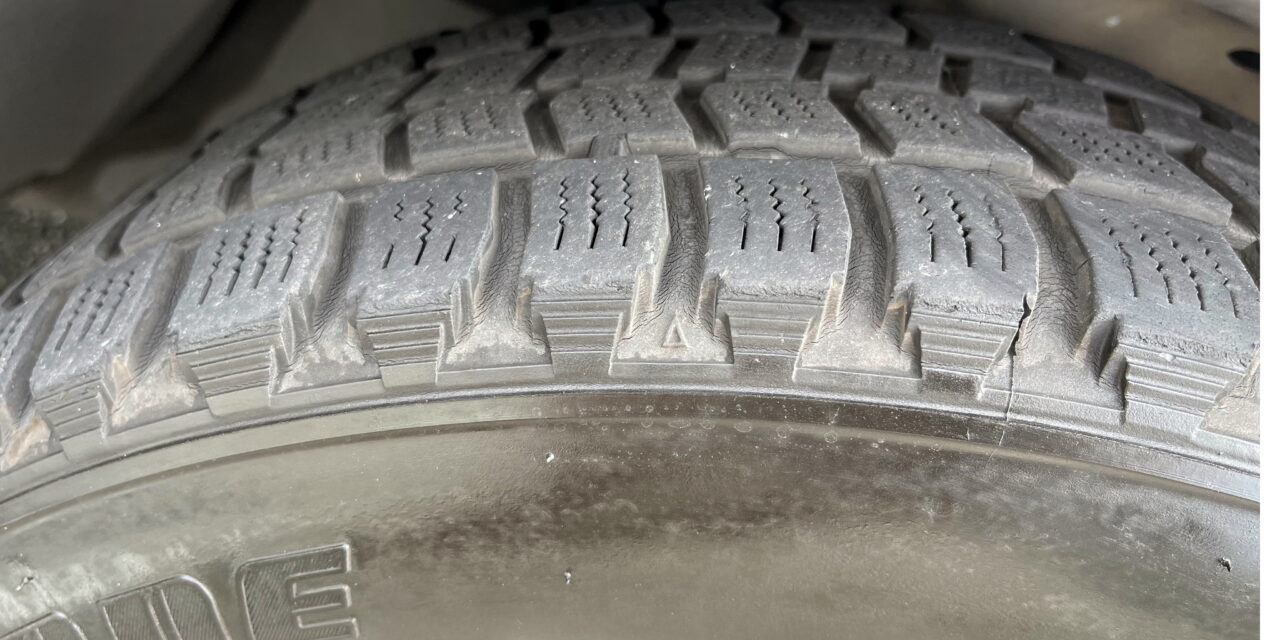
- have at least 2mm tread across the full breadth of the tread and around the whole outer circumference
- be free from serious cuts, bulges, tears, exposed cord and unrepaired penetration damage
That 2mm point matters. The legal minimum tread depth once a tyre is in service on most cars is 1.6mm, so a tyre sold at 2mm may technically be legal to sell while offering very little usable life before it needs replacing again.
There is also a broader roadworthiness issue. GOV.UK says drivers are responsible for making sure a vehicle is safe to drive even if it has a current MOT, and driving a vehicle in a dangerous condition can bring a fine of up to £2,500, three penalty points and even a driving ban.
Why this part of the market deserves caution
The strongest argument against part-worn tyres is not theory. It is compliance.
In June 2025, Lancashire County Council said a joint inspection by Trading Standards, TyreSafe and Lancashire Constabulary found that none of the 30 part-worn tyres examined across three garages met the legal requirements. That does not prove every seller is cutting corners, but it is a sharp reminder that this is a market where the burden of checking often falls on the buyer.
A used tyre can look decent at a glance and still have problems that matter. Sidewall damage, poor repairs, ageing rubber, irregular wear and old heat cycles are not always obvious from the outside. A clean-looking tread face is not the whole story.
When a part-worn tyre can make sense
There are still situations where a part-worn tyre is not automatically a bad idea.
It can be a reasonable stop-gap if:
- you need a temporary replacement to keep an older car going for a short period
- you are matching an unusually expensive premium tyre and do not want one budget tyre mixed into the axle
- you have verified the tyre properly and its age, condition and tread depth all stack up
- the price is low enough to reflect the shorter remaining life
The problem is that too many buyers focus only on the purchase price.
A cheap used tyre is not a bargain if it lasts a fraction as long as a new economy tyre, or if you end up paying twice for fitting because the first one was close to the limit anyway.
The checks worth making before you hand over any money
If you are considering a part-worn tyre, treat it like a proper inspection, not an impulse buy.
1. Check the tread depth, not just the legal minimum
If the tyre is sitting only a little above 2mm, the value is weak from the start. You are paying fitting and balancing costs for a tyre that may need replacing again sooner than you expect.
A better question than "Is it legal?" is "How much life am I actually buying?"
2. Look for the PART-WORN marking
If it is being sold by a business, the tyre should be clearly marked PART-WORN. If that marking is missing, walk away.
3. Inspect both sidewalls carefully
Cuts, bulges, tears and cracking matter as much as tread. A tyre can have plenty of pattern left in the middle and still be a bad buy because the sidewall has taken a knock.
4. Ask about puncture repairs
A repaired tyre is not automatically unsafe, but repairs should meet British Standard guidance. If the seller cannot explain what was repaired, where it was repaired or whether the repair was professionally carried out, that is a bad sign.
5. Check the tyre age
A tyre with decent tread can still be old. The date code on the sidewall tells you when it was made, and it is worth checking before you buy. If you need a refresher, Motoring Mojo already has a guide to how to read a tyre date code.
6. Make sure the tyre matches what is already on the car
Same size is the starting point, not the whole answer. If you are replacing only one or two tyres, think about brand, tread pattern, load rating and the balance of grip across the axle.
Michelin’s current guidance says that if only two tyres are being replaced, the new or least-worn pair should generally go on the rear axle to help maintain vehicle control. That is worth remembering if a seller is pushing a random single used tyre just because it is cheap.
Why cheap new tyres often make more sense
This is the bit many drivers miss.
A new budget tyre may cost more up front than a part-worn one, but it also gives you a full life cycle, a manufacturer’s warranty and none of the uncertainty around previous damage, storage or repairs. Once fitting, balancing and disposal charges are added in, the gap can narrow surprisingly quickly.
For everyday hatchbacks and family cars, the smartest comparison is often not part-worn versus premium new. It is part-worn versus decent budget or mid-range new.
If the used tyre has modest tread left, unclear history and only a small headline saving, the maths is usually worse than it first appears.
So, are part-worn tyres worth it?
Sometimes, but only in a narrow set of circumstances.
If the tyre is correctly marked, thoroughly inspected, meaningfully cheaper than a new alternative and still has strong tread depth left, it can be a sensible short-term buy.
If it is being sold vaguely, looks tired, has only just cleared the legal bar or comes from a seller who rushes you along, it is exactly the kind of saving that turns into false economy.
The safest rule is simple. Buy part-worn tyres only when you can verify the condition properly and the value is obvious. If you cannot, a good new tyre is usually the better purchase.
Bottom line
Part-worn tyres are not automatically a scam, but they are one of those corners of motoring where a legal minimum does not always equal a smart decision.
For most UK drivers, the best buy is the tyre that gives you predictable grip, proper remaining life and no unanswered questions. Quite often, that means walking past the cheap used option and spending a little more once rather than twice.