If you only look at tread depth, you can still miss a tyre that deserves a closer look. Rubber ages whether the car moves much or not, and that matters on low-mileage cars, rarely used second cars, caravans, motorhomes and the sort of used car that has spent long periods parked up.
The good news is that checking tyre age is not difficult. In most cases, you can do it in under half a minute once you know what you are looking for.
Where to find the tyre age code
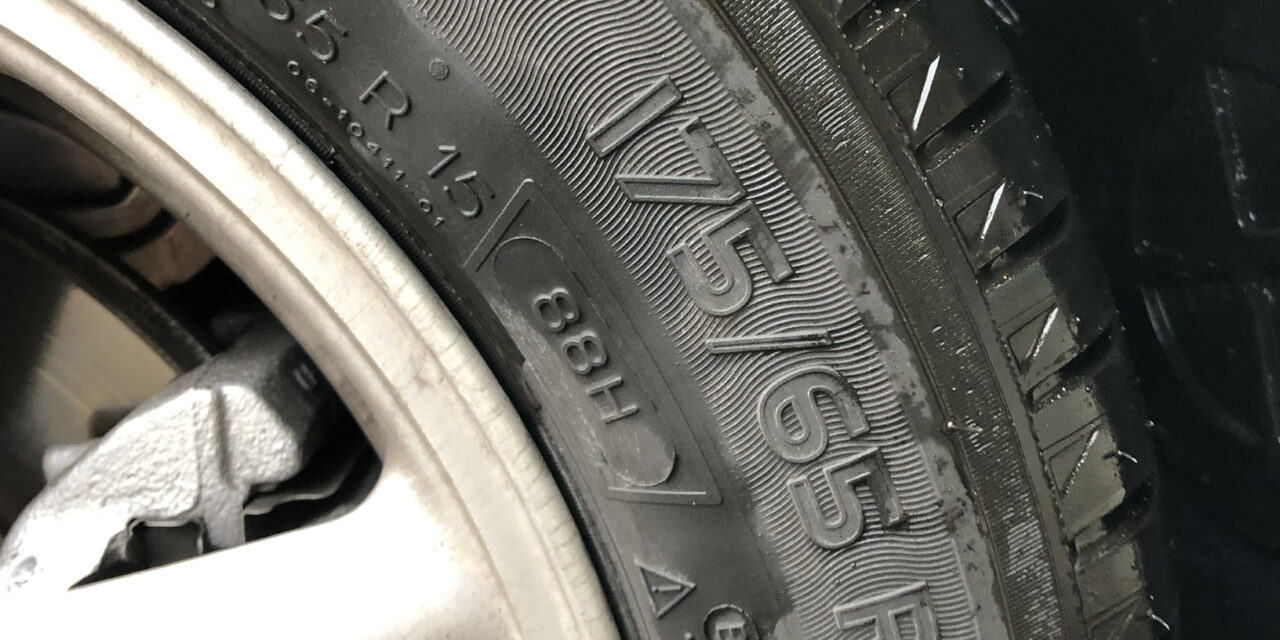
Look at the tyre sidewall for a four-digit manufacturing code, usually found after the letters DOT. The first two digits show the week the tyre was made and the last two show the year.
So if you find 4521, that tyre was made in the 45th week of 2021. If you find 1019, it was built in the 10th week of 2019.
Do not confuse this with the tyre size, load index or speed rating. Those markings are also on the sidewall, but they tell you what tyre the car uses, not how old it is.
On some tyres the full DOT string is only shown clearly on one side, so you may need to check the inner sidewall if the date is not obvious from the outside.
Why tyre age matters even if the tread looks fine
Tyres do not just wear out by losing tread. They also age through heat, sunlight, oxidation, long periods of standing still and repeated stress cycles. That means a tyre can still have legal tread left but be well past its best.
As rubber ages, it can harden, lose flexibility and start to crack. That can affect grip, braking performance and the tyre’s ability to cope with heat and impact. It is one reason old tyres can be a bigger issue on cars that cover very few miles than many drivers expect.
This is especially worth remembering when you are looking at:
- a used car with suspiciously low mileage
- an older family car that only comes out occasionally
- a spare wheel that has never been used
- a caravan, trailer or motorhome that sits for long stretches
When should tyres be replaced because of age?
There is no single UK law that says every ordinary car tyre must be replaced at a fixed age. That is the part many drivers get wrong.
For normal passenger cars, condition is what matters in law and at MOT time. A tyre with cuts, bulges, exposed cords, serious cracking or other damage can fail regardless of age, while an older tyre in sound condition is not automatically an MOT fail just because of its birthday.
That said, tyre makers and specialists do give useful age guidance. Michelin says tyres should be checked by a professional annually from five years of use, and recommends replacing tyres that are 10 years old from date of manufacture as a precaution. Continental also says tyres over 10 years old should be replaced and advises routine inspection at least once a month.
So the practical rule for most UK drivers is this:
- Under 5 years old: usually low age-related concern if condition is good
- 5 to 6 years old: start paying closer attention and get them checked professionally
- 7 to 10 years old: inspect carefully, especially on lightly used cars
- 10 years plus: replacement is usually the sensible call even if tread looks acceptable
That is not panic advice. It is the point where age alone should push you from casual glance to proper scrutiny.
What an MOT will and will not tell you
An MOT is useful, but it is not a full tyre-age audit. Testers inspect the tyres fitted to the car at the time of the test and can fail damage, serious defects, incorrect fitment and illegal tread depth. They are not there to give you a buyer’s report on whether ageing rubber is still a smart long-term bet.
That matters because a used car can pass an MOT and still be sitting on tyres you may want to budget to replace soon. If you are buying privately or from a dealer, check the dates yourself rather than assuming the MOT has covered the question.
It is also worth checking the MOT history for old advisories or mileage patterns that suggest the car has spent long periods unused. Long gaps, tiny annual mileage increases and repeated tyre advisories can all add context.
A quick used-car buyer checklist
If you are viewing a used car, do these five checks before you start negotiating:
-
Read every tyre’s date code
Do not check just one corner. Matching pairs are good. Four tyres from wildly different years can suggest piecemeal maintenance. -
Look for cracks in the sidewall and around the tread blocks
Fine surface crazing is a warning sign, especially on older rubber. -
Check the spare as well
If the car still has its original spare and it is more than a decade old, it may not be something you want to rely on. -
Compare age with mileage and service history
A seven-year-old car wearing seven-year-old tyres is not automatically bad, but it does tell you those tyres are likely nearing the end of their safe useful life. -
Use tyre age in the negotiation
If the car needs four tyres soon, that is a real cost, not a minor quibble.
Signs old tyres are becoming a risk
Age on its own is only part of the story. These are the warning signs that matter most:
- cracking or crazing on the sidewall
- small splits between tread blocks
- bulges or lumps
- repeated pressure loss
- vibration or extra road noise that was not there before
- rubber that feels unusually hard compared with a newer tyre
If you spot any of those, do not rely on a visual guess from the driveway. Get the tyre inspected by a proper fitter.
Do older tyres always need changing immediately?
Not always. A six-year-old premium tyre on a regularly used, properly stored car may be in better condition than a four-year-old budget tyre that has spent long periods underinflated and parked in strong sunlight.
Age is a strong clue, not the only verdict. But once you move into the later years, especially eight, nine or ten years old, the argument for replacement becomes a lot easier to make. That is true even if the tread depth still looks healthy.
The heavy-vehicle rule that confuses car owners
You may have seen references to a 10-year tyre law in Britain. That is real, but it does not apply in the same way to ordinary passenger cars. Department for Transport guidance on tyre age restrictions covers steering axles on certain goods vehicles over 3.5 tonnes, plus buses, coaches and minibuses.
So if you drive a normal car, do not assume there is a simple legal birthday at which your tyres suddenly become illegal. The real question is condition, professional judgement and whether you are comfortable trusting old rubber at motorway speeds in heavy rain.
The bottom line
Checking tyre age is one of the quickest safety checks you can do on your own car or on a used car before you buy it. Find the four-digit code, work out the week and year, then judge that age alongside the tyre’s condition, the car’s mileage and how the vehicle has been used.
If the tyres are edging past five years, pay closer attention. If they are pushing 10, replacement is usually money well spent. And if an older used car is advertised as ready to drive away but is sitting on decade-old tyres, treat that as a cost you should factor in before you agree the price.