Most drivers have heard some version of the same claim: if there was no warning sign, the speed camera ticket does not count. It sounds plausible. It is also wrong.
The short answer
In the UK, there is no general law saying speed camera vans, fixed speed cameras or average speed cameras must be marked with warning signs for enforcement to be valid. The police-backed Ask the Police FAQ puts it plainly: there is nothing in law requiring speed camera devices, fixed or mobile, to be marked, signed or placed in any particular position.
That means a missing camera sign is not a magic loophole. If you were speeding, the absence of a warning sign does not cancel the offence.
Why this myth refuses to die
The confusion comes from old visibility policies and from the fact that camera signs are still common on UK roads. Many drivers understandably assume that if signs are common, they must be legally required every time. That is not how it works.
The archived Department for Transport safety camera FAQ, preserved by the UK Government Web Archive, said the law does not require drivers to be warned about the presence of safety cameras. It also said that the only signing required in law for a speeding offence to be valid is proper speed limit signing for the road.
That older guidance still helps explain why the myth started and why it remains wrong today.
So why are camera signs still everywhere?
Because signs are often used as policy and deterrence, not as a legal precondition for enforcement. Police forces and road safety partnerships often want drivers to slow down before they reach a risk area. A visible van or a camera warning sign can help do that.
But a policy choice is not the same thing as a legal requirement. A force may choose to use marked vans, visible sites or warning boards. Another may deploy differently. Either way, the lack of a sign does not give a driver a defence on its own.
What signs actually matter in law
The signs that matter most are the speed limit signs and the road markings that tell you the limit in the first place. GOV.UK’s Highway Code traffic signs guidance and the Department for Transport’s Know Your Traffic Signs material on speed limit signs make clear that drivers are expected to read and comply with the posted limit.
So if you are wondering whether a speeding allegation can fall apart because there was no camera sign, you are usually looking at the wrong issue. The more important question is whether the road’s speed limit was lawfully and clearly signed. That is a very different point from whether a camera warning sign was present.
Do mobile speed camera vans have to be visible?
Again, not as a general rule of law. The current Ask the Police answer says speed camera devices do not have to be marked or placed in a particular position.
That means the usual pub theories do not hold up well:
- The van does not have to be parked next to a warning board
- It does not have to be painted in high-visibility markings for a prosecution to stand
- It does not have to be fully obvious from a long distance away
- It does not have to sit in exactly the same lay-by every time
Some police forces are highly visible by choice. Some use liveried vans. Some publish enforcement routes. Some place cameras in well-known hotspots. None of that creates a general legal rule that every deployment must come with a warning sign.
What about fixed and average speed cameras?
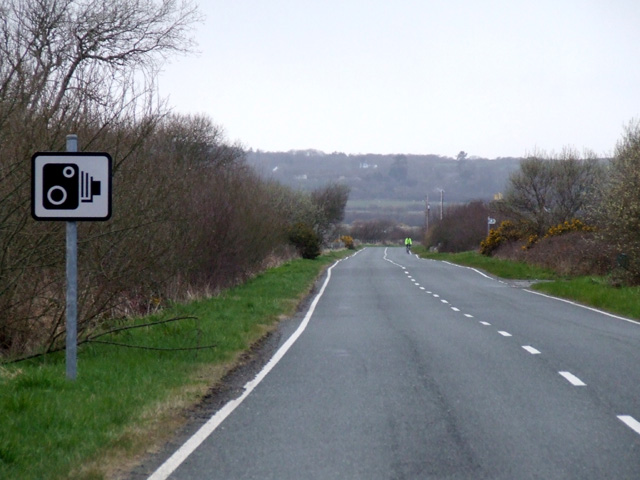
The same broad point applies. Many fixed and average speed camera sites do have signage, and on motorway or roadworks sections you will often see plenty of it. But that does not mean a missing camera warning sign automatically invalidates enforcement.
Average speed camera routes usually have extensive signing because the road layout, temporary restrictions or work zones need to be made clear to drivers. That is mainly about communicating the speed limit and the monitored stretch of road. It is not the same as saying the prosecution only works if a camera sign happens to be in place.
Can you challenge a ticket because there was no sign?
You can raise anything relevant with a solicitor or with the court if a case reaches that stage, but a bare argument that there was no speed camera warning sign is weak. The current police FAQ and the archived DfT guidance both point the other way.
A stronger challenge, where there is genuine evidence, would usually focus on issues such as:
- whether the notice was served correctly
- whether the vehicle and driver identification is disputed
- whether the speed limit signage itself was defective
- whether the enforcement evidence or calibration is being challenged on proper grounds
Those are not simple DIY arguments, and they depend heavily on facts. But they are more serious than relying on a social media myth about missing warning signs.
What should drivers do instead of chasing loopholes?
A more useful approach is to treat camera signs as a bonus warning, not as something you are owed. If you only slow down when you see a van, you are gambling on spotting enforcement before the enforcement spots you.
A better routine is simple:
- Read the speed limit early, especially when entering villages, roadworks and dual carriageway sections.
- Watch for repeaters, gateway signs and temporary restrictions.
- Do not assume a familiar road still has the same limit as last month.
- If you are flashed or later receive paperwork, deal with it promptly rather than relying on forum folklore.
The bottom line
Speed camera vans do not need warning signs to make enforcement lawful, and the same basic point applies to other speed cameras too. The legal weight sits far more with the road’s speed limit signing and the enforcement evidence than with whether you saw a camera warning board on the day.
If you want the safest shortcut here, it is not a loophole. It is reading the limit properly and assuming enforcement can happen even when the warning sign you expected is not there.