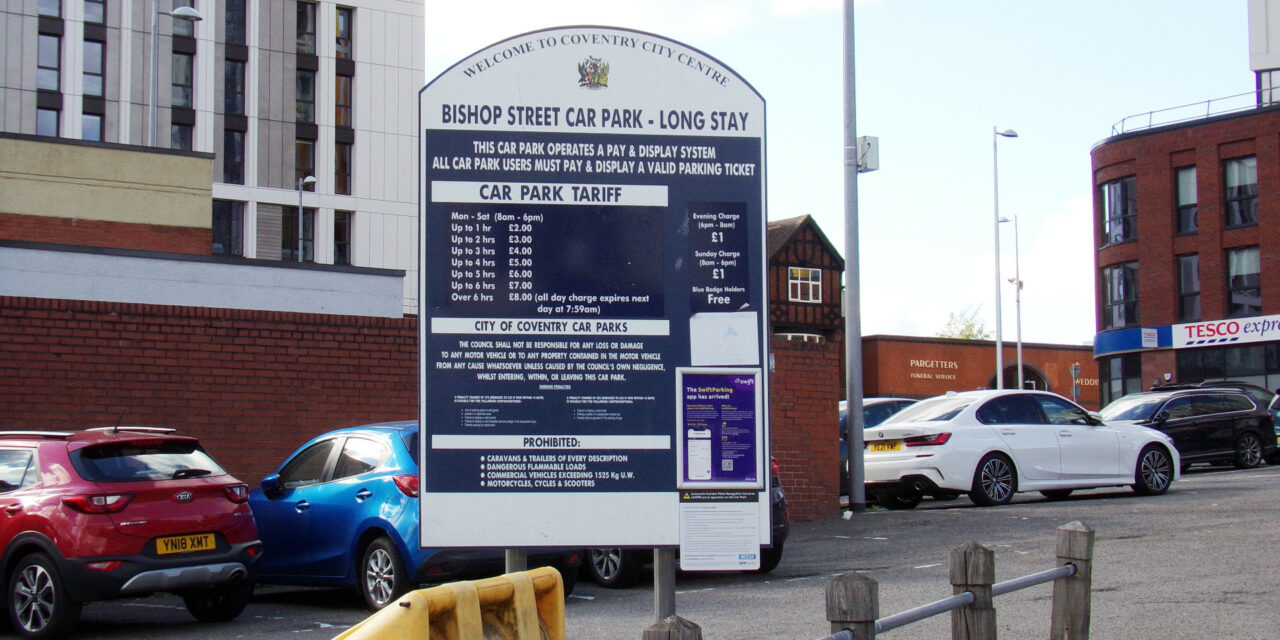
A lot of drivers have heard there is a "10-minute rule" for private parking tickets. The problem is that many people apply it at the wrong point.
If you have been sent a Parking Charge Notice on private land, the important question is not just whether you were a few minutes over. It is whether the operator gave you the consideration period and grace period the trade body code requires for that type of site.
That distinction matters because a private parking company can time your stay from ANPR cameras at the entrance and exit, while your parking contract usually depends on when you had a fair chance to read the signs, decide whether to stay, pay if required and then leave.
This guide explains how private parking grace periods work in the UK, when a charge is worth challenging and the wording that can strengthen your appeal.
First, this is about private parking, not council tickets
This article is about Parking Charge Notices issued on private land such as supermarket car parks, retail parks, hospital sites and privately managed residential or station parking.
It is not about council Penalty Charge Notices on public roads or council-run car parks. The rules, enforcement process and appeal routes are different.
If your notice came from a private parking company, check whether the operator is a member of the British Parking Association or the International Parking Community. Citizens Advice recommends checking ATA membership because only approved operators can normally get keeper details from the DVLA, and the appeal route depends on which body they belong to.
The part many drivers get wrong
There is not a universal rule that says you can enter a private car park and automatically stay 10 minutes for free.
Instead, there are usually two separate timing concepts:
- a consideration period at the start, which gives you time to read the signs, decide whether to accept the terms and, where relevant, find a bay and pay
- a grace period at the end, which gives you time to leave after your permitted parking period has expired
That means a charge can be wrong even if the operator says your vehicle was on site longer than the paid or free parking allowance.
What the current parking code says
The parking sector’s Single Code of Practice version 1.1, published jointly by the BPA and IPC and effective from 17 February 2025, says operators must apply minimum consideration and grace periods.
In plain English, the code says:
- a parking charge must not be enforced while the consideration period has not expired
- the usual minimum consideration period is 5 minutes for many open-to-public sites, including pay-and-display and pay-on-departure locations
- for some larger free car parks with more than 500 spaces, the minimum consideration period can be 10 minutes
- where parking is allowed for a limited time, the usual grace period at the end is 10 minutes
- some restricted or short-stay locations can work differently, so the exact site type matters
The older BPA code also makes the same broad point. Drivers must have the chance to consider the terms before being bound by the parking contract, and a minimum 10-minute grace period is required at the end of a parking event where a limited stay or paid-for period applies.
What counts as the consideration period
The consideration period is the time at the start when you are deciding whether to park on those terms.
That can include time to:
- enter the site and find a space
- read the entrance sign and the main terms inside the car park
- decide whether the terms are acceptable
- pay at a machine or app where required
- leave if you decide not to stay
This is important because ANPR cameras usually capture site entry and exit, not the exact moment your parking period began.
If a parking company tries to count every minute from the instant you crossed the entry camera, that does not automatically settle the issue. The current code says the driver must be allowed time to read and understand the terms and decide whether to accept them.
What counts as the grace period at the end
The grace period is different. It applies after your permitted parking period has finished.
For many standard private car parks, that means the operator should allow at least 10 extra minutes before issuing a charge. Citizens Advice says it is worth appealing if you were only 5 or 10 minutes late, because ATA members should give you that extra 10 minutes before issuing a Parking Charge Notice.
That extra time recognises real-world delays such as:
- walking back to the vehicle
- loading children, shopping or mobility aids
- queueing at the exit
- waiting for traffic to clear inside the site or at the barrier
Why ANPR timestamps can be misleading
Many grace period disputes happen in ANPR-controlled car parks.
The operator’s evidence often shows only:
- the time your car entered the site
- the time your car left the site
That does not always show:
- when you found a bay
- how long it took to read the terms
- whether there was a queue at the payment machine
- whether there was a queue to exit
- whether a machine or app problem delayed payment
If your notice relies on ANPR timings, ask the operator to explain how it accounted for the consideration period at the start and the grace period at the end.
When a private parking grace period appeal is strongest
A challenge is usually strongest where one or more of these points apply:
1. You were only slightly over the allowed time
If you were a few minutes over a free or paid period, a grace-period argument is often the first thing to raise.
2. The operator counted from camera entry rather than actual parking time
This matters especially in busy retail parks, hospital sites and multi-level car parks where finding a bay can take time.
3. The signs were hard to read or not clear on entry
Citizens Advice says unclear signs can be a valid reason to appeal. If the terms were not prominent, the operator may struggle to say you accepted them immediately on entry.
4. There was no realistic way to pay promptly
If the payment machine was broken, the app failed, there was a queue, or the instructions were confusing, include that. Citizens Advice says a ticket should be cancelled if there was no way to pay and no workable alternative.
5. You left after deciding not to stay
If you entered, read the signs and then left because the terms were unsuitable, expensive or unclear, the code says you must be given a reasonable period to leave before you can be bound by the parking contract.
Situations where the usual 10-minute argument may be weaker
Do not assume every private parking ticket can be beaten by quoting "10 minutes" alone.
Your argument may be weaker where:
- the location was a no stopping zone rather than a normal car park
- the site had a special short-stay or restricted-use setup
- you parked in a bay reserved for a clearly marked class of user and were not entitled to use it
- the overstay was long rather than marginal
- your evidence shows the parking period itself, not just the site presence, exceeded the limit by a significant margin
The site type and wording on the signs still matter.
What to gather before you appeal
Before you send anything, collect evidence while it is still available.
Useful evidence includes:
- photos of the entrance sign and the main terms and conditions board
- photos showing poor lighting, hidden wording or damaged signs
- screenshots of payment app failures or banking alerts
- a receipt showing you were a genuine customer if the site was customer-only parking
- photos of queues at payment machines or barriers if you have them
- your notice with the ANPR entry and exit times
- a timeline showing when you parked, when you paid and when you left
If the signs have since changed, take current photos anyway and note the date they were taken.
A simple appeal point you can adapt
You do not need to write like a lawyer. A clear, factual appeal is usually better.
You could say:
I am challenging this Parking Charge Notice because your timings do not properly allow for the required consideration period at the start of the visit and the grace period at the end. Your ANPR images show only entry to and exit from the site, not the actual parking period. The BPA and IPC Single Code of Practice requires minimum consideration and grace periods, and Citizens Advice also notes that ATA members should allow time to leave before issuing a charge. Please confirm which code you rely on for this site, what consideration period and grace period were applied, and provide evidence that these minimum periods were correctly allowed before this notice was issued.
Then add your own facts, such as:
- how many minutes over the operator says you were
- whether the machine, app or exit queue caused delay
- whether you left after deciding not to park
- whether the signs were unclear
What happens if the operator rejects your first appeal
If the operator is a BPA member, you can usually take the case to POPLA.
If the operator is an IPC member, the next stage is normally the Independent Appeals Service.
Citizens Advice says not to pay a private parking ticket while you are actively appealing it, because payment is usually treated as accepting the charge.
The bottom line
For private parking tickets, the key point is this: the clock does not always work the way the parking company suggests.
There is usually time at the start to read the signs and decide whether to stay, and there is often a further grace period at the end before a charge should be issued. If your notice is based on a small overstay, entry-and-exit camera timings or a site where the terms were not easy to understand, a grace-period appeal is often worth making.
That does not guarantee cancellation, but it is one of the better private parking arguments because it goes to the operator’s own trade body rules rather than just asking for goodwill.
Useful official and industry links
- Citizens Advice guide to appealing a parking ticket
- Citizens Advice guide on when to appeal a parking ticket
- British Parking Association Code of Practice
- IPC and BPA Single Code of Practice version 1.1
If you are writing an appeal, use the code wording carefully, keep the timeline tight and make the operator explain exactly how it calculated your parking period rather than just your time on site.