The short answer
A flash of the headlights is not a signal that another driver may pull out, turn, cross your path or proceed. In the UK, Highway Code Rule 110 says headlights should be flashed only to let other road users know that you are there. It also says not to use them to convey another message or to intimidate someone.
That may sound at odds with everyday driving. Many people use a flash to mean ‘after you’, ‘I am letting you out’ or ‘there is a speed camera ahead’. But the other driver cannot safely know which meaning you intended. If they move into danger after seeing your lights, both people may have made a bad assumption.
Rule 111 of the Highway Code makes the point from the receiving driver’s side: never assume flashing headlights is an invitation to proceed. Use your own judgement and proceed carefully.
What a headlight flash is for
A brief flash can be a presence warning. For example, it may help a driver who appears not to have seen you, or draw attention to your vehicle where there is an immediate risk. It is not a substitute for slowing down, giving a clear signal, leaving space or taking evasive action where needed.
Think of it as: ‘I am here’, not ‘you may go’.
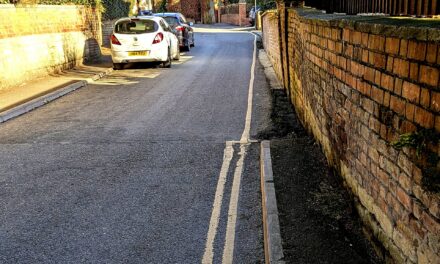
That distinction matters most at junctions, on narrow roads and when a pedestrian is waiting to cross. A driver who flashes may be yielding, but there may be a cyclist filtering past, an overtaking vehicle, or a hazard the person being waved through cannot see.
Why the familiar ‘after you’ flash is risky
A driver waiting to emerge needs to decide whether it is safe using the whole scene: gaps in traffic, speed, visibility, pedestrians, cyclists and vehicles approaching from the other direction. A flash gives none of that information.
There are two common traps:
- Mistaking courtesy for clearance. The flashing driver may intend only to acknowledge you, not to give up priority or guarantee that the road is clear.
- Looking only at the flashing vehicle. It is easy to miss a motorbike, cyclist or another vehicle passing it, especially at a congested junction.
If someone flashes you out, make the normal observations anyway. If you cannot see enough to be sure, wait. It is perfectly reasonable to decline the gesture.
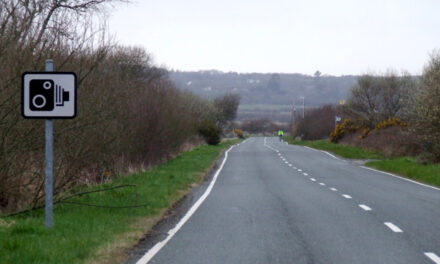
Can you flash to warn drivers about a speed camera, police or a hazard?
The Highway Code wording is deliberately narrow: the flash is for making others aware of your presence, not for passing a message. So using it as a warning about enforcement ahead is not what Rule 110 says it is for.
More importantly, flashing at oncoming traffic creates ambiguity. A driver may think you are warning that they are in danger, inviting them to move, or reacting to their lights. That confusion is a poor trade-off for trying to communicate something the road ahead should make them deal with safely anyway.
If there is a real hazard, reduce speed, position safely and use your vehicle’s proper signals where appropriate. Do not assume a light flash will be understood.
Could flashing headlights get you in trouble?
The Highway Code is guidance unless a rule is backed by a ‘MUST’ or ‘MUST NOT’, but it can be used in court to help establish whether someone drove carefully. Whether a particular flash creates an offence depends on what happened around it, not on a simple rule that every flash brings a fixed penalty.
There are separate lighting rules too. Regulation 27 of the Road Vehicles Lighting Regulations 1989 prohibits using a headlamp so as to cause undue dazzle or discomfort to other road users. Repeatedly flashing or using lights aggressively can therefore be more than bad manners, especially if it distracts or intimidates another person.
The sensible rule is simple: do not use a headlight flash to pressure another driver, express frustration or force a response.
Do not flash pedestrians across either
The same principle applies at crossings. The Highway Code warns drivers not to wave, flash lights or sound the horn to invite pedestrians across because another vehicle may be approaching.
At a zebra or parallel crossing, the safer approach is to slow down, stop when required and let the person decide when it is safe to cross. A friendly gesture can accidentally make a situation less predictable.
A safer way to handle the situations drivers mean to solve
| Situation | Safer response |
|---|---|
| You want to let someone emerge | Leave a clear gap, slow if safe, but do not expect them to pull out until they have checked the road themselves. |
| Someone flashes you at a junction | Treat it as awareness, not permission. Check every lane and blind spot before moving. |
| You think another driver has not seen you | Make your presence clear, while being ready to brake or steer safely. |
| A pedestrian is waiting at a crossing | Follow the crossing rules and avoid gestures that could be misunderstood. |
| You are annoyed by another driver | Create space and stay calm. Lights and horn are not tools for confrontation. |
The rule to remember
A headlight flash does not transfer responsibility for the manoeuvre. The driver moving off, turning or crossing still has to decide it is safe.
So the next time you see a flash, do not read it as ‘go ahead’. Read it as ‘I am here’, check the road for yourself and move only when you can do so safely.