A used-car test drive is not a reward for turning up to view a tidy-looking car. It is the part of the buying process that can expose a hard clutch, wandering steering, poor brakes, warning lights or a seller who has not been straight about how the car behaves.
You do not need to be a mechanic, and you do not need to thrash somebody else’s car. You do need enough uninterrupted time to drive it from cold, at low and higher speeds, on more than one type of road. Twenty focused minutes is far more useful than a five-minute loop around the block.
Before the key turns: make the test drive possible
Ask to see the car when the engine is cold. A seller who has warmed it up may have an innocent reason, but a cold start is when some rattles, smoke, rough running and battery weakness are easiest to notice. Touch the bonnet carefully only when it is safe to do so, rather than taking anyone’s word for it.
Make sure you are insured to drive it before moving off. Do not assume that your own fully comprehensive policy covers other cars: the driving-other-cars extension is often limited, conditional or absent. A dealer may have demonstrator cover, but ask what applies to you. Our guide to test-drive insurance for a used car explains the checks to make before leaving the forecourt.
Bring your driving licence, and ask the seller to join you if that is their policy. Plan a route that includes stop-start traffic, a stretch where the car can reach 50mph or 60mph legally, and a safe place to reverse and park. If the seller will only permit a very short, tightly controlled route, treat that as a reason to slow the buying process down, not as something to overlook because the car is in demand.
1. Start it and wait a moment
Turn the ignition on before starting. The normal warning lamps should illuminate for their self-check, then go out after the engine starts. A warning light that stays on deserves an explanation and, usually, a diagnostic check before any money changes hands. Do not accept tape over a light or a vague promise that it is “just a sensor”.
Listen with the radio and climate control switched off. A brief change in engine note on a cold start can be normal, but persistent rattling, a loud ticking, misfiring, hunting idle or a belt squeal is not something to diagnose from the driver’s seat. Note it, ask when it happens, and consider an independent inspection.
Check that the heater fan, air conditioning, wipers, washers, lights, electric windows, mirrors, central locking and infotainment do the jobs you will rely on. Small electrical faults can be inconvenient and, on modern cars, occasionally expensive to trace.
2. Let the car reveal itself in town
For the first few minutes, drive gently. The clutch should take up predictably and the gear lever should select gears without grinding or excessive resistance. On an automatic, look for clean, timely shifts rather than a thump, a long pause or engine revs flaring before the next gear engages. Try a hill start where it is safe: a struggling clutch, hesitant automatic or weak handbrake is easier to spot there than on level ground.
At low speed, wind the steering through gentle turns and listen for knocks or groans. The wheel should not feel unusually heavy in one direction or fail to self-centre after a bend. Find a smooth, safe stretch and check that the car tracks straight with a light grip on the wheel. Do not take your hands off completely.
Drive over a few ordinary road imperfections at a sensible speed. One isolated bump is not a verdict, but repeated clunks, rattles or a floaty, unsettled feel are reasons to investigate the suspension, tyres and steering rather than simply negotiate harder.
3. Check brakes, tyres and higher-speed behaviour
When the road is clear and it is safe to do so, apply the brakes firmly but progressively. The car should pull up straight, the pedal should feel consistent, and the steering wheel should not shake. Avoid an emergency stop unless conditions genuinely make it safe and the seller agrees.
At a legal higher speed, listen for wheel-bearing hum, wind noise that suggests a poor seal, and vibrations through the steering wheel, seat or pedals. A vibration that arrives at a particular speed can be as simple as wheel balance, but it can also point to tyres, wheels, brakes or suspension. It is a question to answer before purchase, not a defect to price in blindly.
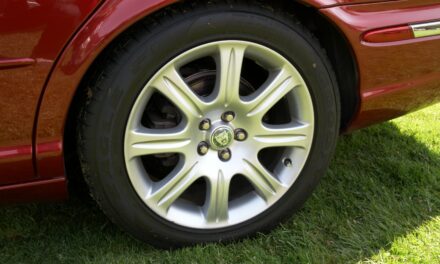
Before setting off and after returning, look at all four tyres. Check for uneven wear across the tread, cuts, bulges and mismatched tyres on the same axle. Uneven inner-edge wear can be easy to miss unless you turn the steering and look closely. Tyres also give clues about alignment and how carefully the car has been maintained.
4. Use the car’s history to make the drive more useful
Do the free checks before the viewing, then use the results to ask better questions on the drive. The DVLA vehicle enquiry service lets anyone check key vehicle details, including tax and MOT expiry, from the registration number. Confirm that its make, colour, fuel type and other basic details match the car and advert.
Then read the official MOT history, which shows results from 2005 onwards, recorded mileage and reasons for failures. Repeated advisories for tyres, brakes, corrosion, suspension or leaks are not an automatic no, but they are useful prompts. If an advisory says a tyre was close to its legal limit last year, inspect the replacement. If brake imbalance keeps returning, make the braking part of the drive especially careful.
Ask for invoices, not only a stamped service book. A receipt that identifies the car, date, mileage and work done is stronger evidence than a verbal assurance that a major job was completed. For a car with a timing belt, ask for the invoice and the replacement interval, rather than assuming a service stamp proves it.
5. Give hybrids and EVs a different set of checks
In a hybrid, note whether the transition between electric and petrol power is smooth and whether any hybrid-system warning appears. In an EV, look at the displayed state of charge and estimated range, but do not mistake either for a battery-health certificate. Check that the charge flap, cables and connectors are present and undamaged, and ask to see charging work if a home charge point is part of the sale.
For either type, try the heating and air conditioning. Cabin heat and cooling are not luxuries in an EV: they affect comfort and can materially affect range. A model-specific buyer’s guide is still worth reading because normal operation varies widely between cars.
What should make you pause or walk away?
- A seller refuses a reasonable test drive, a cold start or an independent inspection.
- Warning lights remain on, the car overheats, it smells strongly of fuel or exhaust, or it produces persistent smoke.
- Steering pull, serious vibration, poor braking or a gearbox that will not shift cleanly.
- The registration, recorded mileage, keys, service records or story around the car do not line up.
- Pressure to leave a deposit before you can check the evidence or think clearly.
None of those requires an argument at the viewing. Thank the seller, take your notes and leave. A good used car should stand up to a measured drive and reasonable questions.
After the drive: decide with evidence, not adrenaline
Write down faults and unanswered questions before looking at the next car or hearing a new price. If the car remains a contender, arrange an independent pre-purchase inspection for an older, higher-value or complicated vehicle. A road test is a screening tool, not a substitute for a ramp inspection, diagnostic scan or a proper history check.
Finally, do not confuse an MOT pass with a guarantee that the car is fault-free. It records that the vehicle met the required standard on the day of the test. The right used car is the one whose condition, history, price and seller’s answers all make sense together.