
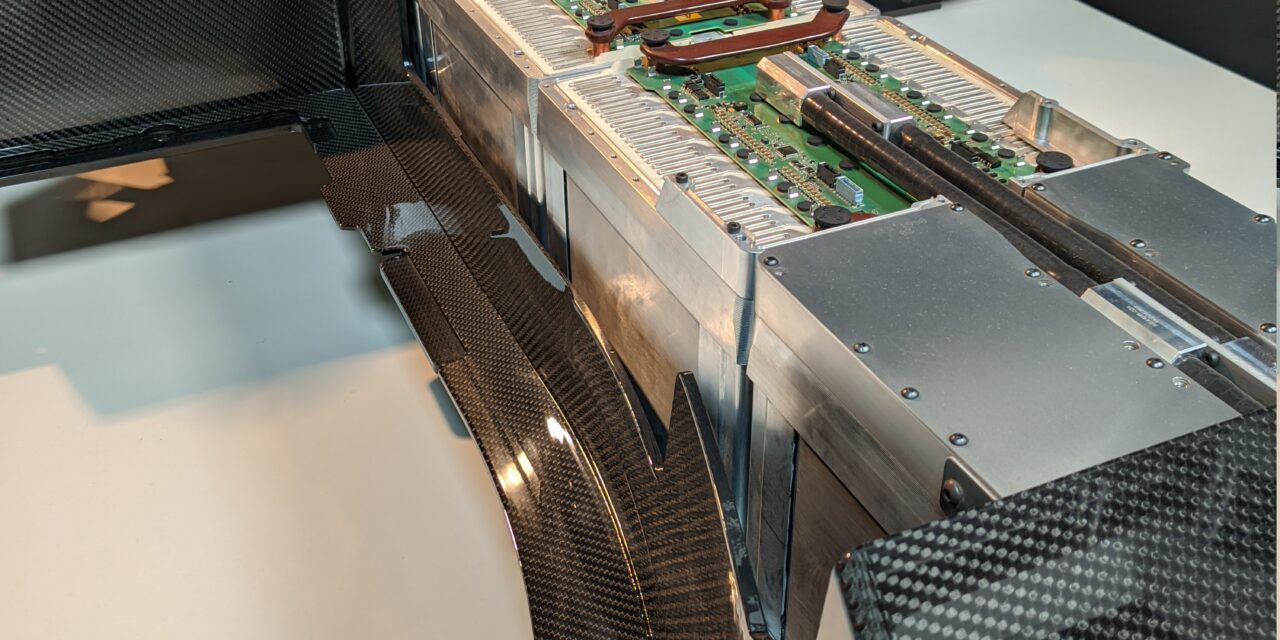
If you are trying to understand an EV battery warranty explained UK style question, the headline is reassuring but not quite as simple as "the battery is covered for eight years". Most new electric cars sold in the UK come with a separate high-voltage battery warranty, often lasting 8 years or 100,000 miles, but the details vary by brand, model and registration date.
The important bit is the capacity promise. Many warranties do not guarantee that the battery will stay like new. They usually step in if usable capacity falls below a stated threshold, commonly around 70% of the original capacity, within the warranty period.
For used EV buyers, the next question is whether that cover follows the car. Often it does, but you should never assume. Check the exact warranty booklet, first registration date, mileage, service history and any battery health evidence before buying.
Quick answer
In the UK, a typical EV battery warranty lasts 8 years or 100,000 miles, whichever comes first. Many brands cover the high-voltage battery if it drops below about 70% state of health during that period, although some use different wording or measurement methods.
The warranty usually covers defects and excessive degradation, not normal range variation, normal wear above the threshold, accident damage, misuse, unauthorised repairs or charging/storage outside the owner’s manual. For a used EV, the remaining battery warranty often transfers with the car, but the rules vary, so verify it with the manufacturer or dealer in writing.
What is an EV battery warranty?
An EV battery warranty is the manufacturer’s promise for the car’s high-voltage traction battery. That is the large battery pack that powers the motor, not the small 12V battery that runs ordinary electrical systems.
It is normally separate from the standard new-car warranty. For example, a car might have a 3-year vehicle warranty but an 8-year battery warranty. That matters because the battery is usually one of the most expensive components in an electric car.
A good battery warranty usually covers two broad things:
- Defects or failure in the high-voltage battery pack.
- Excessive loss of usable capacity below a stated threshold.
That second point is where many buyers get caught out. Batteries naturally lose capacity with age, mileage, temperature and charging habits. A warranty does not normally promise that an 8-year-old EV will still deliver the same range it had when new.
How long do EV battery warranties last in the UK?
For many mainstream UK electric cars, the common benchmark is 8 years or 100,000 miles. That is also the minimum battery warranty standard used for cars seeking eligibility under the UK Electric Car Grant, where GOV.UK guidance requires a battery warranty of at least 8 years or 100,000 miles for eligible models.
Some manufacturers go beyond that mileage on certain models. Tesla, for example, lists different Battery and Drive Unit warranty mileages depending on model and version, ranging from 100,000 miles to 150,000 miles, all with a minimum 70% battery capacity retention during the warranty period.
Others keep the time and mileage familiar but use different definitions. Nissan’s public UK warranty page describes an 8-year/100,000-mile battery state-of-health guarantee for current Leaf and Ariya models, protecting against capacity loss below 9 bars out of 12 on the in-car capacity gauge.
The safe rule is this: treat 8 years/100,000 miles as the common starting point, then check the exact model’s warranty document.
What does the 70% battery capacity threshold mean?
The 70% threshold means the battery warranty may apply if the high-voltage battery’s usable capacity falls below 70% of its original or starting capacity during the warranty period.
In simple terms, if a car could use 60 kWh when new, a 70% threshold would be roughly equivalent to 42 kWh of usable capacity. Real cars are more complicated than that because manufacturers measure capacity through approved diagnostic procedures, not a driver’s rough range estimate.
This matters because range can fall for reasons that are not warranty faults, including:
- cold weather
- motorway speeds
- tyre choice and tyre pressure
- heavy loads
- roof boxes
- battery temperature
- driving style
- using heating or air conditioning
A car showing less range on a winter motorway trip does not automatically have a warranty problem. A warranty claim normally depends on the manufacturer or authorised repairer measuring the battery and confirming it is below the stated threshold.
Typical EV battery warranty examples in the UK
These examples show why you need to check the exact wording. They are not a substitute for the warranty booklet that applies to your car.
| Brand/example | Typical UK battery warranty wording checked | Capacity/degradation trigger | Transferability notes |
|---|---|---|---|
| Tesla | 8 years, with 100,000, 120,000 or 150,000 miles depending on model/version | Minimum 70% battery capacity retention | Check the warranty document for the vehicle |
| Volkswagen BEV | 8 years/100,000 miles for high-voltage battery degradation | Below 70%, with staged repair targets in the terms | VW says the all-electric battery warranty can be passed to future owners |
| Kia EV | Separate EV battery pack cover up to 8 years/100,000 miles on current terms | Repair/replacement to restore at least 70% capacity | Kia says its 7-year warranty is transferable; check model/date terms |
| Hyundai EV | 8 years/100,000 miles high-voltage battery warranty | Check the applicable warranty booklet for degradation wording | Confirm with Hyundai/dealer for the exact car |
| Nissan Leaf/Ariya | 8 years/100,000 miles on current EV lithium-ion battery warranty | State-of-health guarantee below 9 bars out of 12 | Confirm remaining cover against VIN |
| Renault E-Tech electric | 8 years/100,000 miles on new E-Tech electric batteries | Replacement if below 70% of initial capacity | Check model-specific warranty and ownership documents |
The pattern is clear: long battery cover is normal, but the measurement method and claim trigger are brand-specific.
What is usually covered?
Most EV battery warranties are designed to cover faults that are not the owner’s fault. Depending on the manufacturer’s wording, that can include:
- manufacturing defects in the high-voltage battery
- battery pack failure during the warranty period
- excessive degradation below the warranty threshold
- repair or replacement of battery components where the manufacturer chooses that route
- labour and parts needed for an approved warranty repair
One important point: a warranty repair may not return the battery to 100% "as new" condition. Some warranty terms say the repair only needs to bring the battery back to the minimum warranted level. Kia’s terms, for example, say repairs are needed to return capacity to at least the stated percentage, not necessarily to original new capacity.
That is not necessarily bad; it is just how many degradation warranties work.
What is usually not covered?
Battery warranty exclusions vary, but common exclusions include:
- normal degradation above the warranty threshold
- reduced range caused by weather, driving style or accessories
- accident damage
- flood or water damage
- fire damage not caused by a covered defect
- unauthorised battery repairs or removal
- tampering or modifications
- failing to follow charging, storage or maintenance instructions
- damage from using the car outside the owner’s manual guidance
- the separate 12V battery, unless covered by another warranty section
Volkswagen’s UK warranty terms are a good example of how specific these exclusions can be. They mention factors such as unauthorised battery work, not using or charging the battery as recommended, contact with open fire and excessive water exposure.
So if you are buying used, service history and evidence of proper care matter. A cheap EV with missing paperwork can be harder to assess than a slightly dearer one with a clean history and battery certificate.
Does an EV battery warranty transfer to a used buyer?
Often, yes — but not always in exactly the same way.
Many manufacturer warranties are attached to the vehicle, so the next owner gets the balance of the original cover. Volkswagen says its all-electric battery warranty is available from new and can be passed to future owners. Kia says its 7-year warranty is fully transferable, with the remaining time and mileage following the car.
However, there are caveats.
First, transferability can differ between a full vehicle warranty, a battery degradation warranty and an extended warranty. Volkswagen’s terms, for example, treat BEV and PHEV degradation cover differently, and its PHEV degradation warranty wording says it is for the first customer vehicle owner only.
Second, some used cars may have missed service requirements, had unauthorised work, been written off, imported, modified or used in ways that affect cover.
Before buying a used EV, ask for:
- the first registration date
- current mileage
- the warranty booklet or digital warranty terms
- service and repair history
- proof that recalls or battery software updates are complete
- a manufacturer or dealer battery health report, if available
- written confirmation of remaining battery warranty against the VIN
For a deeper look at the documents used EV buyers may be asked for, read Motoring Mojo’s guide to used EV battery health certificate requirements in the UK.
How UK consumer rights fit in
A manufacturer warranty does not replace your legal rights.
In the UK, your contract is usually with the retailer that sold you the car, not the manufacturer. If a car is faulty, not as described or not of satisfactory quality, consumer law may give you rights against the seller. Citizens Advice also makes clear that warranties and guarantees add to your legal rights rather than replacing them.
The timeframes matter:
- If a fault appears very soon after purchase, your rights can be stronger.
- Within the first 6 months, it is generally easier to argue that a fault was present at sale.
- After 6 months, you may need stronger evidence that the problem was not caused by wear, misuse or later damage.
- GOV.UK guidance notes that consumers can have up to 6 years to make a claim in England, Wales and Northern Ireland, or 5 years in Scotland, but that does not mean every old fault is automatically covered.
For new cars, The Motor Ombudsman’s New Car Code also covers manufacturer warranty obligations, spare parts availability and complaints handling for subscribing manufacturers.
In practice, if your EV has a battery issue, you may have two routes:
- Manufacturer battery warranty claim through the authorised dealer or repairer.
- Consumer rights claim against the seller if the car was faulty, misdescribed or not of satisfactory quality when sold.
Those routes are related, but they are not the same.
What should you check before buying a new EV?
Before ordering a new electric car, check the battery warranty as carefully as the range figure.
Ask these questions:
- How long is the high-voltage battery warranty?
- What mileage limit applies?
- Is degradation covered, or only total battery failure?
- What capacity threshold applies: 70%, 66%, 80% early in life, or something else?
- Who measures battery capacity for a claim?
- Does the warranty repair restore the pack to 70%, 80% or another level?
- Is the warranty transferable?
- Are there exclusions around rapid charging, long-term storage or state of charge?
- Does the standard vehicle warranty cover the onboard charger, motor and inverter?
This is especially important if you are looking at a grant-eligible EV. The UK Electric Car Grant has warranty requirements for eligible cars, but you still need to compare the full warranty package, finance cost, insurance and charging setup. Motoring Mojo’s guide to electric car grants and EV incentives in the UK for 2026 explains the wider incentive picture.
What should you check before buying a used EV?
For a used EV, the warranty question becomes more urgent because part of the cover may already be gone.
Use this quick checklist:
- Age: Count from first registration, not when you buy it.
- Mileage: The warranty ends when the time or mileage limit is reached, whichever comes first.
- State of health: Ask for a battery health certificate or diagnostic report.
- Warranty transfer: Confirm the remaining cover in writing.
- History: Look for authorised servicing, recall completion and battery-related repairs.
- Accident record: Battery damage after a crash can complicate cover.
- Charging clues: Repeated misuse is hard to prove either way, but missing history increases risk.
- Import status: Grey imports or non-UK cars may not have the same warranty support.
If the car is 6 or 7 years old, a battery warranty can still be useful, but you need to know exactly how much time and mileage is left. If the car is already outside its warranty, battery condition evidence becomes even more important.
FAQs
Is an EV battery covered for 8 years in the UK?
Many new EVs sold in the UK have an 8-year battery warranty, often with a 100,000-mile limit. Some models have higher mileage limits, while older cars or hybrids may differ. Always check the warranty document for the exact model, registration date and market.
Does an EV battery warranty cover range loss?
It can cover excessive battery capacity loss, but not ordinary range variation. Many warranties only apply if measured battery capacity falls below a set threshold, often 70%. Cold weather, faster driving and heavy accessory use can reduce displayed range without creating a warranty claim.
What happens if my EV battery drops below 70%?
If the car is inside the warranty period and meets the terms, the manufacturer may repair or replace battery components, or replace the pack. The remedy may only need to restore the battery to the warranted minimum, not to brand-new capacity.
Does rapid charging void an EV battery warranty?
Using public rapid chargers normally does not void the warranty by itself. However, manufacturers can exclude damage caused by misuse or failing to follow the owner’s manual. If the manual gives charging or storage limits, follow them and keep software updates current.
Is the 12V battery included in the EV battery warranty?
Usually not. The long EV battery warranty normally applies to the high-voltage traction battery. The 12V battery is usually covered separately, often for a shorter period, under the standard vehicle warranty or parts warranty.
Can I claim under consumer rights after the battery warranty ends?
Possibly, but it depends on the facts. UK consumer rights can apply beyond a warranty period, but you may need to prove the fault existed at sale or that the car was not of satisfactory quality. For a high-value battery dispute, get written diagnostics and independent advice.
Verdict: the warranty is reassuring, but read the trigger
An EV battery warranty is one of the biggest protections electric car buyers get in the UK. For many new EVs, 8 years or 100,000 miles and a 70% capacity threshold is the benchmark to look for.
But the details matter. Some brands use different mileage limits, some measure degradation differently, and some repairs only need to restore the battery to the minimum warranted capacity. Used buyers also need to confirm transferability and remaining cover before relying on it.
The simplest advice is this: do not just ask "is the battery covered?" Ask how long, to what mileage, below what capacity, measured by whom, and transferable to whom. That is the difference between a comforting headline and a warranty you can actually use.



Trackbacks/Pingbacks