Buying a family SUV in the UK is a balancing act. You want a higher driving position, a useful boot and enough rear-seat room for children, but you probably do not want to dread every supermarket bay, school run, multi-storey ramp or terraced street.
The best answer is not simply choosing the smallest crossover you can find. Some very small SUVs give away too much rear-seat room or boot space, while some larger family SUVs look manageable until you are trying to open a rear door next to a concrete pillar. For this list, I have focused on five SUVs that still feel properly family-usable while keeping their dimensions sensible for everyday UK parking.
Quick answer: the best family SUVs for tight UK parking
| Car | Width excluding mirrors | Length | Boot space | Best for |
|---|---|---|---|---|
| Skoda Kamiq | 1,793mm | 4,241mm | 400 litres | Best all-round narrow family SUV |
| Renault Captur | 1,797mm | 4,239mm | Up to 616 litres petrol / 480 litres full hybrid | Best flexible family layout |
| Ford Puma | 1,805mm | 4,226mm | 456 litres | Best compact SUV boot |
| Dacia Duster | Body width not the issue; 2,069mm with mirrors extended | 4,343mm | 594 litres official minimum figure | Best value practical SUV |
| Nissan Qashqai | 1,835mm | 4,425mm | Up to 504 litres | Best if you need a bigger family SUV |
A lot of UK parking guidance still works from a space around 2.4 metres wide and 4.8 metres long. That means all five cars fit on paper, but daily life is not about maths alone. Mirror width, door shape, turning circle, camera quality and how easily you can load children all matter just as much.
How I judged these SUVs
- Relatively modest width for the class
- Manageable length for typical bays and driveways
- Rear seats that still work for actual family use
- Boot space that can cope with pushchairs, shopping or school kit
- Good visibility or worthwhile parking tech availability
- Current UK model information rather than guesswork
This is why you will not find the absolute tiniest crossovers topping the list. A family SUV still has to work as a family car.
1. Skoda Kamiq: the best all-round choice
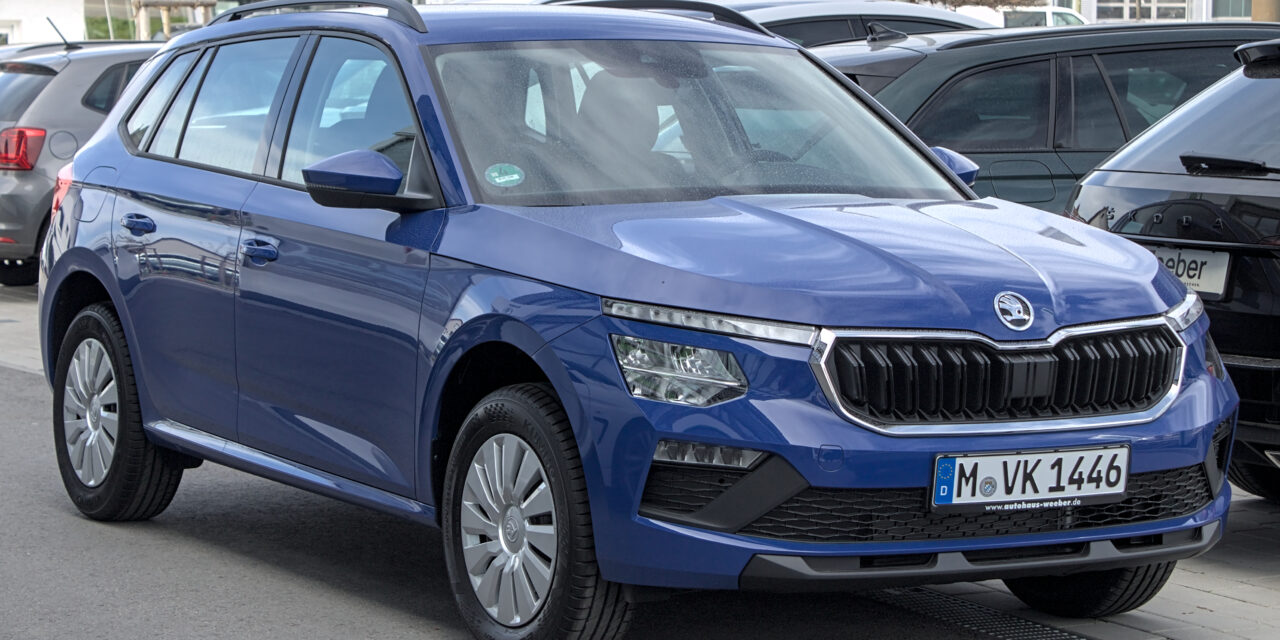
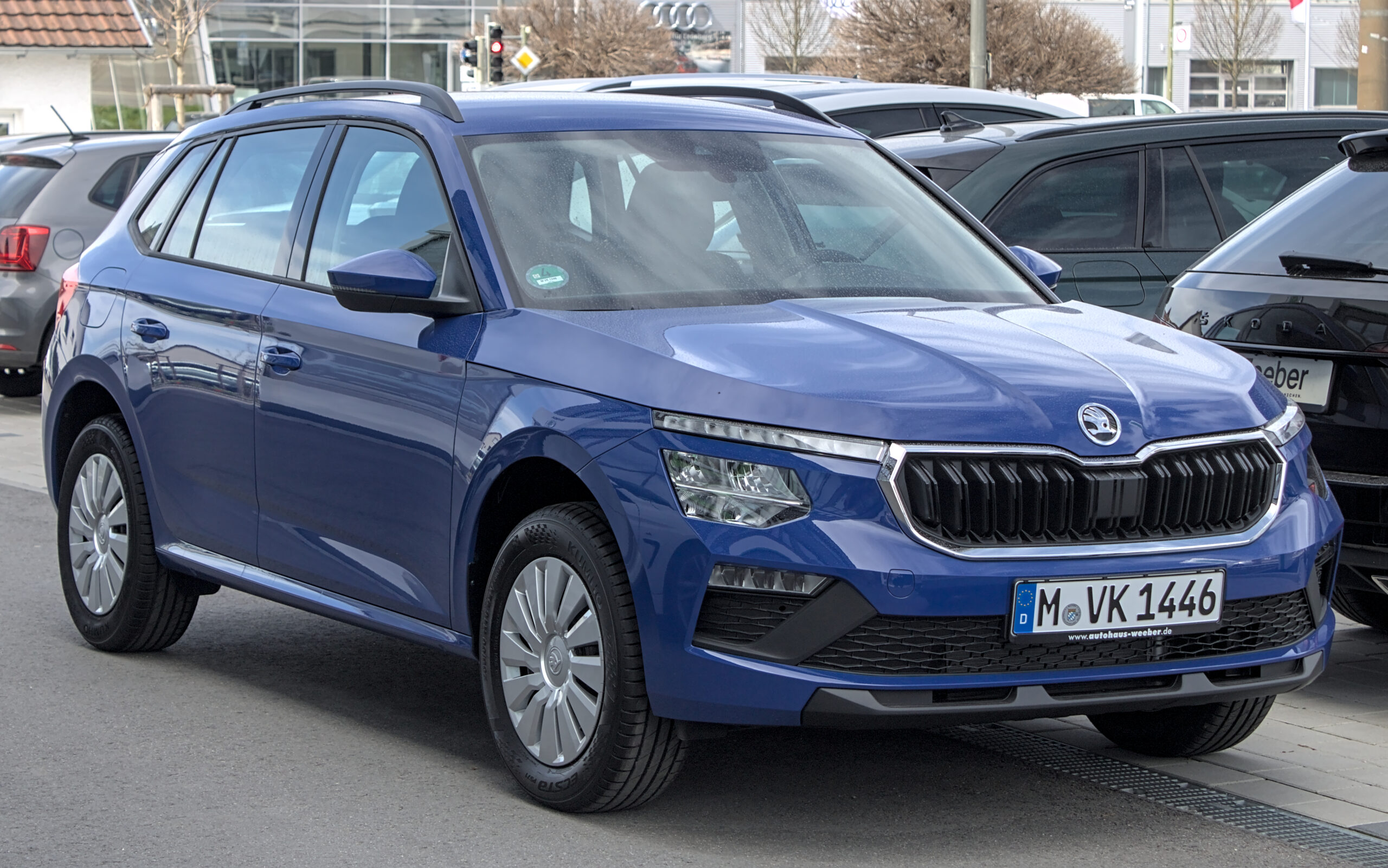
The Skoda Kamiq is the easiest recommendation if you want SUV practicality without obvious SUV bulk. At 1,793mm wide and 4,241mm long, it stays tidy by modern standards, and it still offers a square 400-litre boot plus enough rear-seat room for most families with one or two children.
It also helps that the Kamiq feels easy to place. The upright shape, sensible window line and calm low-speed manners make it less stressful in supermarket bays and tight residential streets than many wider SUVs. It is not huge inside, but it is packaged well enough that most families will not feel short-changed.
- Why it works: narrow body, useful visibility, sensible boot, easy low-speed manners
- Watch out for: rear bench is fine rather than huge, and the boot is practical rather than massive
If you want one safe answer to this search, the Kamiq is probably it.
2. Renault Captur: best for flexible family space
The Renault Captur is very close to the Kamiq on footprint, but it adds one genuinely useful family trick: a sliding rear bench. That lets you trade a little rear legroom for more boot space depending on whether the day involves children, shopping, a buggy or a weekend away.
Renault quotes up to 616 litres of boot space for petrol versions with the bench forward, while the full hybrid gives up some luggage room at 480 litres. Either way, the Captur feels like one of the smartest compact SUVs for families who want flexibility without moving into Qashqai-sized territory.
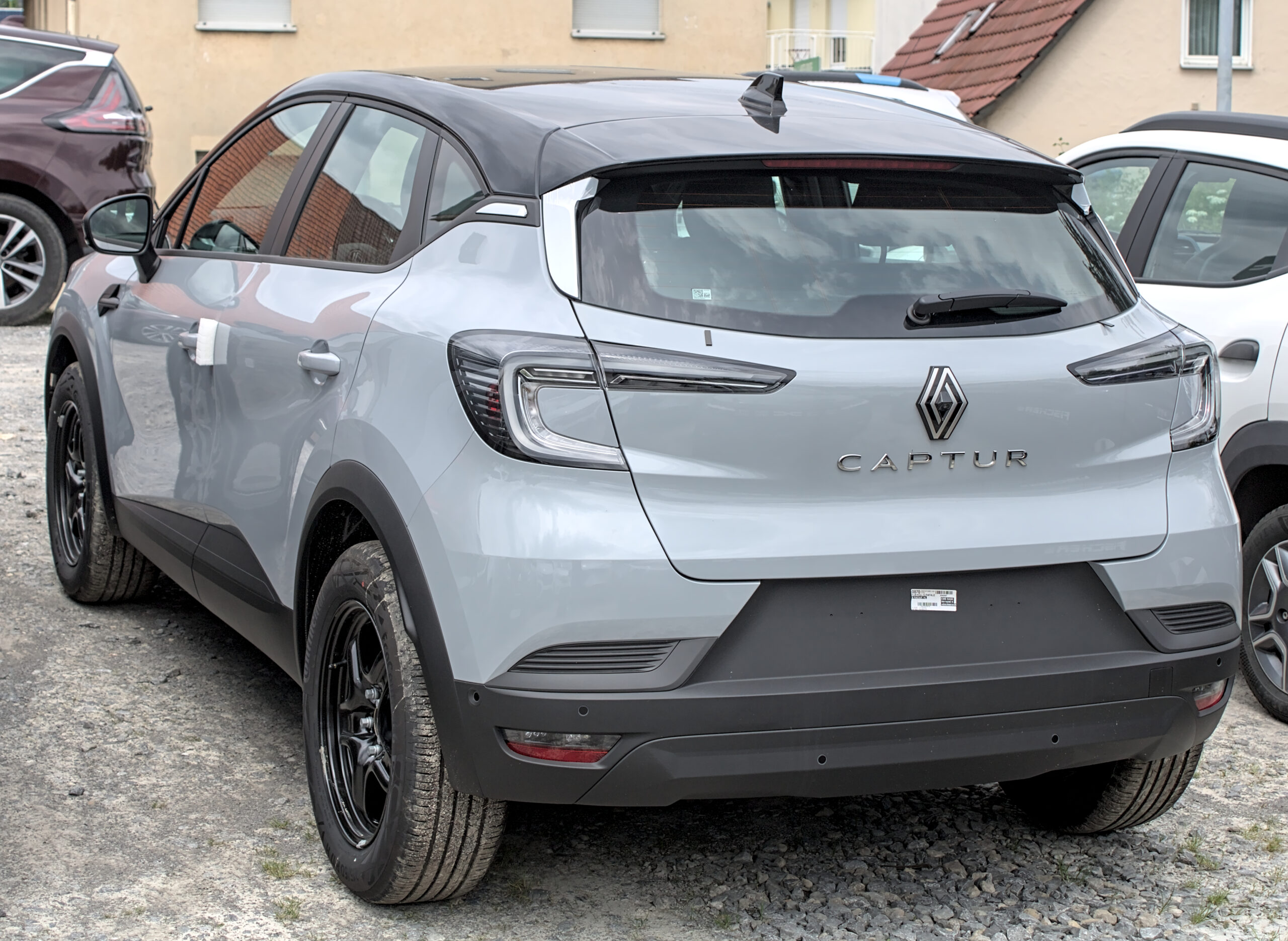
- Why it works: compact footprint, sliding rear bench, strong family versatility
- Watch out for: hybrid versions lose some boot space, so check the exact model you are considering
If your family needs change from one day to the next, the Captur is one of the cleverest small SUVs on sale.
3. Ford Puma: best compact SUV boot
The Ford Puma remains one of the best answers if your biggest concern is getting good boot space without moving into a wider SUV. It is only 1,805mm wide and 4,226mm long, but it still offers a 456-litre boot and Ford’s clever underfloor storage area, which is genuinely handy for muddy boots, sports kit or wet bags.
The compromise is rear-seat room. Adults will fit, but the Puma is not as generous in the back as the Kamiq, Captur or Qashqai. For families with younger children, though, it still makes a lot of sense, especially if boot flexibility matters more than maximum rear-seat space.
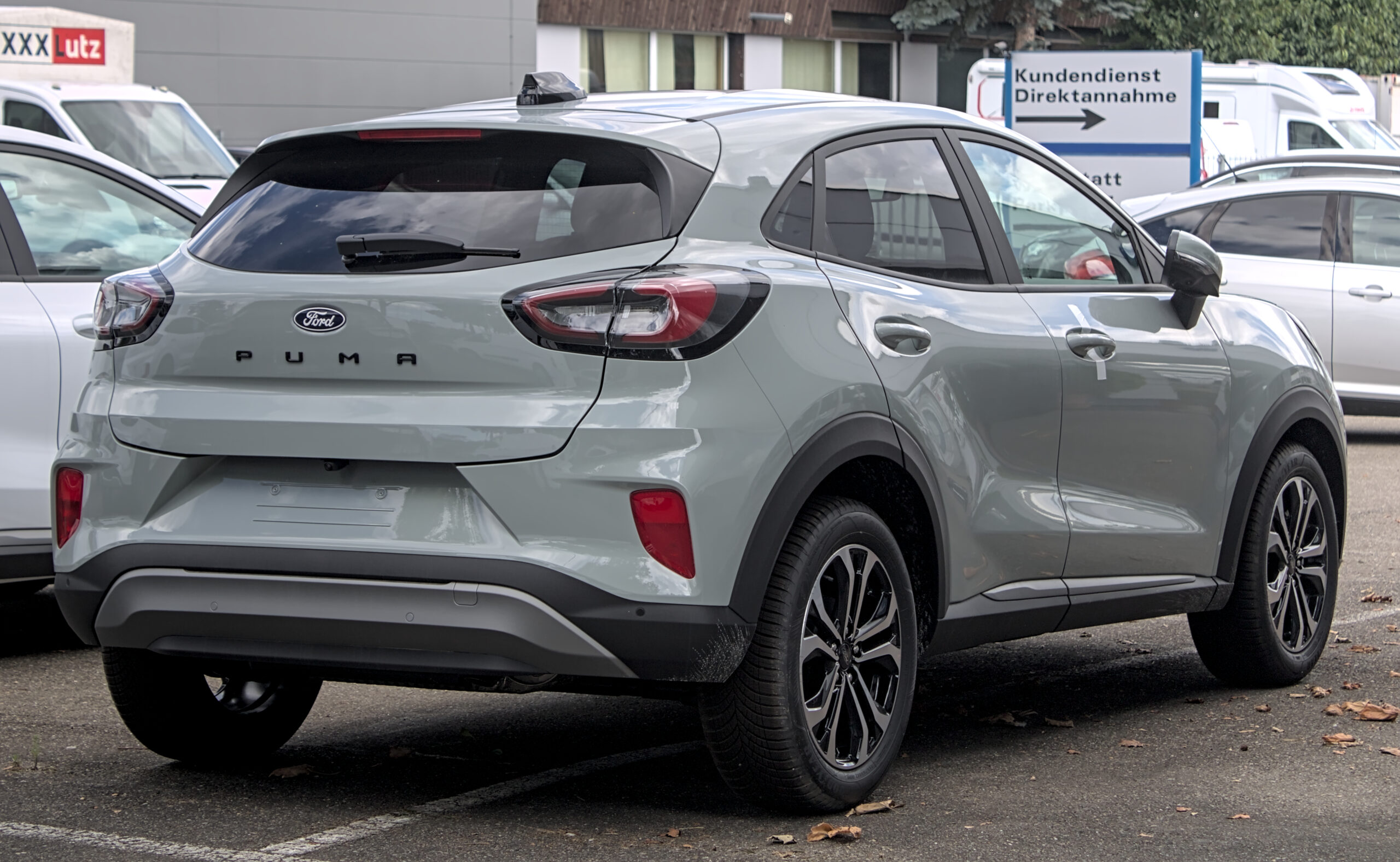
- Why it works: compact outside, one of the cleverest boots in the class, easy to thread through town
- Watch out for: rear-seat space is not class-leading, so try your child seats before buying
If your main thought is I need a smallish SUV but I still need a proper family boot, start with the Puma.
4. Dacia Duster: best value practical SUV
The Dacia Duster earns its place because it gives you more of the traditional SUV feel without ballooning into something awkward to live with. At 4,343mm long it is still manageable, and Dacia quotes a 2,069mm width with mirrors extended plus an official minimum boot figure of 594 litres for the version in its UK technical data.
That mirror width is worth remembering in narrow streets and tight multi-storeys, but the Duster still feels refreshingly honest. You get a higher seating position, useful cabin space and strong value, which matters if you need family practicality but do not want to spend premium-SUV money.
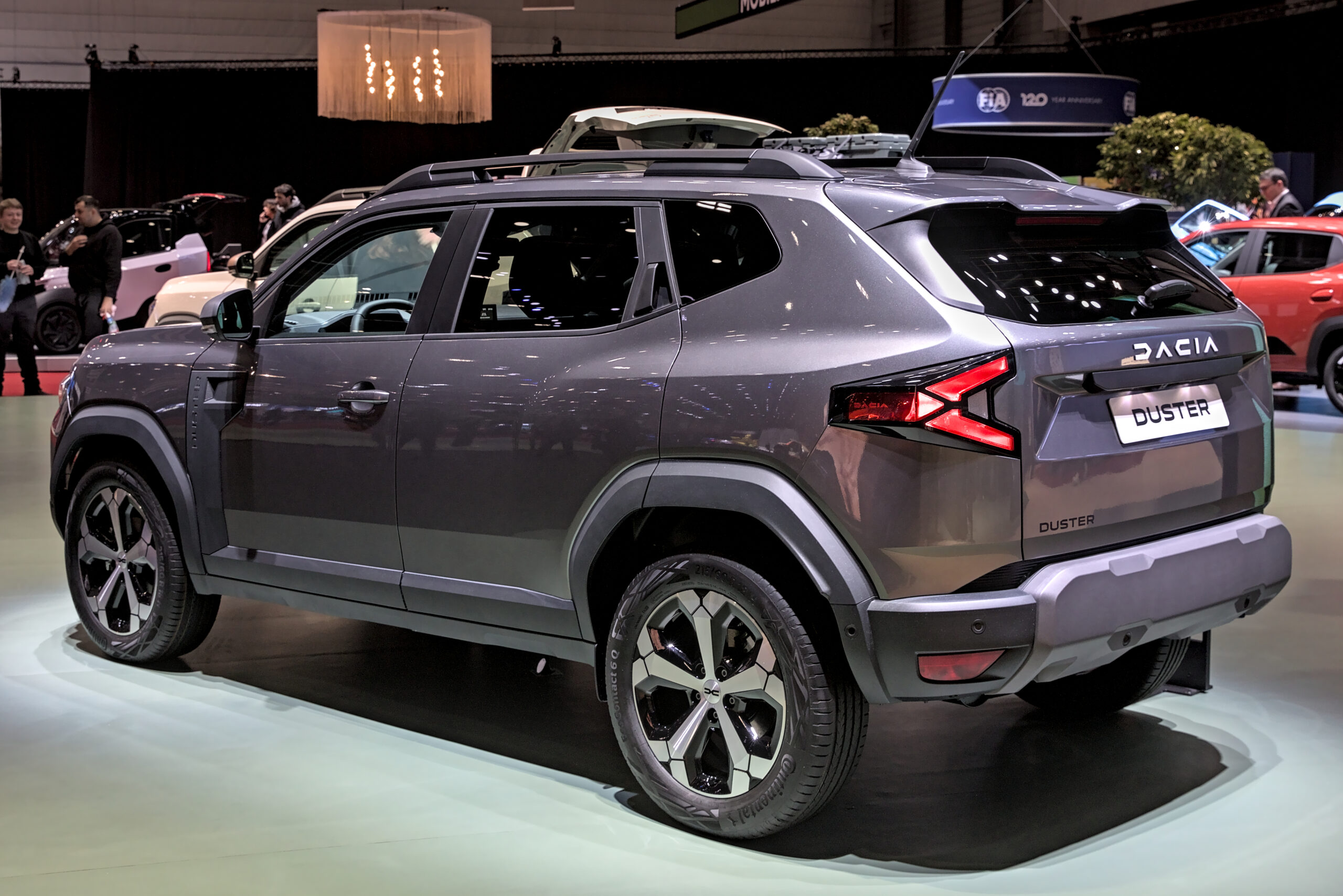
- Why it works: roomy feel, strong value, good driving position, useful family practicality
- Watch out for: mirrors are broader than the smaller cars here, and cheaper trims may not give you all the parking aids you want
The Duster is the value pick for families who want useful SUV space without paying for badge prestige.
5. Nissan Qashqai: best if you need a larger family SUV
The Nissan Qashqai is the biggest car on this list, so it is not the easiest to park. It still deserves a place because plenty of families genuinely need more room than a Puma or Kamiq can offer. Nissan quotes 1,835mm in body width, 4,425mm in length and up to 504 litres of boot space, which makes it more substantial without becoming a full-size SUV.
In day-to-day use, the Qashqai is the one to choose if you regularly carry older children, bulkier child seats or holiday luggage and you are willing to accept a little more parking stress in exchange. It is still more manageable than many mid-size SUVs, especially if you choose a trim with decent camera support.
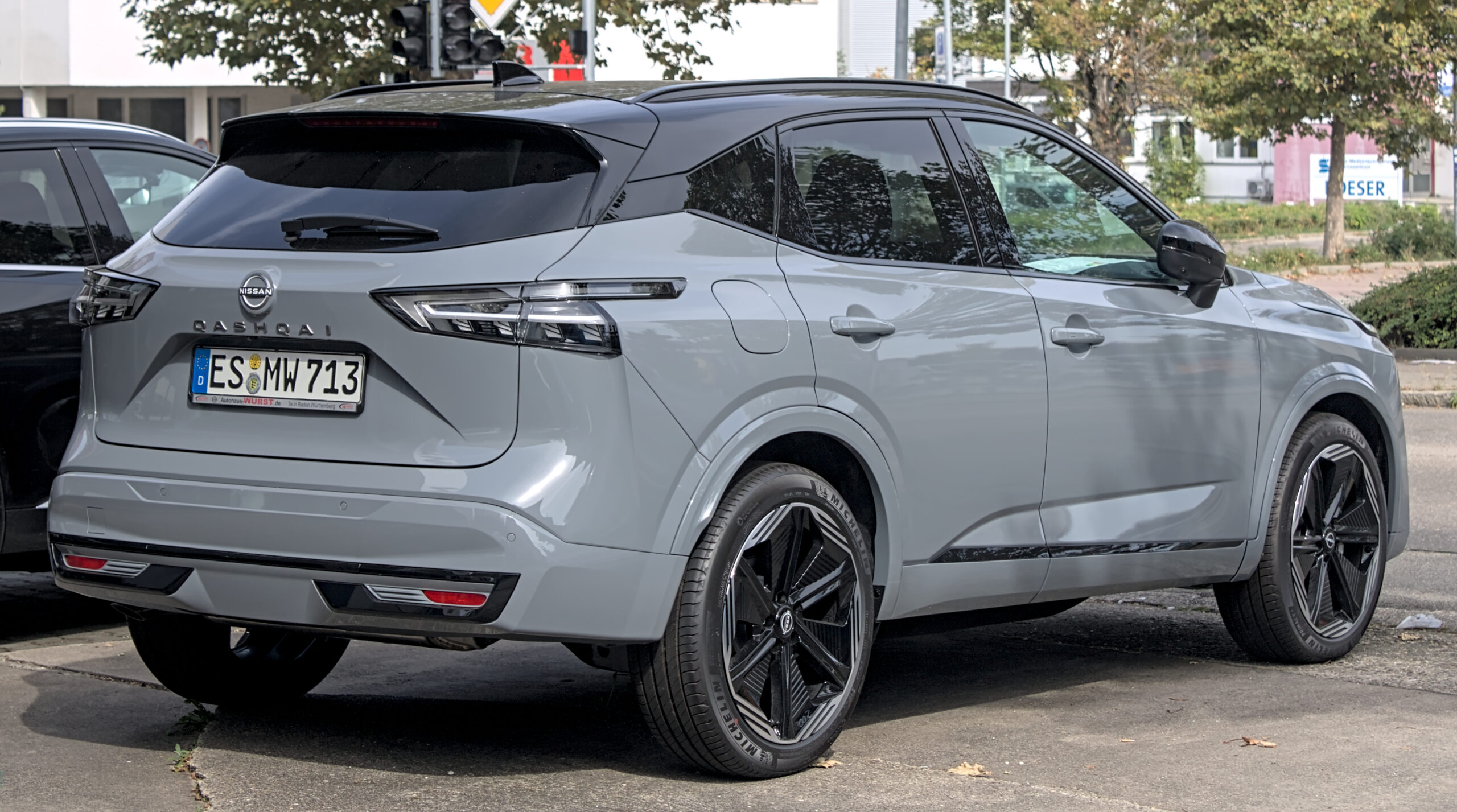
- Why it works: more family room than the smaller cars here, still sensible by modern SUV standards
- Watch out for: widest car on this shortlist, so parking sensors and cameras are worth prioritising
If you need a proper family-sized SUV but still want to stay sensible, the Qashqai is the step-up choice.
What about the Peugeot 2008, Hyundai Kona and Volkswagen T-Roc?
All three are worth a look, but they just miss the top five here.
The Peugeot 2008 is relatively compact but its rear visibility and cabin layout do not suit everyone. The Hyundai Kona is easy to recommend in general, especially as a hybrid, but it does not feel quite as space-efficient for family duties as the best cars above. The Volkswagen T-Roc is a polished all-rounder, though it is usually pricier and not meaningfully easier to park than a Kamiq.
What to check before you buy
1. Check mirror width as well as body width
Manufacturers often headline width excluding mirrors. That helps with painted bay lines, but it does not tell the full story in narrow streets or tight multi-storeys. Power-folding mirrors are more valuable than they sound.
2. Test your child seats
Parking-friendly does not automatically mean child-seat-friendly. If you use rear-facing seats or bulky bases, take them to the test drive if possible. If child-seat fit is your main concern, also read our guide to cars that can handle three child seats.
3. Open the rear doors in a tight space
This is the part many buyers forget. A narrow SUV is only useful if you can still get children in and out without a wrestling match. Try the rear doors in a genuinely tight bay if you can.
4. Prioritise parking cameras and sensors
For this sort of car, a rear camera is not a gimmick. Front sensors help too, especially in multi-storeys. A 360-degree camera is nice to have, but a clear reversing camera plus audible sensors already makes a big difference.
5. Do not obsess over boot litres alone
Boot shape matters just as much as the headline number. A square opening, adjustable floor and low load lip can matter more than an extra 20 litres. If bigger luggage space is your main priority, our guide to family cars with big boots is the better place to start.
Verdict: which one should you buy?
For most UK families worried about narrow parking spaces, the Skoda Kamiq is the best all-round answer. It is genuinely narrow by class standards, easy to judge, practical enough for daily family use and not overcomplicated.
Choose the Renault Captur if flexibility matters most. Choose the Ford Puma if you want a compact footprint with a very clever boot. Choose the Dacia Duster if value and straightforward practicality matter more than polish. Choose the Nissan Qashqai if you truly need the extra family space and can live with a slightly bigger car.
The key lesson is simple: in the UK, the best family SUV is often not the biggest one. It is the one you can park without wincing every time you visit the supermarket.
FAQs
What is the easiest family SUV to park?
The Skoda Kamiq is one of the easiest family SUVs to park because it combines a relatively narrow body, manageable length, good visibility and enough boot and rear-seat space for normal family use.
Is a Nissan Qashqai too wide for UK parking spaces?
No, but it is noticeably wider than smaller SUVs such as the Kamiq, Captur and Puma. It still fits typical UK bays, yet you will appreciate good sensors and cameras in tighter spaces.
Are small SUVs better than hatchbacks for parking?
Not always. Small SUVs can be easier to judge because of the higher seating position, but they are often wider than equivalent hatchbacks. If parking is your biggest worry, compare real dimensions rather than body style alone.
Which SUV features help most in narrow car parks?
The most useful features are rear parking sensors, a reversing camera, front sensors, power-folding mirrors and good all-round visibility. A 360-degree camera helps, but it is not essential.
Should I buy a compact SUV or a bigger family SUV?
Buy the smallest SUV that genuinely fits your family. If you only need space for one or two children and normal weekly use, a Kamiq, Captur or Puma may be enough. If you regularly carry older children, bulky child seats, pets or holiday luggage, a Qashqai-sized SUV may be worth the extra width.