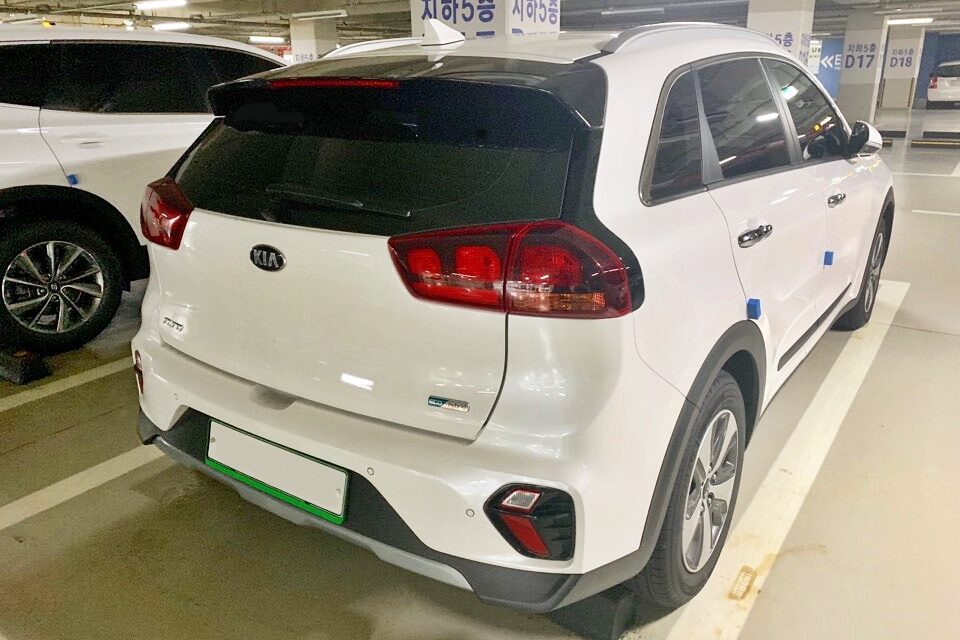
Thinking about a used Kia Niro? The main things to check are early hybrid recall work, 12V battery health, brake condition on lightly used cars, suspension noises, tyre wear that suggests poor alignment, and charging system issues on e-Niro models.
The Niro has become one of the smartest used choices for British drivers who want SUV practicality without the fuel bills of a conventional petrol crossover. It is available as a self-charging hybrid, a plug-in hybrid and a full EV, which means there is a version for almost every kind of commute. The good ones are easy to live with, cheap to run and backed by Kia’s strong warranty reputation. The wrong one can still sting you with warning lights, neglected recalls, brake corrosion or battery-related headaches.
This guide focuses mainly on the first-generation Kia Niro sold from 2016 to 2022, plus the closely related e-Niro, because those are the cars most used buyers in the UK are shopping for right now.
Quick answer: what are the main used Kia Niro problems to look for?
The biggest things to watch are completed recall work on early hybrids, 12V battery drain or electrical glitches, brake wear and corrosion on cars that do lots of gentle urban driving, suspension knocks and uneven tyre wear, and charging or power-control issues on some e-Niros.
Before you buy, start with these checks:
- full service history with invoices, not just a stamped book
- proof that recall work has been completed through the GOV.UK recall checker and a Kia dealer if needed
- no hybrid, engine, ABS or EV warning lights on start-up or during the test drive
- smooth braking with no graunching, pulling or steering vibration
- even tyre wear across all four corners
- no knocking from the suspension over broken urban roads or speed humps
- if it is an e-Niro or PHEV, a clean charging session and no fault messages from the charging flap or cable lock
- confirmation of the remaining Kia warranty, because that can still be a big selling point on newer examples
For most private buyers, a well-maintained Niro Hybrid 2 or 3 with a strong history is the safest all-round choice. If you can charge at home, the Plug-in Hybrid can make sense. If you want the lowest day-to-day running costs and are happy with EV life, the e-Niro is still one of the better used electric family cars in Britain.
Why the used Kia Niro makes sense in the UK
The Niro landed at exactly the right moment. British buyers wanted something higher-riding than a hatchback, but they did not necessarily want a big SUV with big fuel bills. Kia’s answer was sensible rather than flashy.
The first-generation car is roomy enough for small families, efficient in everyday use and generally easier to own than many diesel crossovers. Parkers rates the 2016 to 2022 Niro highly for low running costs, practicality and value, while Carbuyer highlights the newer-shape Niro’s space, low running costs and wide choice of hybrid, plug-in hybrid and EV powertrains.
It also helps that Kia’s 7-year or 100,000-mile warranty has real used-market value. On younger cars, some of that cover may still remain, and Kia says the warranty can pass to the next owner within its terms. That does not make every used Niro risk-free, but it does give you a useful layer of protection that a lot of rivals cannot match.
Which used Kia Niro does this guide cover?
If you are browsing the UK used market, you will usually be looking at one of these:
- Niro Hybrid (HEV), 2016 to 2022
- Niro Plug-in Hybrid (PHEV), 2017 to 2022
- e-Niro, 2019 to 2022
- the second-generation Niro from 2022 onwards, which is newer and usually pricier, but worth a look if budget allows
For many buyers, the first-generation self-charging hybrid is the sweet spot. It is usually cheaper than the PHEV, avoids diesel complexity and does not depend on home charging. The e-Niro is especially appealing if you want an EV that is more sensible than glamorous.
Used Kia Niro problems that matter most
1. Early hybrid recall work matters more than a glossy valeting job
This is the first thing to check because it is simple, important and often overlooked.
The official GOV.UK recall checker shows that some 2017 Kia Niro Hybrid models were subject to safety recalls. One recall covered reduced contact pressure on the main relays in the Power Relay Assembly, which could lead to heat build-up. Another covered burrs in the inner hydraulic clutch actuator housing, where oil leakage could trigger a warning light and, in the official recall wording, create a fire risk.
That does not mean every early Niro is a problem car. It does mean you should treat documented recall completion as part of the buying process, not a nice extra. If the seller cannot show paperwork, check the registration with GOV.UK and then confirm with a Kia dealer.
2. Electrical faults and 12V battery drain can turn a cheap buy into an annoying one
Hybrid and EV buyers often think only about the big traction battery, but the humble 12V battery causes plenty of real-world grief.
Fixter flags battery drain and electrical faults as recurring Kia Niro complaints, including cases where the car’s battery management does not behave as owners expect. In practice, the symptoms can include a flat 12V battery, random warning lights, keyless-entry issues or a car that seems fine one day and reluctant the next.
On a viewing, do not just see whether it starts. Check whether the car has clearly been recently jump-started, whether the seller mentions that it needs to be driven regularly to keep the battery happy, or whether there are warning messages stored in the dash. If the battery is old, budget for replacement and ask whether any software updates have been done.
3. Brake wear and corrosion are easy to miss on hybrids and EVs
This is one of the more important used-car traps with electrified family cars.
Because the Niro uses regenerative braking, the conventional friction brakes may not get worked as hard as those on a normal petrol SUV, especially on cars that spend their lives in town. That can mean rusty discs, sticky components or disappointing braking feel even when the rest of the car seems mechanically fine.
Fixter specifically notes owner complaints around the brake system, including squeaks, inconsistent feel and warning lights. During a test drive, use the brakes firmly a few times on a safe stretch of road. The car should pull up straight, without steering shake, grinding or a long dead travel before the brakes bite. After the drive, look through the wheels at the disc condition instead of assuming the hybrid system makes all brake issues disappear.
4. Suspension knocks and uneven tyre wear deserve a closer look
The Niro is not known as a fragile SUV, but suspension wear still shows up on UK roads. Potholes, speed humps and heavy kerbs do what they always do.
Fixter highlights suspension and steering complaints including uneven tyre wear, changes in ride quality and noises over bumps. That matters because tyre wear tells you quite a lot about how a car has been used and maintained. A Niro with feathered front tyres or clear inner-edge wear may need more than a simple alignment. It can point to tired components, a history of kerb strikes or neglected maintenance.
The test drive should include rougher urban roads, not just a smooth bypass. Listen for front-end clunks, rear-end knocks and any steering that feels less precise than it should.
5. e-Niro buyers should be fussy about charging and recall history
The e-Niro is one of the more convincing used EVs because it offers strong range, decent space and a sensible shape, but you still need to check EV-specific basics properly.
The GOV.UK recall checker shows a 2020 e-Niro recall for a potential coolant leak in the Electric Power Control Unit, which could cause loss of power while driving. Again, this is exactly why recall checks matter.
When you inspect an e-Niro, do not settle for a normal walkaround and a short drive. Make sure it charges cleanly, check that the charging flap and locking mechanism work properly, and look for any stored fault messages. If the seller cannot demonstrate charging, that is not an automatic deal-breaker, but it is definitely a reason to be more cautious.
Also ask about real-world range in winter and whether the car has spent long periods parked at very high or very low states of charge. A healthy e-Niro should still feel like an easy family EV, not a science project.
6. Plug-in Hybrid cars need the right owner, not just the right spec sheet
A used Niro PHEV can be brilliant for someone with a short commute and regular home charging. It can also be a slightly compromised buy if the previous owner never plugged it in and simply carried the extra hardware around.
The key thing is not just whether the car drives well, but whether it has been used as intended. Ask about charging habits, service records and average fuel economy. A PHEV that has spent years being run like a normal petrol car may still be fine, but it deserves more questions than a tidy self-charging hybrid.
You should also test both sides of its character. It needs to drive properly when running as a hybrid, and it needs to accept a charge without drama.
7. Interior quality is generally solid, but cabin tech still needs checking
The Niro’s cabin is usually one of its strengths. Even the older cars are straightforward, airy and easy to get on with. That said, used buyers should still test every boring detail.
Check the infotainment screen, reversing camera, parking sensors, climate controls, heated seats if fitted, USB ports and all charging-related menus on PHEV and EV versions. A hybrid crossover can look smart in photos while hiding an expensive list of smaller faults that make ownership irritating.
This is especially true if you are buying privately. A seller may describe the car as faultless because it drives fine, while quietly ignoring a dead camera, an intermittent sensor or a weak 12V battery.
Which used Kia Niro should you buy?
For many UK buyers, the best balance is a first-generation Niro Hybrid 2 or 3 with full history and evidence of careful ownership. It is the easiest version to recommend because it combines low running costs with fewer lifestyle demands than the PHEV or e-Niro.
If your daily routine suits charging, the Niro PHEV can work well, but buy on condition and charging proof rather than brochure claims. If you want an EV, the e-Niro remains a strong used buy because it has family-friendly packaging and a good reputation for real-world usefulness.
If your budget stretches to the newer 2022-on car, you get a smarter cabin, more modern design and a generally more polished feel, but the earlier model is still the value play.
Best used Kia Niro checks before you buy
Run through this shortlist before money changes hands:
- check the GOV.UK recall checker and ask for proof any recall work was completed
- inspect the service history for brake-fluid changes, not just annual stamps
- listen for suspension noise on rough roads
- look closely at tyre wear patterns
- check for any 12V battery or electrical drama, especially after the car has been standing
- on PHEV and EV versions, test a proper charging session
- confirm how much Kia warranty is left, if any
- read the MOT history carefully for recurring brake, tyre or suspension advisories
Is a used Kia Niro worth buying?
Yes, usually.
A well-bought Kia Niro is one of the more sensible used family cars in the UK if your priorities are low running costs, easy daily use and a bit more practicality than a normal hatchback. The hybrid is the safest all-round recommendation, the PHEV makes sense for the right routine, and the e-Niro is still a genuinely good used EV.
The trick is to buy on condition and evidence, not on green credentials alone. Check the recall history, be alert to 12V and brake-related issues, and do not wave away suspension knocks or charging faults as small stuff. Get those basics right and the Niro can be an excellent used buy.