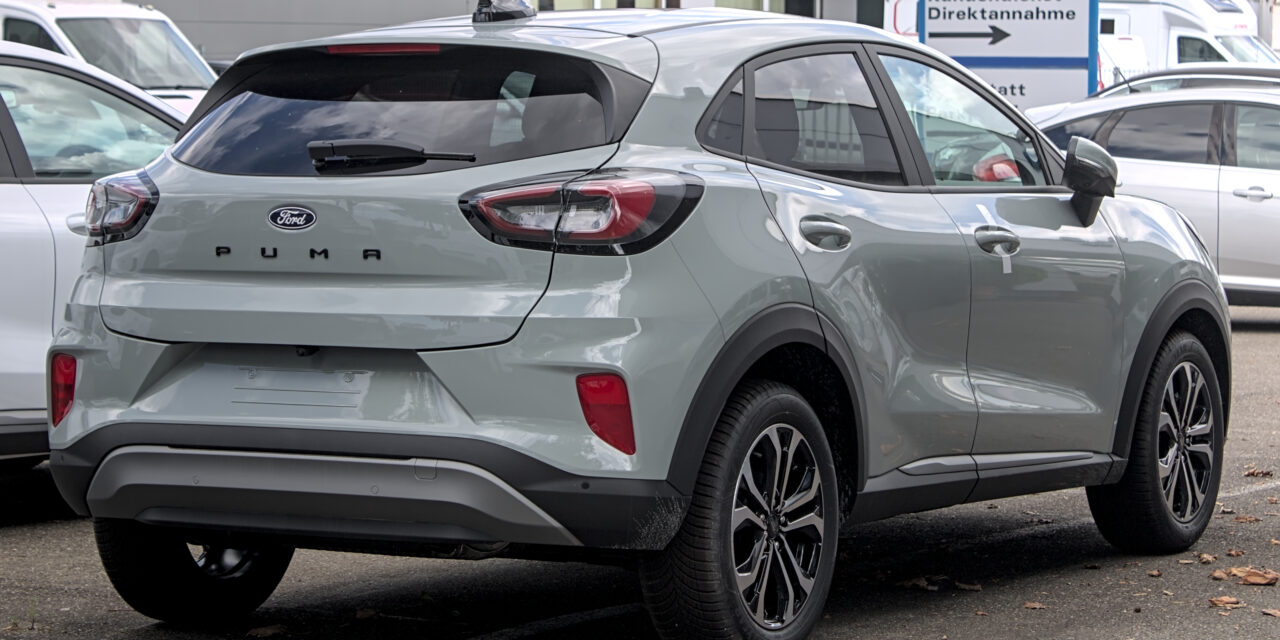
The Ford Puma has become one of the UK’s default choices for anyone who wants a small SUV that does not feel dull. It looks sharper than most of its rivals, it is better to drive than many crossovers at this price, and it has the sort of practicality that makes family life easier without feeling van-like.
That popularity also means there are now thousands of used Pumas on the market, with Auto Trader currently listing well over 3,900 examples. The upside is choice. The downside is that buyers can get lazy, assume every Puma is a safe bet and end up paying strong money for a car with mediocre history, unfinished recall work or the wrong kind of wear.
Quick answer: what are the main used Ford Puma problems to look for?
The main things to check are full and correct servicing on 1.0 EcoBoost cars, any signs of cooling or warning-light trouble, recall completion on hybrid and software-related issues, scuffed wheels and suspension wear from potholes, and electrical gremlins involving the screen, cameras or instrument display.
Before buying, start with these checks:
- full service history with invoices, not just a stamped book
- evidence the car has had the correct oil and on-time servicing
- no warning lights, no hybrid system alerts and no instrument display glitches
- smooth cold start and stable idle from the 1.0 EcoBoost engine
- proper recall checks for fuel line, eCall, battery-terminal, camera and software campaigns where relevant
- wheel condition, tyre brand quality and any knocks over broken roads
- smooth clutch take-up on manuals and clean low-speed response on automatics
- a proper road test with the air conditioning, infotainment, parking camera and driver-assistance kit all working
For most buyers, the safest used Puma is a car with strong paperwork, a clean MOT history, matching decent tyres and proof that any recall work has already been handled.
Why the Puma is such a tempting used buy in the UK
The Puma sits in a sweet spot of the used market. It gives buyers the higher seating position and easy access many people now want, but it still feels far closer to a Fiesta than to a bloated family SUV from behind the wheel.
That matters because the small-SUV class is full of cars that are sensible on paper and forgettable in real life. The Puma is one of the few that people actively seek out, which helps explain why used prices often stay fairly firm.
It is also a car that attracts a wide mix of owners. Some Pumas have lived easy motorway or commuter lives. Others have spent years on school runs, tight urban parking and poor roads, which can leave a very different kind of wear. Condition matters more than the badge.
Which used Ford Puma are most buyers looking at?
Most buyers are shopping the current-generation Puma launched in 2019. In practice, that means the 1.0-litre EcoBoost petrol dominates the used market, usually in 125PS or 155PS form, with mild-hybrid versions very common.
There is a lot to like here. Honest John highlights the Puma’s strong fuel economy, generous equipment and appealing road manners, all of which help explain its used demand. But this is not a car you buy on reputation alone.
A used Puma needs to be treated as a history-and-condition purchase first, and a trim-level purchase second.
1) Service history matters because the EcoBoost questions never fully go away
This is the biggest used Puma check.
The Puma’s 1.0 EcoBoost is not the same horror story some buyers still associate with older Ford three-cylinder engines, but that does not mean you should shrug off servicing. Bumper’s UK reliability guide notes that the Puma uses the newer EcoBoost layout with a timing chain, while the oil pump is still belt-driven. In plain English, this is still an engine family where correct oil, timely servicing and proper paperwork matter.
So when you inspect a car, do not just ask whether it has service history. Ask:
- were the services done on time rather than only when the seller remembered
- is there invoice evidence, not just a stamp
- has the car always had the correct oil grade
- has the engine ever shown oil-pressure, overheating or warning-light issues
- has the seller ever been advised about belt-related or lubrication-related work
Any vague answers here should make you cautious. A cheap Puma with a fuzzy maintenance record is not the bargain it first appears to be.
2) Check for recall work instead of assuming Ford handled it years ago
This is where a lot of buyers get caught out. GOV.UK’s vehicle recall service shows that Puma recalls have covered a surprisingly wide range of issues depending on year.
Examples include:
- an engine oil separator issue on some earlier cars
- hybrid battery connections not torqued to Ford specification on some 2020 cars
- eCall malfunction recalls on certain 2022, 2023 and 2024 cars
- fuel-line chafing recalls affecting some 2023 and 2024 vehicles
- rear-view camera software issues on some earlier cars
- instrument cluster software faults on certain later cars
None of that means the Puma is uniquely troublesome. It means a serious buyer should always run the registration or VIN through Ford’s recall checker and compare the answer with the paperwork in front of them.
If the seller has never checked, do it before you agree a deal.
3) Watch for overheating history and do not dismiss temperature warnings
One issue raised by UK reliability coverage is overheating caused by a coolant-flow problem involving the valve between the coolant hoses and heater matrix. That does not mean every Puma is vulnerable, but it does mean any hint of past overheating deserves proper attention.
On a viewing and test drive, look for:
- a temperature warning or previous warning-light history
- no heat from the cabin heater when the engine is warm
- evidence of coolant top-ups without a convincing explanation
- a seller who says the car once "got hot" but was supposedly fine afterwards
Modern small turbo engines do not respond well to owners casually ignoring cooling problems. If the history here feels messy, walk away and find another one.
4) Mild-hybrid and electrical issues are worth checking properly
Many used Pumas are mild hybrids, and most will be absolutely fine. Still, software and electrical glitches are part of the car’s pattern of known issues.
GOV.UK recall records show campaigns covering hybrid battery connections, eCall faults, rear-view camera software and instrument-cluster display problems. What Car?’s used reliability coverage has also pointed to electrical niggles rather than one single dominant mechanical disaster.
That means your road test should include more than the engine and gearbox. Check that:
- the instrument display wakes up properly every time
- the infotainment system responds without freezing or random restarts
- the reversing camera and sensors work normally
- there are no unexplained driver-assistance warnings
- stop-start and charging functions behave as expected on a mild hybrid
A used crossover can feel fine for ten minutes and then start throwing electronic tantrums once you actually live with it. This is exactly the sort of stuff to catch before you buy.
5) Big wheels, potholes and cheap tyres tell you a lot about the car
The Puma is often bought in sporty-looking trims with large alloy wheels, and those do not always age gracefully on British roads.
What Car?’s used-car advice flags wheel damage as something to watch for, and that makes sense. A lot of Pumas live in city centres, supermarket car parks and pothole-heavy suburbs. Kerbed alloys are common. More importantly, they can be a clue to harder impacts that also affect tyres, alignment and suspension components.
Check for:
- badly kerbed alloys
- uneven tyre wear
- mismatched cheap tyres
- steering pull on a flat road
- knocks or clonks over potholes and speed humps
- vibration through the steering wheel at speed
A tidy Puma on decent matching tyres is usually a much better sign than a shinier one sitting on four budget tyres and scarred wheels.
6) Manual and automatic gearboxes both need a proper low-speed test
Many buyers focus so much on the engine that they barely test the transmission. That is a mistake.
On a manual Puma, make sure the clutch bites cleanly, the car pulls away without shuddering and the gearbox does not feel obstructive when cold. On an automatic, pay more attention to low-speed behaviour than to a quick burst on an open road. You want smooth parking manoeuvres, clean take-up in traffic and no hesitation or warning messages.
This is not a model known for one notorious gearbox disaster. It is simply a reminder that used family cars live a lot of their lives in stop-start driving, and that is exactly where tired clutches and awkward low-speed calibration show up first.
7) Interior wear can reveal a harder life than the mileage suggests
The Puma’s cabin generally holds up well, but it is still worth reading the wear clues carefully.
Look at the driver’s seat bolster, steering wheel trim, touchpoints around the screen, the boot floor and the rubber seals around the doors and tailgate. A supposedly pampered low-mileage car should not feel battered.
Also check the famous MegaBox boot area for signs of heavy use, damp or rough treatment. It is a clever feature, but it is also the sort of space people throw muddy boots, leaking garden kit and wet dog gear into without much sympathy.
Which used Ford Puma is the best one to buy?
For most UK buyers, the sweet spot is a well-maintained 1.0 EcoBoost 125 mild-hybrid in a sensible trim with full history, completed recall work and no signs of cheap upkeep.
That version gives you the economy and usability people actually buy the Puma for, without pushing as hard into expensive trim or performance territory. The key is not chasing the cheapest car. It is finding one that has been serviced properly and not cosmetically disguised for sale.
If you want the sharpest value, buy on history and condition rather than on badge, body kit or wheel size.
Should you buy a used Ford Puma?
Yes, provided you buy carefully.
The Puma is popular for good reasons. It is one of the more enjoyable small SUVs to drive, it looks modern enough not to feel stale, and the used market is large enough that you do not need to compromise for the wrong car.
Just do not treat it like a buy-any-one proposition. Be strict about servicing, be even stricter about recall checks, test every bit of electrical kit, and pay attention to tyres, wheels and suspension clues that reveal how the car has actually been used.
Get that right and a used Ford Puma can still be one of the smartest compact crossover buys in the UK.