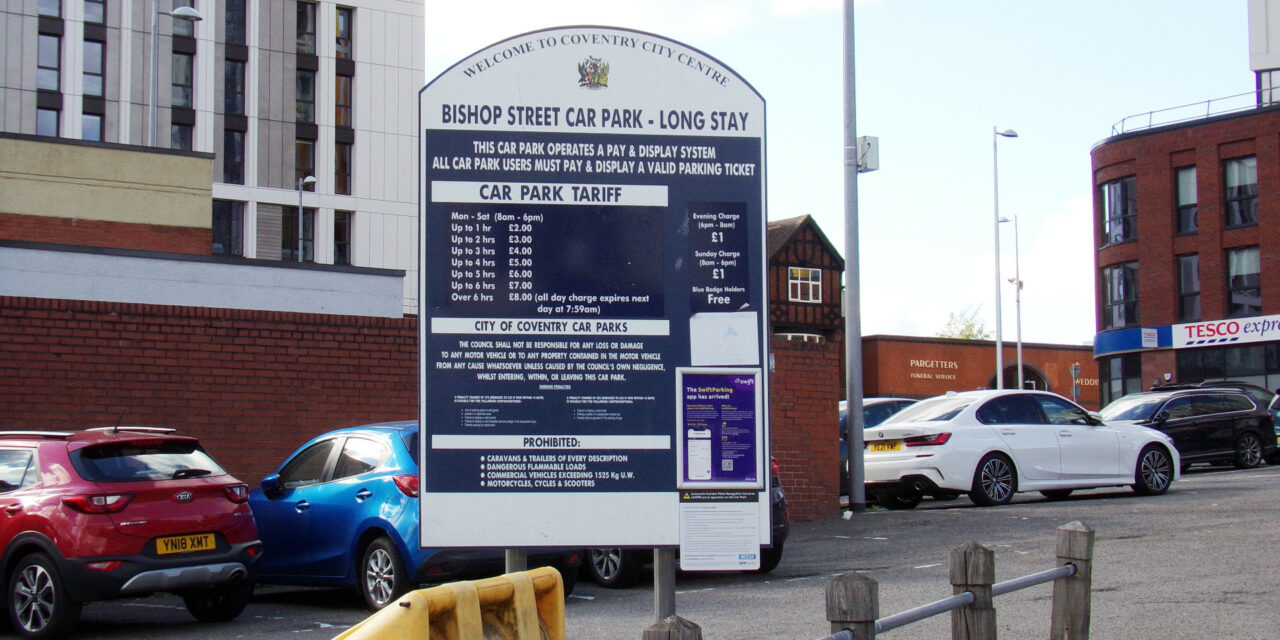
If a ticket lands on your windscreen in a supermarket, retail park or privately run car park, the first thing to know is that it is not handled in the same way as a council parking fine.
This guide is for private parking tickets, usually called a Parking Charge Notice, on private land in the UK. The practical appeal route below is most relevant for drivers in England and Wales. If you are in Scotland or Northern Ireland, check the local Citizens Advice guidance as the legal position and enforcement route can differ.
First, check what type of ticket you actually have
Before you pay anything, read the notice carefully.
Citizens Advice says most parking tickets will be one of three types:
- a Penalty Charge Notice from a council on public land
- a Parking Charge Notice from a landowner or parking company on private land
- a Fixed Penalty Notice issued by the police in certain locations
If yours came from a supermarket car park, retail park, hospital car park or a privately managed residential or business site, it is usually the second kind.
That matters because the appeal route is different. A council ticket goes through the official public process. A private parking ticket starts with the parking company, then may go to an independent appeals body if the firm rejects you.
The first checks that matter most
Do these before you start drafting an appeal.
1. Keep the paperwork and photograph everything
Take clear photos of:
- the ticket itself
- your car where it was parked
- the bay markings
- the nearest signs and the entrance signage
- payment machines, broken screens or app error messages if relevant
- your receipt, bank transaction or pay and display ticket if you paid
This is the difference between an appeal with evidence and an appeal that just says the ticket feels unfair.
2. Check whether the signs were actually clear
On private land, the operator relies on the terms shown on nearby signs. Citizens Advice says those terms and conditions should be made clear on the signs near where you parked. If the wording was hidden, confusing, badly lit, blocked or contradictory, that can be an appeal point.
A lot of weak private parking cases come down to bad signage, tiny print or a rule that only becomes obvious after a driver has already parked.
3. Check whether you actually broke the stated rule
This sounds obvious, but it is where many drivers either save money or waste time.
If you paid, left within the free period, entered the registration correctly, displayed the permit, used the parent and child bay properly or followed the site rules, say so clearly and attach proof. Citizens Advice notes that if you can show you stuck to the rules on private land, the ticket should be cancelled.
4. Check if the operator belongs to an accredited trade association
Citizens Advice says only accredited trade association members can normally get the registered keeper’s details from the DVLA. The two names that matter are the British Parking Association, known as the BPA, and the International Parking Community, known as the IPC.
If a company put a notice on your car but is not a member of an accredited trade association, Citizens Advice says not to rush into contacting them unless they write to you first.
5. Check the deadline before the discount disappears
Citizens Advice says private parking operators usually offer a 40 to 60 per cent discount if you pay a Parking Charge Notice within 14 days.
That does not mean you should panic-pay, but it does mean you should decide quickly whether you have a real case or whether the cheapest option is simply to settle it.
When a private parking ticket is worth appealing
A private ticket is usually worth challenging when one or more of these apply:
- you paid and can prove it
- the signs were hard to see, misleading or inconsistent
- the machine or payment app failed
- your car broke down
- you had permission from the landowner or retailer
- you were on site as a genuine customer and have receipts or transaction proof
- the operator has mixed up the times, registration or location
Citizens Advice also points to evidence such as witness statements, repair notes and photos of signs that are hard to understand.
For supermarket and retail park tickets, it can also be worth speaking to the store manager or site management team. If you were a genuine customer and can show a receipt, some landowners will tell the parking operator to cancel the charge.
When paying quickly may be the smarter move
Not every ticket is a winner on appeal.
If the signs were obvious, the time limit was clear, you overstayed by a long margin and you have no evidence of a machine problem or other issue, the early payment discount can be the least painful exit.
The internet is full of macho advice telling drivers to ignore private parking tickets on principle. That is a good way to turn a smaller problem into a bigger one.
How to appeal a private parking ticket properly
Step 1. Appeal to the parking company first
Citizens Advice says you must write to the company before using an independent appeals service. Keep it factual. Do not ramble and do not invent legal arguments you do not understand.
A simple structure works best:
- identify the ticket number, vehicle registration and date
- explain clearly why you object
- attach your evidence
- ask for cancellation
- request a copy of the rejection notice and appeal code if they refuse
One important point from Citizens Advice: do not pay a parking ticket that you are appealing. Paying is usually treated as admitting the charge was correct, which can kill your appeal.
Step 2. Escalate it if they reject you
The next stage depends on which trade body the operator belongs to.
- If it is a BPA member, Citizens Advice says you can make a formal appeal to POPLA, Parking on Private Land Appeals.
- If it is an IPC member, Citizens Advice says you can make a formal appeal to the Independent Appeals Service.
Citizens Advice says a BPA case can go to POPLA within 28 days of your first appeal being rejected. For an IPC member, Citizens Advice says you can appeal to the Independent Appeals Service for free within 21 days, and after that within one year for a fee.
POPLA’s own guidance also stresses the value of good supporting evidence, so do not throw together a one-line complaint and expect it to carry the day.
Step 3. Keep every reply and do not miss later letters
If the company, appeal body or landowner writes back, keep the emails, screenshots and letters in one folder. If your appeal fails and you decide not to pay, you need to understand exactly what stage the case is at.
What not to do
- Do not ignore the notice just because it is on private land.
- Do not pay first and argue later unless you are intentionally giving up the appeal.
- Do not rely on old forum advice that says all private parking tickets are unenforceable.
- Do not miss the independent appeal deadline.
- Do not bin debt collection or court paperwork if the case keeps moving.
Citizens Advice is blunt on this point. If you are outside the appeal window, do not just ignore the ticket, because costs can rise and the problem can escalate.
Private parking ticket or council PCN? Here is the quick difference
If the notice came from a council, TfL or another public authority, the GOV.UK parking fines process is the one to follow.
If it came from a private operator on a retail park, supermarket, hospital or other private site, start with the operator’s own appeal process, then move to POPLA or the Independent Appeals Service if available.
That sounds like a small distinction, but it changes almost everything.
The practical bottom line
If you get a private parking ticket, do not treat every case as either an obvious scam or an automatic fine.
Treat it like a paperwork and evidence job.
Check who issued it, confirm whether the signs were clear, gather your proof, see whether the company belongs to the BPA or IPC, and then decide fast whether you have a real appeal or whether the discounted payment is the cheaper answer.
That approach is a lot more useful than panic-paying, and a lot safer than pretending the ticket will disappear by itself.
Useful official and consumer guidance
- GOV.UK parking tickets and fines guidance
- Citizens Advice guidance on parking tickets and appeals
- POPLA appeal guidance
- British Parking Association member search
- International Parking Community member search