A dash cam is legal in the UK, but that does not mean you can stick it anywhere and forget about it. The real risk is not owning the camera. It is mounting it where it blocks your view, leaves cables in the way or creates a problem at MOT time.
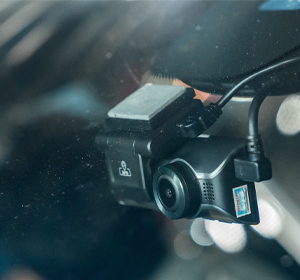
If you want the short version, the safest place is usually high up on the windscreen, tucked close to the rear-view mirror, with the lens still giving a clear view ahead and the body of the camera kept out of the driver’s main sightline. On many right-hand-drive cars that means mounting it slightly towards the passenger side rather than directly in front of you.
Here is what UK drivers actually need to know before fitting one.
The quick answer
A dash cam is not banned in the UK. What matters is placement. Your windscreen and windows must be kept clean and free from obstructions to vision, and a badly placed dash cam can become both a road-safety issue and an MOT issue.
The government guidance used for windscreen obscuration is also the simplest rule of thumb for accessories on the glass:
- in Zone A, the critical area centred on the steering wheel, obstructions should not encroach by more than 10mm
- in the rest of the swept area of the windscreen, obstructions should not encroach by more than 40mm
That is why small cameras mounted high and neatly are usually fine, while bulky suction mounts placed low or near the middle of the driver’s view are asking for trouble.
Where should a dash cam go in a UK car?
In practical terms, the best place is normally:
- high on the windscreen
- close to or just behind the rear-view mirror
- outside the driver’s direct line of sight
- with the power cable routed neatly so it does not dangle across the screen
That position works because it keeps the camera close to an area drivers are not looking through continuously. It also tends to avoid the most sensitive part of the swept area in front of the driver.
A few fitting tips matter more than people think:
- Sit in the driving position before fixing the mount permanently.
- Check what the camera body blocks, not just what the lens can see.
- Turn the wipers on and make sure the camera is not sitting in an awkward part of the swept area.
- Make sure it does not interfere with any sensor housing, mirror movement or sun visor operation.
- Hide or secure the cable properly, especially near the A-pillar.
If your car has a large camera or sensor pack behind the mirror, do not assume there is loads of spare room. Modern cars can be fussier than older ones, and some installations look tidy from outside but are more intrusive from the driver’s seat than expected.
What do the UK rules actually say?
The Highway Code says windscreens and windows must be kept clean and free from obstructions to vision. That is the broad rule.
The more specific government guidance on windscreen obscuration breaks the windscreen into two areas:
- Zone A is the 290mm-wide section centred on the steering wheel within the swept area
- Zone B is the rest of the swept area
In Zone A, stickers or other obstructions should not encroach by more than 10mm. In Zone B, the limit is 40mm.
A dash cam is not named specially because it does not need to be. It is simply another item attached to the glass, so the same visibility logic applies.
That does not mean every camera larger than 10mm is automatically illegal. It means the part that sits within those critical viewing areas is what matters, and why careful placement is more important than the sales copy on the box.
Can a dash cam fail an MOT?
Yes, it can if it significantly affects the driver’s view through the swept area of the windscreen.
The DVSA MOT inspection manual says an obstruction that significantly affects the driver’s view of the road through the swept area of the windscreen is a major defect. An obstruction outside that swept area but still significantly affecting the field of view is listed as minor.
That is the bit many drivers miss. A camera can be secure, expensive and perfectly functional, but still be mounted in a way an MOT tester does not like.
You are more likely to have a problem if:
- the camera sits low on the screen
- the mount is large and chunky
- a second rear-view display or extra accessory is also fixed nearby
- the cable loops across the glass
- the unit blocks part of the area you naturally look through at junctions or roundabouts
If you are already close to the line, a tester may look at the whole setup rather than the camera alone. A compact unit with neat wiring is much easier to defend than a cluttered windscreen full of gadgets.
Is it legal to record other road users?
For an ordinary private motorist using a dash cam for personal driving, the camera itself is not the issue most people think it is. The bigger legal and practical problems usually come later, when footage is shared carelessly or used in a business context.
If the camera is fitted to a work vehicle, the ICO says businesses need to justify using it, tell people they are recording them, handle the footage responsibly and keep data protection fee payments up to date where required. The ICO also says people captured on camera have rights.
For private drivers, the sensible rule is simple:
- use the camera for genuine driving evidence and security
- avoid recording more than you need
- be cautious about posting clips publicly with faces, number plates, addresses or audio that identifies people
- do not assume that because a clip is yours, sharing it everywhere is consequence-free
That is especially true if your camera records audio inside the car. Cabin audio can be far more intrusive than people realise.
Can dash cam footage help with insurance or the police?
Often, yes, but it is not a magic button. Footage can help establish what happened after a collision or road-rage incident, and some police forces accept uploaded road-traffic footage through online portals. Insurers may also find clean, time-stamped footage useful when liability is disputed.
That said, footage only helps if it is usable. A badly positioned camera, a dirty windscreen, poor night performance or missing registration details can all limit its value. So can forgetting to protect the file after an incident if your camera overwrites old footage automatically.
If you are buying one mainly for claims evidence, it is worth reading our guide to dash cams and car insurance in the UK. If you still need to choose a unit, our roundup of the best budget dash cams under £100 is a good place to start.
Common dash cam mistakes UK drivers make
1. Mounting it where the driver naturally looks
A camera can feel small when you hold it in your hand, then suddenly look huge once it is in the windscreen. If it sits in your main forward view, move it.
2. Forgetting the mount counts too
The suction cup, adhesive plate and hinge can take up more space than the camera body itself. Test the whole unit, not just the lens housing.
3. Leaving cables loose
Loose wiring looks untidy and can become distracting. In a harsher reading, it may also contribute to an obstructed view.
4. Assuming rear-view mirror height means automatic legality
Close to the mirror is usually the right idea, but each windscreen shape is different. Sit in the car and check it properly.
5. Posting footage online too casually
Sharing clips for laughs can create trouble that using the camera never did. If there is no real reason to publish a clip, do not.
A sensible fitting checklist before you drive
Before you treat the job as finished, make sure you can answer yes to all of these:
- Can I see the road, junctions and traffic lights clearly from my normal driving position?
- Is the camera tucked high enough to stay out of my direct sightline?
- Are the mount and cable as unobtrusive as the camera itself?
- Does the setup avoid blocking mirrors, sensors or visor movement?
- Would I be comfortable explaining the placement to an MOT tester or police officer at the roadside?
If the answer to any of those is no, reposition it before relying on it.
The bottom line
Dash cams are legal in the UK, but lazy fitting is where people get into trouble. Keep the unit high, keep it out of the driver’s direct view, keep the wiring tidy and remember that MOT visibility rules matter just as much as the camera spec sheet.
Done properly, a dash cam is useful evidence. Done badly, it is just another obstruction stuck to your windscreen.