A cheap used car can still come with an expensive problem that is not obvious on a quick driveway viewing. One of the easiest checks to miss is whether the vehicle has an outstanding safety recall.
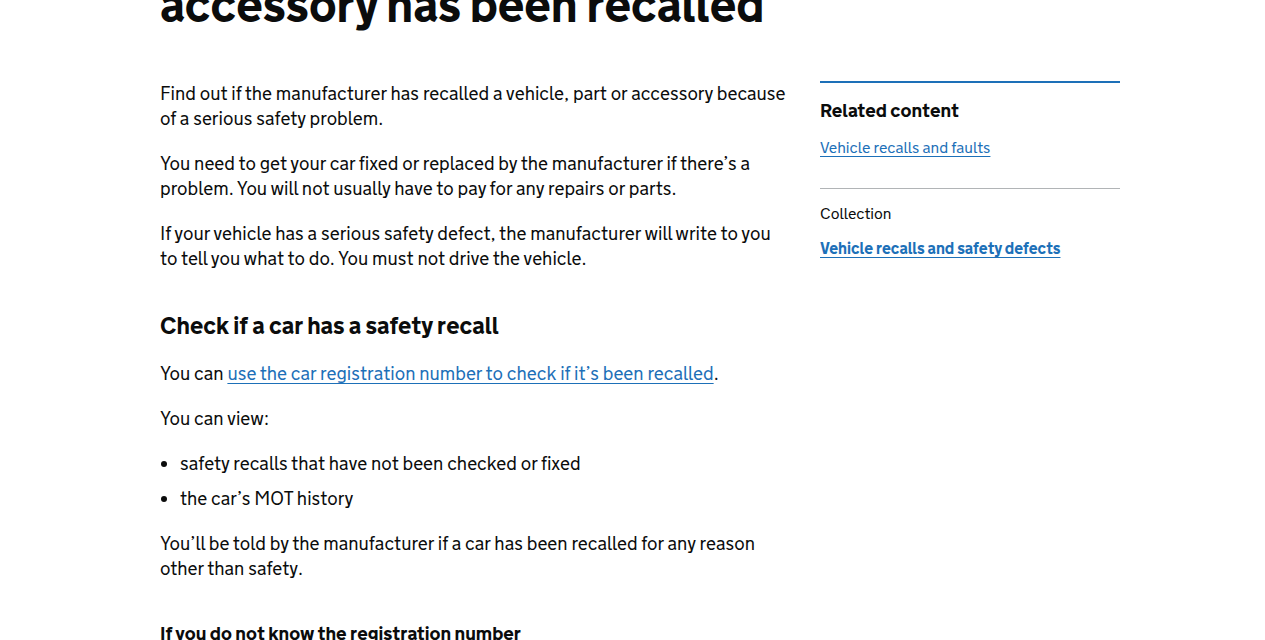
In the UK, you can now check this for free through GOV.UK. It takes only a moment, and it can tell you whether the car has a safety recall that has not yet been fixed.
That matters for two reasons. First, some recalls involve faults serious enough that the manufacturer says the car should not be driven until it is inspected. Second, an unfinished recall can tell you something about how carefully the vehicle has been looked after.
If you are buying used, this is one of the smartest checks to run before money changes hands.
What a car recall check actually tells you
The GOV.UK recall service is aimed at safety recalls. In plain English, that means faults serious enough for the manufacturer and the Driver and Vehicle Standards Agency to treat them as a safety issue rather than routine wear or a minor product update.
For cars, the check can show outstanding safety recalls that have not been checked or fixed. GOV.UK also says the same route lets you view the car’s MOT history, which makes it a handy extra check during the buying process.
There is one detail buyers often miss. GOV.UK says you will usually be told by the manufacturer if a car has been recalled for reasons other than safety. So the public recall check is most useful for open safety campaigns, not every service action or quiet dealer update a brand might carry out.
How to do a UK car recall check in a minute or two
If you have the registration number, go to the GOV.UK vehicle recall checker and enter it. The service is free.
You can also check without the registration number if you know the manufacturer, model and year of manufacture. That is useful if a seller has blurred the plate in an advert, or if you are comparing several cars before arranging viewings.
A sensible order is:
- Check the registration against the GOV.UK recall service.
- Read the MOT history while you are there.
- Cross check the vehicle details with the DVLA vehicle information service so the make, fuel type and other basics line up with the advert.
- If there is an open recall, ask the seller for proof that the repair has been completed, or book the car into a franchised dealer before you commit.
That little four step routine will tell you more than plenty of buyers get from a rushed forecourt walkaround.
What to do if the car shows an outstanding recall
Do not panic, but do not shrug it off either.
An open recall does not automatically mean the car is dangerous to drive home that minute, but some safety recalls are serious enough that the manufacturer may tell owners not to drive the vehicle until it has been inspected. GOV.UK is clear on that point.
If the car you want has an outstanding recall, do this next:
- ask the seller when they became aware of it
- ask whether a dealer appointment has already been booked
- ask for invoices, a dealer job sheet or a service record showing the recall work was completed if they claim it has been fixed
- check whether the manufacturer is advising owners not to drive the vehicle until the repair is done
- use the open recall as leverage to delay payment or renegotiate only if the position is genuinely clear
For a dealer sale, the cleanest route is often to insist the recall work is completed before collection. For a private sale, be more careful. If the seller is vague, dismissive or says recalls are "nothing to worry about", that is not a brilliant sign.
Will recall repairs cost you anything?
Usually, no.
GOV.UK says you will not usually have to pay for repairs or parts when a manufacturer recalls a vehicle because of a serious safety problem. That is one reason this check matters so much. If there is a genuine safety issue, there is often a free manufacturer-backed fix available.
That said, free recall work is not the same thing as free diagnosis for every unrelated fault on the car. If a seller is trying to bundle an obvious wear-and-tear problem into a recall conversation, keep the two things separate.
Does a recall mean you should walk away from the car?
Not always.
A completed recall with paperwork is usually far less worrying than an ignored one. In fact, many perfectly decent used cars have had recall work carried out at some point. That on its own is not a red flag.
What matters more is the pattern:
- Completed recall, documented properly: usually low drama
- Outstanding recall, seller is open and willing to fix it: manageable, but sort it before purchase if you can
- Outstanding recall, seller acts like it does not matter: more concerning
- Multiple signs of poor maintenance alongside an open recall: often a reason to slow down or walk away
Think of the recall result as part of the wider file on the car, alongside service history, MOT history, tyre condition, warning lights and finance checks.
Can an MOT catch this instead?
Sometimes, but do not rely on it.
GOV.UK says the MOT certificate might tell you about a safety recall in England, Scotland and Wales, depending on the manufacturer. That wording matters. "Might" is not the same as "will".
So yes, recall information can show up around the MOT process, but it is not a substitute for running the check yourself before you buy. A clean MOT is useful, but it is not the same thing as a clean recall record.
Why this check is especially useful on older used cars
Older cars often change hands several times. Owners move house, ignore letters or simply stop servicing the vehicle with the main dealer network. That makes it easier for recall work to slip through the cracks.
The result is a familiar used-car problem. The car looks fine, drives fine and has a current MOT, but there is still an unfinished manufacturer safety campaign hanging over it.
This is also why private buyers should not assume a missing recall letter means everything is fine. GOV.UK notes that a manufacturer may not have your contact details. If you buy first and check later, you may only discover the issue after the deal is done.
A practical used-car recall checklist
Before you pay for a used car, make sure you can answer these six questions:
- Have I checked the registration on the GOV.UK recall service?
- If I could not check by registration, have I checked by make, model and year?
- Does the MOT history show anything else that changes how I view the car?
- If there is an open recall, do I have proof of what the next step is?
- Has the seller explained clearly whether the car is safe to drive before repair?
- Am I still comfortable with the overall maintenance story the car is telling?
If the answer to two or three of those is "not really", slow the deal down.
The bottom line
A UK car recall check is free, quick and worth doing every time you buy used.
It will not replace an inspection, a finance check or common sense, but it can uncover an open safety issue that many buyers never think to look for. Better still, the fix is usually carried out by the manufacturer without the owner paying for the repair.
That makes this one of the rare used-car checks that is fast, free and genuinely capable of saving you real trouble. Run it before you hand over the money, not after.