If a used car’s mileage looks suspiciously low, do not shrug it off as a lucky find. A clocked car can leave you paying strong money for a vehicle that is more worn, more tired and more expensive to keep right than the advert suggests.
In plain English, clocking is when a vehicle’s recorded mileage is reduced so it appears to have covered fewer miles than it really has. Modern digital dashboards have not killed the problem. They have just made it less obvious to spot at a glance.
The good news is that UK buyers have better tools than ever. A free GOV.UK MOT history check, a sensible look through the paperwork and one cheap private history check can usually tell you whether the mileage story holds together.
Why mileage fraud matters more than the number on the dash
Mileage affects value, but it also affects risk. A car that has actually done 110,000 miles but is being sold as a 62,000-mile example may be closer to major suspension, clutch, timing-chain, DPF or gearbox bills than you think. It may also have a harder life behind it than the seller is admitting.
RAC notes that selling a clocked vehicle as genuine is mileage fraud, and that buyers should not rely on the odometer alone. That is the right mindset. Your job is not to prove fraud on the driveway. It is to decide whether the car’s history is believable enough to buy.
Start with the free MOT mileage trail
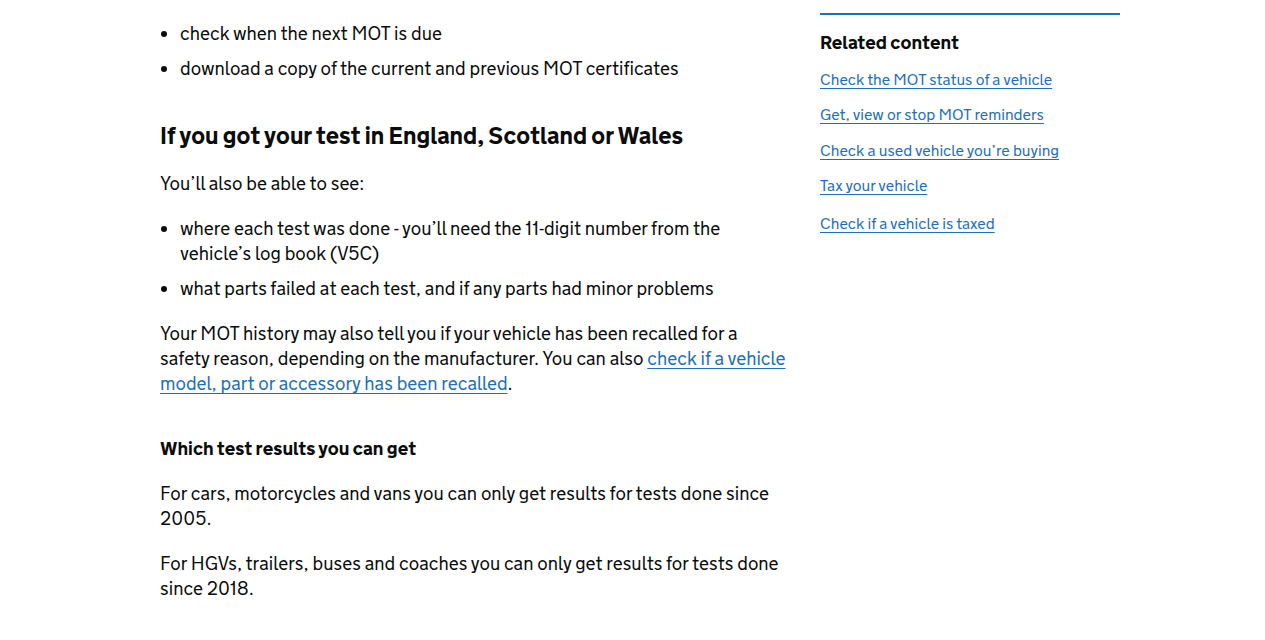
The first check is the official GOV.UK MOT history service. For cars, vans and motorcycles, GOV.UK says you can see test results going back to 2005. You can check recorded mileages, pass and fail results, advisories and, for tests in England, Scotland and Wales, more detail about what failed or was flagged.
That matters because clocking is usually easier to spot as a pattern than as a single smoking gun. Open several years of records and look for this kind of story instead of staring at one number.
What a believable mileage history looks like
A healthy MOT mileage record usually has:
- steady year-by-year increases
- usage that broadly matches the car’s age and type
- no sudden drops
- no unexplained years where the car supposedly barely moved
A ten-year-old family hatchback that has risen by roughly 7,000 to 12,000 miles a year is not automatically better than one that has done less, but the pattern makes sense.
What should put you on alert
Be cautious if you see:
- mileage that falls between MOT tests
- a jump that looks too small for the period between tests
- a car that was doing big annual mileage, then suddenly almost none
- a seller describing the car as low mileage when the official record suggests otherwise
A mileage issue does not always mean fraud. GOV.UK also has a process for fixing mistakes on an MOT record, including mileage errors. But if the seller says a mismatch is just a typo, ask for proof, not a shrug.
Know the difference between a typo and a real red flag
The occasional wrong MOT entry can happen. GOV.UK says that if the MOT was within the last 28 days, the MOT centre can update the mileage after checking the vehicle again. If it was more than 28 days ago, the error can be reported online, but evidence is needed.
That gives you a simple test as a buyer. If a seller claims the wrong mileage was an innocent MOT error, they should be able to show one of the following:
- the corrected MOT record
- paperwork showing the correction is in progress
- service invoices and older MOT certificates that clearly support their version
If they cannot show any of that, treat the car as higher risk.
Compare the mileage with the service history
RAC is right to point buyers towards the service history next. Every service invoice, dealer printout or stamped record should help the mileage story make sense. The exact intervals will vary, but the broad direction should be obvious.
When you review the history, check whether:
- the mileage rises consistently through the invoices
- the service dates line up with MOT dates
- a digital service record agrees with the dashboard reading
- there are suspicious gaps followed by a very tidy new service book
This is where a supposedly low-mileage car often starts to wobble. A car showing 48,000 miles today should not have a service invoice from five years ago that already had it in the high 50,000s. Equally, a car with no supporting mileage trail at all should not get the benefit of the doubt just because the seats have been valeted.
If you want a deeper checklist on paperwork, Motoring Mojo already has a guide on checking a used car’s service history.
Check whether the wear matches the claim
Clocking is often caught by the bits owners touch, not the bits they polish. Mileage is not the only cause of wear, but a car’s condition should still broadly fit the story on the advert.
Pay close attention to:
- steering wheel shine and wear
- flattened driver’s seat bolsters
- worn pedal rubbers
- tired gear knob markings
- scratched boot lip and loading area
- heavily chipped bonnet and mirrors on a supposedly very low-mileage motorway car
A forty-thousand-mile car that feels like it has spent ten years as an airport taxi deserves harder questions. One worn item is not enough to condemn it. Several mismatches together are where the trouble starts.
Add a private history check before you pay a deposit
Citizens Advice recommends getting a private history check on a used car, even if you are buying from someone who seems genuine. It says this can cost up to £20 and can help reveal whether a car is stolen, written off or still under finance. Some providers also flag mileage discrepancies using wider databases than the free MOT record alone.
That is money well spent when the mileage story feels even slightly off. The free MOT history check shows you the official annual trail. A paid data check can add another layer by comparing mileage records from other points in the car’s life.
It should not replace the MOT history or your own inspection. It should back them up.
Ask the seller questions a genuine owner should answer easily
Once you have spotted a discrepancy, stop being polite about it and be specific. Good sellers usually become more convincing when the car is honest. Weak sellers tend to become vaguer.
Ask things like:
- The MOT record shows a mileage dip here. Why?
- Do you have invoices or certificates that explain it?
- When did you buy the car and what mileage was on it then?
- Is the service history complete, digital or part paper?
- Has the instrument cluster ever been replaced?
Also listen for the way the answer arrives. Someone who has actually dealt with an MOT typo or a replacement dashboard can usually explain it clearly. Somebody who is inventing a story on the spot normally cannot.
Watch for the advert and the car telling different stories
Mileage fraud is not always just about the dashboard. Sometimes the clues are in the whole pitch. Be careful if the seller is leaning heavily on low mileage but gives little detail on ownership, servicing or recent repair work.
The same goes for cars where the advert says things like "drives like new" or "must be seen to appreciate" while the paperwork is thin and the MOT trail has awkward gaps. The lower the claimed mileage, the more the supporting evidence needs to do the talking.
Do not ignore simple DVLA and recall checks either
GOV.UK’s buy a vehicle guidance starts with checking the vehicle before you buy it. That means mileage should sit inside a wider fact-checking routine, not on its own. Before you pay, also run these basics:
- check the V5C details match the vehicle
- check the MOT status and due date
- check for outstanding recalls
- check whether there is outstanding finance
Motoring Mojo has separate guides for used-car recall checks and outstanding finance checks. If the mileage looks doubtful and another check also comes back messy, your answer is usually to walk away.
When to walk away from a suspected clocked car
You do not need courtroom proof to reject a used car. Walk away if:
- the MOT mileage trail does not make sense
- the seller cannot prove a claimed typo or dashboard replacement
- the service history clashes with the displayed mileage
- the car’s wear looks far heavier than the mileage suggests
- a private history check flags a mileage discrepancy
- the seller becomes defensive when you ask for evidence
There are too many honest used cars on the market to gamble on one with a shaky story.
Bottom line
If you are worried a car has been clocked, trust the paperwork before the polish. Start with the free GOV.UK MOT history check, compare the mileage against service records, inspect the wear points and spend the extra money on a private history check if anything feels off.
A legitimate seller should be able to support a low-mileage claim with evidence. If they cannot, let somebody else take the risk.