Bought a car today and need the short answer? You must tax it before you drive it on the road, even if the previous keeper taxed it yesterday and even if the car is in a zero-rate tax band. In the UK, vehicle tax does not move across with the car when it is sold.
Bought a car today? Here is the rule before you drive it home
If you have just bought a used car, van or motorcycle, the safest assumption is simple: do not drive away until the tax is sorted in your name.
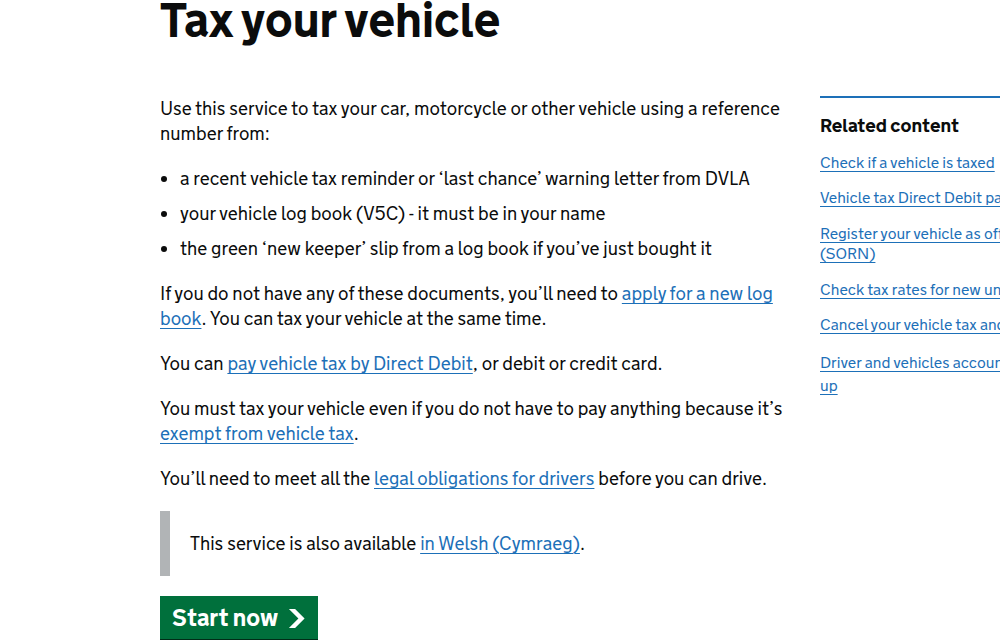
GOV.UK’s used-car buying guidance says to tax the vehicle immediately using the green new keeper slip from the V5C log book. The main DVLA vehicle tax service also makes clear that you can tax a vehicle using the V5C if it is already in your name, or the green new keeper slip if you have just bought it.
That catches people out because plenty of buyers still assume road tax carries over with the car. It has not worked like that for years.
What you need before you start
In most cases, you need four things lined up before you drive the car away:
- Insurance in place for you to use the vehicle on the road
- A valid MOT if the vehicle is old enough to need one
- A V5C reference such as the green new keeper slip from the log book
- A payment method if the car is not tax-exempt
The online DVLA vehicle tax service accepts payment by debit card, credit card or Direct Debit. If you use the 24-hour phone service, GOV.UK says you cannot pay by Direct Debit over the phone.
If you are buying used, ask the seller for the V5C and make sure you leave with the green new keeper slip. That small bit of paper matters far more than many buyers realise.
The fastest way to tax a car you have just bought
For most buyers, the quickest route is the official online service.
1. Get the green new keeper slip
When you buy a used car, the seller should give you the green V5C/2 new keeper supplement. The Post Office’s vehicle tax guidance specifically says you can tax your new car online or at the Post Office using the 12-digit reference number from that slip.
If the seller says they will post it later, that is a bad plan. It turns a simple five-minute job into a paperwork problem.
2. Make sure insurance is live
You need insurance before you can legally use the car on the road. The GOV.UK buy-a-vehicle steps put insurance before tax for a reason.
If you are switching from one car to another on the same day, double-check the exact start time. "Covered from today" is not always the same as "covered right now".
3. Check the MOT status
The car needs a valid MOT if one is required. Before handing over money, it is worth checking the official MOT history service and reading our own guide on how to spot used car red flags in an MOT history check.
One important wrinkle here is timing. GOV.UK says MOT information can take up to two days to update, so a car that has only just passed may not be taxable immediately if the system has not caught up yet.
4. Use the DVLA tax service
Go to the official GOV.UK tax page, enter the reference number from the green slip, and follow the steps. If everything matches, you can tax the vehicle there and then.
You can usually choose whether to:
- pay for 12 months in one go
- set up monthly Direct Debit payments
- in some cases pay for 6 months
5. Wait for confirmation before driving off
Do not assume it has gone through just because the card payment worked. Finish the process properly and keep the confirmation page or email.
If you are stood on a private seller’s driveway, that extra minute is worth it.
Can you drive the car home before taxing it?
In normal circumstances, no.
GOV.UK’s step-by-step used-car guidance says you need to tax the vehicle before you can use it on the road, and its used-car checklist says to tax it immediately if you buy it.
That means these common excuses do not help:
- "I am only driving it home"
- "The previous owner already paid for this month"
- "I will do it when I get back"
- "It is in a zero-tax band anyway"
If the car is going on the public road, sort the tax first.
What if you did not get the green slip?
This is where buyers end up in a mess.
The DVLA tax service says that if you do not have the required document, you need to apply for a new log book and you can tax the vehicle at the same time. The Post Office guidance says you will need to fill in a V62 if you do not have the V5C or V5C/2, and that there is a £25 fee for a new V5C.
In practice, that means you have three sensible options:
- Get the seller to hand over the green slip before you leave
- Delay collection until the paperwork is sorted
- Go to a Post Office that handles vehicle tax and ask what you need to complete the V62 route
What you should not do is shrug and drive home untaxed because the seller promises the paperwork is on its way.
What happens to the seller’s old tax?
The seller does not transfer it to you.
When the previous keeper tells DVLA the vehicle has been sold or transferred, their tax is cancelled. GOV.UK says they will get a refund for any full months remaining.
That is why a seller can honestly say, "it is taxed", and you can still need to tax it yourself before using it.
Buying from a private seller versus a dealer
The rule is the same either way, but the risk is not.
Private seller
This is where people get caught most often because handover happens on a driveway, outside normal office hours, with no admin staff around. Before paying, check that you have:
- the correct V5C details
- the green new keeper slip
- insurance ready to start
- an MOT that shows on the system
If any one of those is missing, pause the deal.
Dealer
A dealer sale is usually smoother because the paperwork process is more routine, but do not assume it is automatic. Ask whether they expect you to tax it yourself online before collection or whether they will help you do it on site.
Either way, do not drive away until you know it is done.
The mistakes that waste the most time
Assuming tax transfers with the car
It does not. This is still the number one trap.
Forgetting that insurance must already be active
You cannot sort tax but ignore insurance. Both matter before the car touches the road.
Collecting the car without the V5C/2
If the seller cannot produce the green slip, your easy online route may disappear.
Buying straight after an MOT retest and expecting instant system updates
Sometimes the MOT pass is real but the database has not updated yet.
Thinking tax-exempt means no action is needed
GOV.UK is very clear here. Even if the vehicle does not require a payment because it is exempt, it still needs to be taxed.
A five-minute checklist before you set off
Run through this before you turn the key:
- Is the car insured in your name right now?
- Does the MOT show as valid if the vehicle needs one?
- Do you have the V5C/2 new keeper slip or another accepted DVLA reference?
- Have you completed the tax process and seen confirmation?
- Are you keeping a screenshot or email in case you need it later?
If the answer to any of those is no, stop and fix it first.
The bottom line
Taxing a car you have just bought is usually easy. What makes it stressful is not the DVLA system, but buyers collecting cars without the right document, assuming the seller’s tax still covers them, or discovering that insurance or MOT details are not live yet.
Do the admin before you drive, not after. If you are buying used, make the green new keeper slip part of the handover checklist, right alongside the keys.
And while you are doing your homework, it is also worth checking our guides to MOT history red flags and ULEZ compliance if the car will be used in London or other clean-air zones.