If you are replacing your car, this is the decision that quietly changes the real cost of the next one. A private sale will usually put more money in your pocket, but part exchange can still be the smarter move once you factor in time, finance, paperwork and how quickly you need the deal done.
The mistake is comparing only the headline offers. The better question is this: which route leaves you with the strongest net result for your situation?
The short answer
- Choose a private sale if your main goal is squeezing the best possible price out of the car and you are happy to handle the advert, messages, viewings and payment checks yourself.
- Choose part exchange if you value speed, convenience and a cleaner handover more than the last bit of sale value.
- Do not assume private sale always wins by a huge margin. Auto Express, using UKVD market estimates, reported an average £407 gap in favour of private sale across its sample, but also noted that some popular mainstream cars could match or even beat private-sale money in part exchange.
That last point matters. If your car is desirable stock for a dealer, the gap may be smaller than you expect.
Part exchange vs private sale at a glance
| What matters most? | Part exchange | Private sale |
|---|---|---|
| Likely sale price | Usually lower, but not always by a dramatic amount | Usually higher |
| Speed | Fast. Often same day | Slower and less predictable |
| Convenience | High. One transaction tied to your next car | Lower. You manage everything |
| Risk of time-wasters | Low | Higher |
| Payment admin | Straightforward through the dealer | You need to verify funds carefully |
| Selling a financed car | Often easier, because the dealer can handle settlement as part of the deal | Possible, but more admin and more explaining to buyers |
| Best for | Busy sellers, financed cars, urgent changeovers | Sellers chasing maximum value |
Why part exchange can still make sense
Part exchange is often written off as the lazy option. That is too simplistic. In the right situation it is the lower-stress, lower-risk and sometimes even the financially sensible choice.
It tends to work best when:
- you need the next car quickly
- your current car still has finance attached to it
- you do not want strangers visiting your home
- the car is good, honest dealer stock that can be retailed easily
- the price gap versus private sale is small enough that the saved hassle is worth it
The real benefit is certainty. You agree one deal, hand over one car and drive away in the next one. There is no awkward period where you have sold the old car but still need transport, or bought the new one while your old car sits unsold on the driveway.
For a lot of people, that alone is worth money.
Where private sale usually wins
Private sale tends to win when the car is tidy, well-priced and easy for an ordinary buyer to understand. If you have a popular hatchback, crossover or family car with decent history, you can often attract buyers who are happy to pay more than a dealer’s trade figure.
Private sale is usually strongest when:
- you are not in a rush
- you have the V5C, service history, spare keys and a believable ownership story
- the car presents well in photos
- you can price it sensibly rather than optimistically
- you are comfortable handling enquiries, viewings and secure payment
This route is also more attractive when the part exchange offer feels especially soft. If a dealer is cautious about prep costs, tyre wear, cosmetic work or patchy service history, a private buyer may be less severe if the price reflects the car honestly.
The comparison most sellers should actually run
Do not compare your best private-sale fantasy against your worst trade offer. Compare real numbers.
Use this simple framework:
- Get two or three part exchange or buying-service quotes.
- Check what similar cars are actually advertised for privately, then price yours below the wishful sellers and near the realistic ones.
- Deduct the private-sale costs you will really carry, such as valeting, minor prep, ad fees if any, and the value of your time.
- If you still need your current car until the replacement arrives, factor in that inconvenience too.
If the private route only gains you a few hundred pounds, part exchange can be the better answer. If the gap is much wider, the extra effort may be worth it.
Selling with finance changes the calculation
If the car has outstanding finance, part exchange often becomes more attractive because the dealer can settle the agreement as part of the transaction. That does not automatically make it the best-value route, but it usually makes the process cleaner.
In a private sale, you need to be ready for sensible buyer questions:
- Who is the finance company?
- What is the current settlement figure?
- Will the lender be paid directly?
- When will the finance marker be removed?
That is manageable, but it adds friction. Buyers get nervous when finance is involved, even when the sale is legitimate.
If you still owe money, get an up-to-date settlement figure first and read this related guide: Selling a car with finance still on it: the safe UK route for PCP, HP and negative equity.
The paperwork and legal bits that matter
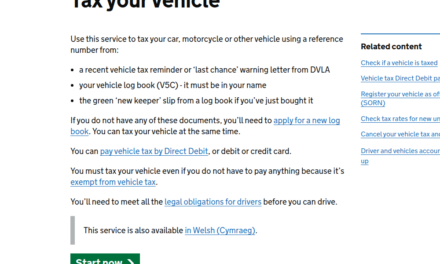
Whatever route you choose, do not get casual with the admin. According to GOV.UK, you must give the buyer the green new-keeper slip and tell DVLA that you have sold the vehicle. The online DVLA service also confirms that any remaining vehicle tax does not transfer to the buyer and that a refund is issued for any full remaining months once the change is processed.
A few points are easy to miss:
- Do not share the V5C document reference number or copies of the full log book online. GOV.UK warns this can be used to obtain a fraudulent duplicate.
- Make sure your name and address are correct on the V5C before selling. Incorrect details can complicate the process.
- Tell DVLA promptly once the car has gone. Do not assume the other party will sort it out for you.
If you need a refresher on the handover steps, these guides help:
- Sold your car today? The DVLA steps to take before the buyer drives away
- Selling a car without a V5C in the UK: the legal route, the DVLA letter and when to wait for a replacement
How to decide in the real world
Part exchange is usually the better call if:
- you already have a replacement car lined up
- you want one clean transaction
- your car has finance outstanding
- you cannot be bothered with flaky messages, late arrivals and payment nerves
- the gap to private sale is relatively modest
Private sale is usually the better call if:
- you can wait for the right buyer
- you have a tidy, easy-to-sell car
- you want the strongest price rather than the quickest exit
- you are organised enough to prepare the advert, answer questions and handle the paperwork properly
A simple rule for valuing your own hassle
Ask yourself one blunt question: how much extra money would make the private route feel worth the effort?
For some sellers that number is £300. For others it is £1,000. There is no universal answer. The right choice is the one that leaves you happier with the trade-off once the car is gone and the next step is done.
The bottom line
Private sale usually offers the best headline return, but part exchange often wins on speed, simplicity and reduced risk. If your car is financed, you are short on time, or the dealer’s offer is closer than expected, part exchange can be the smarter move. If the car is easy to sell and the value gap is meaningful, private sale is still the route most likely to maximise what you get back.
The trick is to compare the real-world net result, not just the top-line number on the advert or the forecourt board.