Shopping for a used Toyota Yaris? Here are the common faults, hybrid checks, warranty points and model choices UK buyers should know before handing over their money.
The Toyota Yaris has a reputation most small cars would love to borrow. It is easy to drive, cheap to run, compact enough for town use and, in the right version, impressively stress-free to own. That is exactly why it has such a strong used market in the UK.
The catch is that not every Yaris on the classifieds is the safe, sensible buy its badge suggests. Many have spent their lives in hard urban use, some have patchy servicing, and older examples have a few known weak spots worth checking properly before you buy.
Quick answer: what are the main used Toyota Yaris problems to look for?
The main things to check are tailgate corrosion around the rear number plate trim on older Mk3 cars, clumsy or unloved Multidrive CVT automatic behaviour, signs of neglected servicing, 12-volt battery issues on newer hybrids, and the usual city-car wear such as kerbed wheels, suspension knocks, parking damage and tired interiors.
Before buying, start with these checks:
- full service history, not just a stamped book with big mileage gaps
- evidence of Toyota dealer servicing if you want to preserve any remaining Toyota warranty or hybrid battery cover
- smooth cold start, no warning lights and no hybrid system messages
- tailgate edge and number plate trim area for bubbling paint or corrosion on Mk3 cars
- CVT or hybrid transmission behaviour at low speed, on hills and in stop-start traffic
- tyre condition and brand consistency, because cheap mixed tyres usually point to penny-pinching maintenance
- alloy wheel damage, suspension noises and steering pull from pothole or kerb impacts
- MOT history and recall checks before you commit
For most buyers, the safest bet is a well-kept Yaris with strong history, sensible tyres, no warning lights and every bit of electrical kit working properly.
Why the Yaris is still such a strong used buy in the UK
The Yaris earns its reputation honestly. It is small outside, easy to place in town and usually inexpensive to insure and fuel. It also tends to age well compared with many rivals that looked more fashionable when new but become more troublesome once they are a few owners deep.
That matters because a used supermini is rarely bought for romance. It is bought because somebody needs a dependable car for commuting, school runs, first-car duty or mixed family use. In that role, the Yaris makes a lot of sense.
Its reliability record is a big part of the appeal. What Car?’s used-car reliability work has rated the older 2011 to 2020 Yaris extremely highly, and the newer 2020-on car also scores well overall, even if it is not completely fault-free. That means the Yaris is not just a car with a good historic reputation. It still stacks up well against modern small-car rivals.
Which used Toyota Yaris are most buyers looking at?
Most UK buyers will be looking at one of two shapes.
The first is the Mk3 Yaris sold from 2011 to 2020. This is where the lower-budget end of the market sits, and it is the car many buyers will find in the £4,000 to £10,000 bracket depending on age, mileage and engine.
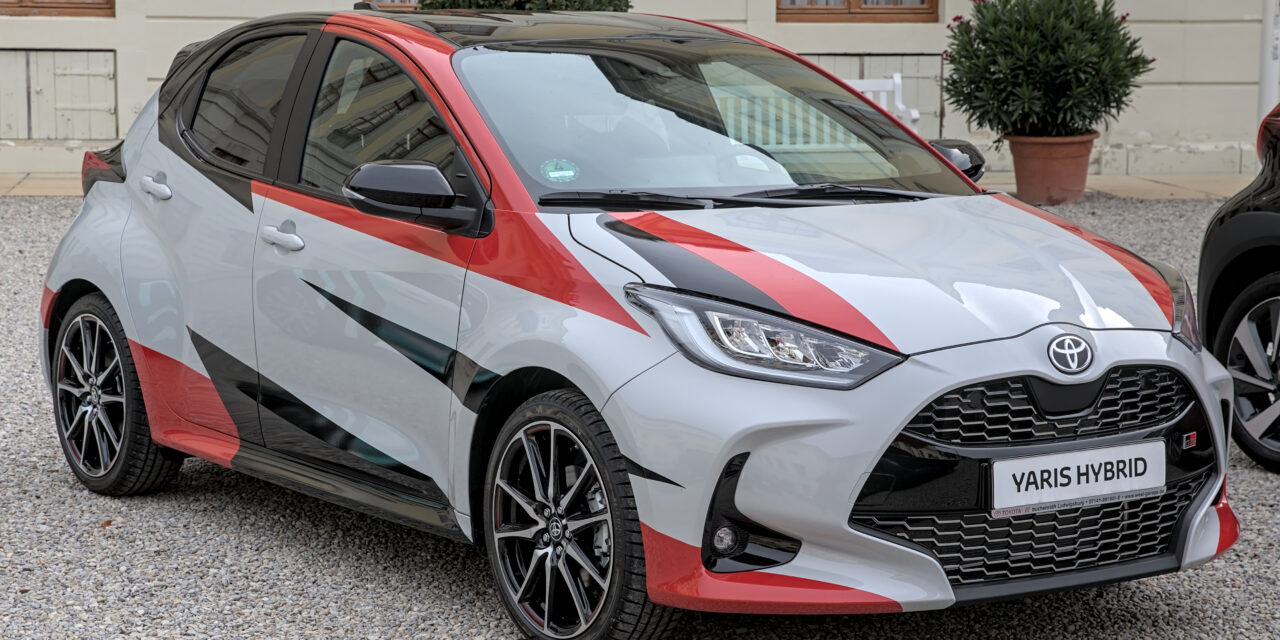
The second is the current-generation Yaris launched in 2020. These cars feel more modern, are generally better to drive and usually come as hybrids. They cost more, but the gap is often justified by better efficiency, more safety kit and the possibility of meaningful Toyota warranty cover if the servicing has been done properly.
If value is the main goal, the older Mk3 is still attractive. If you want the more polished and more efficient option, the 2020-on hybrid is the one most buyers end up wanting.
1) Check older Mk3 cars for tailgate corrosion around the rear trim
One of the most specific used Yaris faults flagged by Auto Express on the 2011 to 2020 car is corrosion caused by the rear number plate trim reacting with the tailgate.
This is exactly the kind of issue buyers miss when they focus only on the engine and forget the bodywork. Look closely around the trim, tailgate edge and paintwork near the rear number plate area. Bubbling paint, staining or a rough edge is a reason to ask questions.
It is not the end of the world if it has been repaired properly, but it is worth checking because small bodywork issues on cheap used cars are often ignored until they become more expensive than expected.
2) Be careful with the older Multidrive CVT automatic
Toyota’s reputation does not mean every gearbox choice is equally appealing. Auto Express notes that the older Multidrive CVT automatic is less loved by owners than the manual alternative.
That does not automatically make it a bad car, but it does mean you should test it properly. On a road test, pay attention to:
- hesitation when moving away
- awkward response when joining traffic quickly
- flaring revs without convincing progress
- shuddering, warning lights or generally unpleasant low-speed behaviour
Some buyers simply dislike the way a CVT feels, which is different from an actual fault. The important thing is to separate normal CVT behaviour from a tired or badly maintained example.
If you want an older automatic Yaris, buy on condition and history rather than convenience alone.
3) Newer hybrids are generally strong, but ask about 12-volt battery issues
The current-generation Yaris is a very appealing used buy, especially in hybrid form, but it is not perfect.
What Car?’s 2025 Reliability Survey gave the 2020-on Toyota Yaris a strong 92.5% reliability score overall, but it also reported that 12-volt battery issues were the biggest headache for some Yaris Hybrid owners. That is worth knowing because a weak 12-volt battery can trigger frustrating warning messages and leave a car feeling far less dependable than the Toyota badge suggests.
On inspection, look for any sign the car has been slow to wake up, has had repeated warning lights or has needed battery-related attention. Ask directly whether the 12-volt battery has ever been replaced.
This is not a reason to avoid the hybrid. It is simply one of the few current pattern issues worth raising before you buy.
4) Service history matters more than usual because Toyota’s warranty is genuinely valuable
A good used Yaris is not just about what has gone wrong. It is also about what protection you can keep.
Toyota UK says its cars can receive up to 10 years or 100,000 miles of warranty cover if qualifying services are completed at an approved Toyota dealer. Toyota also says its hybrid battery cover can extend to 15 years with annual servicing at a Toyota dealer.
That is a big deal in the used market. A Yaris with full Toyota history is not just easier to sell later. It can come with a meaningful ownership safety net that many rivals simply cannot match.
So do not just ask whether it has service history. Ask where it was serviced, whether the intervals were on time and whether the car still qualifies for Toyota-backed cover.
5) Rare diesel Yaris models deserve extra caution if the car has lived in town
Most buyers should focus on petrol or hybrid Yaris models, and that is the safer part of the range anyway.
If you are looking at one of the rarer diesel cars, be more careful about driving pattern and warning lights. FixMyCar notes that diesel Yaris models used mainly for short urban trips can suffer blocked diesel particulate filters, which may lead to limp mode or loss of power.
That is not unique to Toyota. It is the usual diesel problem when the car’s usage never really suits the engine. But it does mean a cheap diesel Yaris can be a false economy if your own driving is mostly short local trips.
6) City-car wear tells you a lot about how the car has been treated
The Yaris is exactly the kind of car that spends years doing school-run, learner-driver or urban commuter duty. That can be mechanically fine, but it leaves clues.
Check for:
- kerbed alloys or scuffed wheel trims
- cheap replacement tyres
- bent or cracked lower bumper corners
- scraped mirror caps
- worn seat bolsters and steering wheel trim
- clunks from suspension over speed humps or broken surfaces
- uneven tyre wear that hints at poor alignment or past impact damage
None of that is exclusive to the Yaris, but it matters because a supposedly sensible small car can still have been maintained on the cheap.
7) Check for historic recall work and do not rely on assumptions
Older Yaris models had a number of historical recall campaigns according to Auto Express, including issues involving brake fluid leaks, power steering failure, rear hubs, airbags, seatbelts and suspension on certain Mk3-era cars.
That does not mean every used Yaris is risky. It means you should not lazily assume that a Toyota badge guarantees every campaign was completed years ago.
Before you buy, run the registration or VIN through Toyota’s recall information service and compare that with the car’s paperwork. It is an easy check and one that can save pointless hassle later.
Which used Toyota Yaris is the best one to buy?
For many UK buyers, the sweet spot is a tidy later Mk3 1.33 petrol manual or a well-kept current-generation hybrid with full Toyota history.
The older petrol manual keeps things simple and usually avoids the question marks around the older CVT automatic. The newer hybrid is the more refined, more efficient and more modern option, especially for drivers who spend a lot of time in town.
If your budget allows, the newer hybrid is the stronger all-round car. If your budget is tighter, a carefully chosen late Mk3 still makes a lot of sense.
Should you buy a used Toyota Yaris?
Yes, provided you buy with your eyes open.
The Yaris is popular for good reasons. The older car has an excellent reputation for dependability, the newer hybrid remains one of the smartest small-car choices in the UK, and Toyota’s warranty support gives well-maintained examples real extra value.
Just do not let the badge make you lazy. Check the bodywork, test the gearbox properly, treat service history as essential rather than nice-to-have, and give any hybrid or diesel version the kind of road test its drivetrain deserves.
Get that right and a used Toyota Yaris is still one of the safest small-car bets on the market.