If you want a used city car that is easy to place, cheap to run and less of a gamble than many bargain hatchbacks, the Hyundai i10 deserves a serious look. It has been a regular sight on British roads for years, and that matters because there is now a deep used market covering everything from tidy one-owner commuters to nearly new cars with decent kit and some manufacturer warranty left.
The trick is not just buying any i10. Some versions suit town life far better than long A-road slogs, some trim levels are a much better value sweet spot than the headline-cheap cars, and a few of the usual small-car shortcuts can turn a cheap buy into an irritating one.
The quick take
For most UK buyers, the safest all-round bet is a 2020-on i10 1.2 manual in Advance or Premium trim. The 84PS 1.2 petrol feels less strained than the 67PS 1.0 when you have passengers, luggage or regular motorway work, but it still keeps running costs sensible. If your driving is mostly short urban trips, the 1.0 manual is still worth considering, especially if price matters more than pace.
If you can, I would be cautious about treating the automated manual versions as the default choice just because they are easy to find. They can suit drivers who really need two-pedal motoring on a budget, but they are not as smooth or as intuitive as a conventional automatic. A proper test drive matters more here than with the manual cars.
Which used Hyundai i10 should you be looking at?
There are two broad used-car sweet spots.
2014 to 2020 cars
These older cars are usually the budget entry point. They are simple, light and cheap to own, and many have spent their lives as second cars. That is good for mileage, but not always good for condition. A lightly used town car can still have tired tyres, scuffed wheels, worn clutches and neglected servicing.
These cars make sense if you want the lowest possible buy-in and you are happy to be picky about history and condition rather than chasing high specification.
2020-on cars
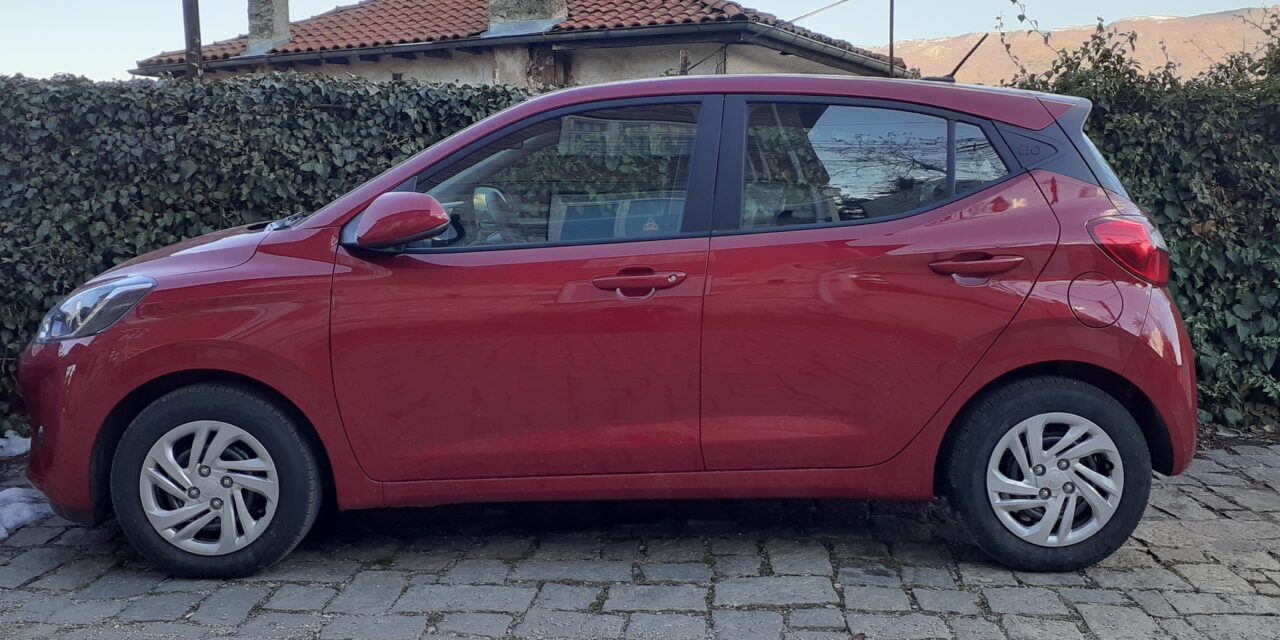
This is the smarter place to shop if budget allows. The current-shape i10 is 3670mm long, 1680mm wide and has a 252-litre boot, so it is still properly small outside but usefully grown-up inside. Hyundai also gave it stronger tech and safety equipment, with 8-inch touchscreen infotainment, Apple CarPlay and Android Auto across the current range, plus features such as cruise control, rear parking sensors and a rear-view camera.
This is also the version that feels most modern on the used market in 2026. If you are financing the car, doing motorway miles, or planning to keep it for several years, it is the one that usually makes more sense.
The engines and gearbox choices that matter
1.0 MPi manual
This is the sensible budget option. Around town it is absolutely fine, and it suits buyers who mainly do school-run, commuting and local errand work. It is also the version least likely to tempt previous owners into driving it hard.
The limitation is obvious once the road opens up. With four adults, luggage or frequent motorway use, it can feel busy and a bit breathless. That does not make it a bad used buy. It just means you should match it honestly to the job.
1.2 MPi manual
This is the one I would point most buyers towards. The extra performance is not about turning the i10 into a hot hatch. It simply makes the car less hard work on faster roads and easier to live with if you regularly leave town. If two similar cars are in front of you and the 1.2 does not carry a silly premium, it is usually the better choice.
Automated manual versions
Treat these as a case-by-case buy, not an automatic upgrade. They can make sense for drivers who need an affordable two-pedal car, but low-speed smoothness is the thing to test properly. Try parking, hill starts, stop-start traffic and three-point turns. If the car feels clumsy, jerky or hesitant beyond what you can tolerate, walk away and try another.
N Line 1.0T
The N Line is the fun outlier. It gets more visual attitude and the turbo engine gives it a bit more sparkle, but it is not the version most used buyers need. Unless you specifically want the look and feel, the regular 1.2 is usually the smarter value play.
The trims that make the most sense
Current i10s are not all sparse little budget cars. Even the better-value trims can be well equipped.
Advance
This is the sweet spot for many people. It gives you the 8-inch touchscreen, smartphone connectivity, cruise control, rear parking sensors, rear-view camera, USB-C charging and a strong chunk of the useful everyday kit you actually notice.
Premium
Premium starts to feel more grown-up. Depending on exact model year and spec, you can pick up extras such as larger wheels, folding mirrors, wireless phone charging, heated seats and a heated steering wheel. If you do a lot of winter commuting, that extra comfort kit can make the Premium worth the step up.
Basic older trims
Do not dismiss lower-spec older cars if the price is right, but check whether the saving is real once you factor in missing tech, smaller screens, or the absence of parking help. Cheap can become less cheap once you start wishing the car had a few more creature comforts.
What to check before you buy a used Hyundai i10
This is where the i10 can catch out rushed buyers. Not because it is fundamentally troublesome, but because small hatchbacks are often bought with the head rather than the heart, then maintained to a price.
1. Clutch wear and gearshift feel
A lot of i10s live hard little urban lives. Constant stop-start traffic, learner drivers, steep car parks and short hops can all take their toll. The manual should pull away cleanly, the clutch bite should not feel desperately high, and the gearshift should not baulk or feel awkward when cold.
2. Wheel, tyre and suspension damage
Kerbs and potholes are a bigger story on city cars than many buyers expect. Check the alloys or steel wheels carefully, inspect the tyre sidewalls for cuts or bulges, and pay attention to whether the car pulls slightly off line. A tidy-looking i10 can still hide a life of parking nudges and urban impacts.
3. Cheap tyres
Budget tyres on a cheap hatchback are common, but they tell you something about the previous owner. One pair of no-name ditchfinders is not always a deal-breaker, but a car wearing four very cheap tyres often points to penny-pinching maintenance elsewhere.
4. Brakes on low-mileage cars
Low mileage sounds attractive, but town cars that sit around or only do short journeys can end up with rusty brake discs and underused rear brakes. A test drive should feel clean and straight under braking, without grinding, pulsing or a rough edge from corrosion.
5. Infotainment, camera and charging ports
The current-shape i10 scores points for useful tech, so make sure that tech actually works. Pair your phone, test Apple CarPlay or Android Auto, check the reversing camera image, and make sure the USB ports are doing their job. Minor electrical niggles are not always costly, but they are annoying if you buy the car expecting easy daily use.
6. Battery health on short-trip cars
Small petrol hatchbacks that mostly do short runs can be hard on batteries. Slow cranking, warning lights on start-up or a history of infrequent use are worth paying attention to. It is not dramatic, but it is the kind of everyday annoyance that can sour an otherwise sound used buy.
7. Service history, not just MOT history
An MOT history check is useful, but it does not replace proof of routine maintenance. Look for regular servicing rather than big gaps. On a simple car like the i10, the appeal is dependable low-stress ownership, so there is no good reason to accept a patchy history unless the price is genuinely compelling.
Running costs and everyday practicality
One of the i10’s strengths is that it stays honest about what it is. The current car’s official WLTP combined fuel figure sits at roughly 51 to 55 mpg in manual petrol form, depending on engine and trim, so it should still look sensible for cost-conscious buyers. The 252-litre boot is useful for a weekly shop, gym bags or a couple of cabin-sized cases, and the small footprint makes it easy to live with in tight urban parking spaces.
The i10 also avoids one of the classic small-car traps, which is feeling too compromised once you leave town. It is not a mini motorway cruiser, but in the right engine and trim it feels adult enough for real life rather than just emergency use.
One thing worth knowing about safety
The latest-shape i10 brought a decent bundle of driver-assistance kit, but Euro NCAP’s 2020 test of the standard car resulted in a three-star rating. That does not automatically make it a poor used choice, but it is worth understanding if safety is high on your shopping list. Equipment, expectations and test standards all matter, so compare carefully rather than assuming every small hatchback performs the same way.
So, is a used Hyundai i10 a smart buy?
Yes, if you buy the right one.
A used Hyundai i10 makes a lot of sense for UK drivers who want a simple hatchback that is easy to park, cheap to fuel and not miserable to own. The best buys are not necessarily the very cheapest ones. They are the cars with the right engine for your driving, a trim level that saves you wishing for basic conveniences, and evidence that someone has looked after the unglamorous stuff.
If it were my money, I would start with a 2020-on 1.2 manual Advance or Premium, then only drop to the 1.0 if I knew the car would spend most of its time in town. Either way, a careful check of clutch feel, tyres, brakes and service history will tell you more than the badge on the nose ever will.