If a garage has told you the car needs tracking, wheel alignment or a full geometry check, the obvious next question is the price. For most UK drivers, front wheel alignment usually lands around £40 to £60, while a proper four-wheel alignment is often nearer £85 to £100. Some independents charge less, some premium or specialist setups charge more, and badly worn suspension parts can push the bill higher because alignment alone will not cure the underlying fault.
The important bit is that wheel alignment is usually far cheaper than the tyre wear it can prevent. If your steering wheel sits off-centre, the car drifts on a straight road or one tyre shoulder is wearing much faster than the rest, leaving it alone can get expensive surprisingly quickly.
Quick answer
- Average front wheel alignment only: about £49.03 according to WhoCanFixMyCar’s UK pricing guide
- Average front and rear wheel alignment: about £87.23 according to the same dataset
- Current retail examples checked in May 2026: Halfords lists 2-wheel alignment at £59.99 and 4-wheel alignment at £94.99
- Budget starting point: Tyre Spot advertises alignment from £28.80, though that is a starting price rather than a typical full-geometry figure
- Typical time: RAC says front wheel alignment can take up to an hour, with four-wheel work taking longer
What wheel alignment usually costs in the UK
The cleanest way to think about the price is to separate a basic front toe adjustment from a proper four-wheel alignment.
| Service | Typical UK price | What you are usually paying for |
|---|---|---|
| Front wheel alignment or tracking | £40 to £60 | Usually a front axle toe check and adjustment |
| Four-wheel alignment | £85 to £100 | A wider geometry check, printout and extra adjustment work |
| Budget entry price deals | From about £28.80 | Often a basic offer, local promotion or starting price rather than the final bill |
Those figures line up reasonably well across current UK sources. WhoCanFixMyCar’s advice page puts the average front-only alignment at £49.03 and front plus rear alignment at £87.23. RAC’s current guide says UK drivers can expect to pay around £90 for front and rear wheel realignment. That is broadly where the mainstream market sits.
Real UK examples checked for this guide
Prices move around, so it helps to look at live retail examples rather than one old average.
| Provider | Price seen | Notes |
|---|---|---|
| Halfords | £59.99 for 2-wheel alignment | Current product-page price checked on 14 May 2026 |
| Halfords | £94.99 for 4-wheel alignment | Current product-page price checked on 14 May 2026 |
| Tyre Spot | From £28.80 | Entry price, so many cars will still pay more |
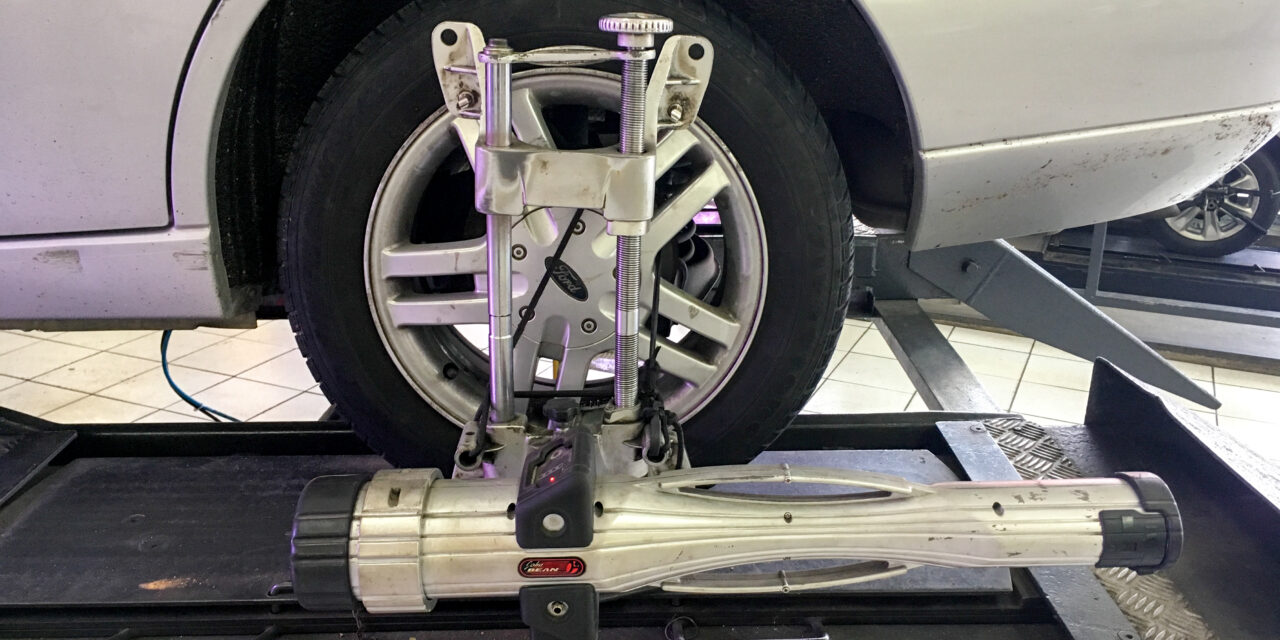
| Kwik Fit | Inspection pricing varies by branch and job | Kwik Fit says its four-wheel service includes a Hunter Hawkeye inspection and front toe adjustment only, with extra charges possible for additional or rear adjustments |
That last point matters. Two garages can both advertise wheel alignment, but one may mean a front toe tweak while another means a fuller measurement of toe, camber, thrust angle and rear axle geometry. That is why a cheap headline figure is not always the best value.
If you want the fuller explanation of the terminology, Motoring Mojo already has a guide to wheel alignment vs tracking.
Why prices vary so much
1. Front tracking is not the same as full geometry
Many cars only get a basic front toe adjustment when drivers ask for tracking. A genuine four-wheel alignment uses more time, more data and often more adjustment work, so it costs more.
2. Some cars have limited factory adjustment
On certain cars, the machine can measure camber or caster, but the workshop cannot adjust those angles without extra parts, bolts or aftermarket correction kits. That can turn a simple alignment visit into a diagnosis plus repair job.
3. Seized adjusters make the job slower
If the track rod ends or rear adjusters are corroded, the technician may need extra labour just to free things off safely.
4. Suspension wear changes the conversation
A wheel alignment is pointless if a worn bush, bent arm, weak spring or tired ball joint is still letting the geometry move around. The garage may recommend fixing the mechanical fault first and aligning the car afterwards.
5. Larger, heavier or more specialist vehicles can cost more
Performance cars, SUVs, vans and vehicles with more complex suspension setups often sit above the cheapest advertised rates.
Is wheel alignment worth paying for?
Usually, yes. If the geometry is wrong, the cost of ignoring it can be worse than the alignment bill itself.
A misaligned car can:
- wear out a tyre edge far earlier than it should
- feel vague or twitchy at motorway speeds
- pull left or right on a flat road
- leave the steering wheel crooked even when driving straight
- reduce fuel efficiency slightly because the tyres are scrubbing rather than rolling cleanly
If you have recently fitted new tyres, alignment is often one of the smarter places to spend money. Ruining a fresh pair of fronts costs more than checking the geometry while the rubber is still healthy.
Signs your car probably needs alignment
Book it in if you notice any of these:
- the steering wheel is off-centre on a straight road
- the car drifts or pulls consistently
- one shoulder of the tyre is wearing much faster than the other
- you have hit a pothole or kerb hard enough to make you wince
- the car feels unsettled after suspension or steering work
- the rear tyres are wearing oddly and nobody has checked the rear geometry
Do not assume alignment is the only answer, though. Uneven tyre pressures, damaged tyres and worn suspension parts can create similar symptoms.
How long does wheel alignment take?
RAC says a front wheel alignment could take up to an hour at a reputable garage, and a full four-wheel job can take longer. That is a useful benchmark.
A fast basic toe adjustment may be quicker, but if a garage claims it can do a serious geometry check in only a few minutes, I would be cautious. Good alignment work involves setup time, measurement, adjustment and a final check.
Should you choose front tracking or four-wheel alignment?
Front tracking may be enough when:
- the issue is minor
- the car only needs a small toe correction
- the rear axle geometry is fixed and there are no signs of rear-tyre wear
- you have had a routine tyre replacement and want a basic check
Four-wheel alignment is the better bet when:
- the car pulls noticeably
- the steering wheel sits crooked
- you have uneven rear-tyre wear
- you have hit a big pothole or kerb
- steering or suspension parts have been replaced
- the car has independent rear suspension or a more complex setup
For a lot of modern cars, four-wheel alignment is the more useful service because it shows whether the whole car is actually pointing straight, not just the front wheels.
Does wheel alignment affect the MOT?
There is no standalone MOT line item that says wheel alignment passes or fails. But the symptoms that often go with poor alignment can become MOT issues.
For example, badly uneven tyre wear, damaged steering parts or worn suspension components can all lead to trouble. So alignment itself is not an MOT ticket, but the reasons you need it might be.
The sensible price to expect
For most UK drivers in 2026, the realistic expectation is this:
- around £50 for a front-only alignment on an ordinary car
- around £90 for a proper front-and-rear alignment
- more if the car needs seized adjusters freed off or suspension parts replaced first
If a quote is far below the market, ask exactly what is included. If it is far above the market, ask whether the price includes diagnostic work, extra axle adjustment or a more specialist setup.
Bottom line
If your steering is off, your tyres are wearing oddly or the car has taken a hard hit from a pothole, wheel alignment is usually money well spent. The sweet spot for most ordinary UK cars is about £40 to £60 for front tracking and roughly £85 to £100 for a fuller four-wheel alignment.
The cheapest deal is not always the best deal. What matters is whether the garage is doing a real measurement and adjustment job, and whether it has checked for worn parts that would make any alignment a short-lived fix.