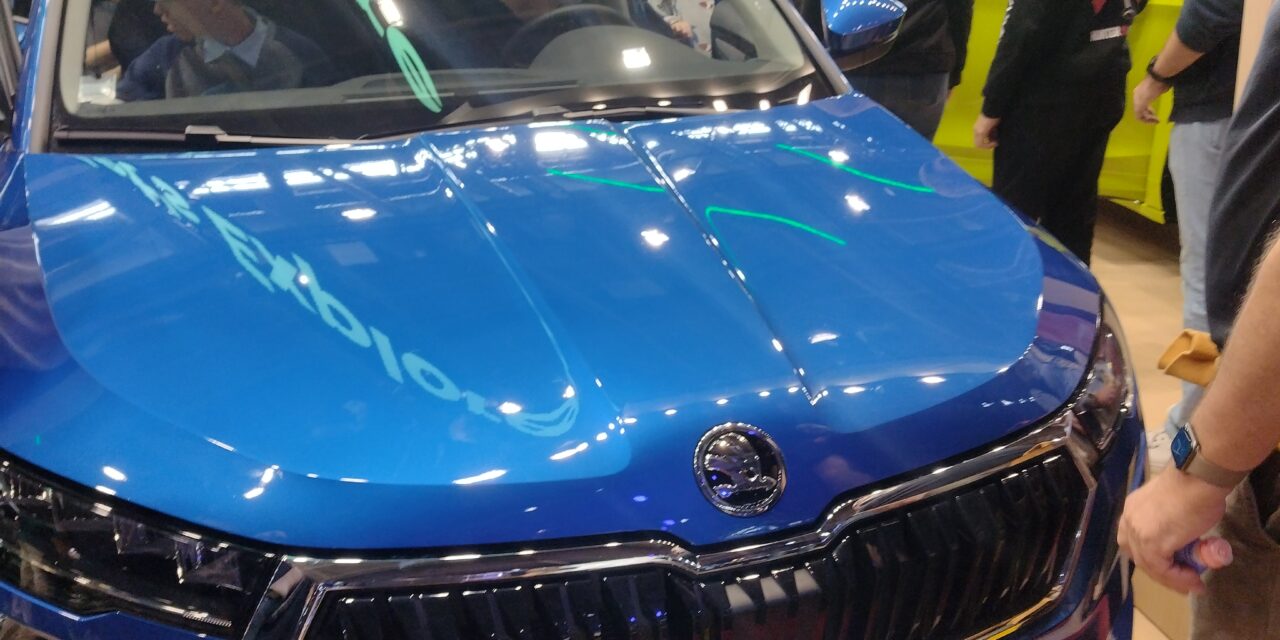
Shopping for a used Skoda Karoq? Here are the common faults, engine choices, recall checks and practical buying tips UK buyers should know before spending their money.
If you want a used family SUV that does not feel cheap, oversized or needlessly flashy, the Skoda Karoq deserves a place near the top of the shortlist. It is roomy enough for family life, easy to drive, sensibly engineered and, in the right spec, more versatile than a lot of obvious rivals.
The catch is that the cheapest Karoqs on the market are now old enough for missed servicing, patchy recall history and small electronic faults to matter. A tidy one is a very sensible buy. A neglected one can still land you with expensive annoyance.
Quick answer: what are the main used Skoda Karoq problems to look for?
The main things to check are 1.5 TSI low-speed judder on some cars, DSG hesitation or clumsiness, infotainment and smartphone-pairing glitches, electric tailgate or locking issues, suspension knocks, and incomplete recall work on early cars. As ever, service history matters more than a shiny valeting job.
Before buying, start with these checks:
- full service history and evidence of routine oil changes
- smooth cold start and clean pull-away, especially on 1.5 TSI cars
- DSG behaviour at low speed, when reversing and when creeping in traffic
- parking brake, hill hold and clutch take-up on manual cars
- every infotainment, navigation, camera, sensor and phone-connectivity function
- electric tailgate, keyless entry and central locking if fitted
- suspension knocks, steering pull and uneven tyre wear on test drive
- MOT history and Skoda recall completion on early cars
For most buyers, the safest used Karoq is a well-kept petrol manual or DSG car with strong paperwork, no warning lights and a cabin full of working tech.
Why the Karoq is such a strong used buy in the UK
There is a reason the Karoq keeps turning up on family-SUV shortlists. It hits a useful middle ground.
It is big enough to work as the main household car, but not so large that it feels awkward in town or on tight UK driveways. RAC’s used review notes that it combines solid practicality with a comfortable ride, while Auto Express highlights the car’s strong build quality, sensible equipment levels and easy ownership appeal.
Practicality is a genuine strength. Standard-seat cars offer a 521-litre boot, while VarioFlex cars can vary luggage space depending on seat position and make the rear cabin much more adaptable. That matters because the Karoq is often bought by people who actually use the back seats and boot rather than just liking the idea of an SUV.
Which used Skoda Karoq are most buyers looking at?
Most UK buyers are looking at the first-generation Karoq launched in 2017, including the facelifted version updated in 2022.
The early cars are where the bargain end of the market starts. They are also where you need to be most careful about recall history, battery condition, tyre quality and the kind of neglected maintenance that creeps in once a family SUV becomes "just the daily car".
Later facelifted cars look a little sharper and tend to feel fresher inside, but they usually cost noticeably more. For value, many buyers will end up looking at pre-facelift 1.5 TSI petrols from the 2018 to 2021 period.
1) 1.5 TSI low-speed judder on some cars
This is one of the best-known Karoq talking points.
Some 1.5 TSI cars can feel jerky or hesitant when moving away gently, especially from cold or in stop-start traffic. RAC mentions reports of "kangaroo-ing" and occasional stalling at junctions, while Auto Express also notes that a software update has been used to address juddering on some examples.
This does not automatically make the 1.5 TSI a bad engine. In fact, it is probably the sweet-spot choice for many buyers because it offers enough performance without diesel complexity. But it does mean you should test the car properly in slow urban driving, not just on a fast A-road where the problem may never show itself.
If the seller claims the car has never done it, fine. Still drive it yourself from cold if possible. If it hesitates, shudders or feels oddly snatchy at low speed, ask whether the relevant software update was done and do not just assume it is normal.
2) DSG gearbox behaviour needs a proper road test
The DSG automatic can suit the Karoq very well, especially in traffic-heavy family use, but it is not a gearbox you should buy without a slow-speed test drive.
You are looking for hesitation when pulling out, clumsy engagement when selecting reverse, shunt when creeping in traffic, or awkward behaviour on hills and during parking manoeuvres. One slightly jerky shift in isolation is not necessarily a crisis. Repeated low-speed awkwardness deserves more scrutiny.
A smooth, well-maintained DSG Karoq is easy to recommend. A car that feels uncertain, shuddery or reluctant to engage gears should be treated carefully until you know exactly why.
3) Infotainment, navigation and phone pairing glitches
The Karoq is a tech-heavier SUV than some buyers realise, and that means a casual test drive is not enough.
RAC specifically mentions reports of sat-nav position loss, MirrorLink issues and Front Assist faults. Auto Express also flags keyless-entry battery issues and other smaller electrical niggles. None of this means the Karoq is a disaster electronically, but it does mean you should test every function rather than assuming that a car with no dashboard warning lights is problem-free.
Check the touchscreen, DAB radio, Bluetooth pairing, Apple CarPlay or Android Auto connection if supported, reversing camera, parking sensors, USB ports and voice or navigation functions if fitted. If the car has keyless entry, try every key and make sure locking and unlocking behave consistently.
4) Tailgate, locking and convenience features can be expensive irritations
The Karoq has enough premium-ish equipment to create annoying repair bills when small things stop working.
Owner reports gathered by RAC include electric tailgate faults, central locking issues and auto main beam glitches. These are not necessarily common enough to condemn the car, but they are exactly the kind of problem buyers miss because they focus too heavily on engine and gearbox only.
If the car has an electric tailgate, operate it several times. Test both keys. Check the fuel filler flap opens properly, because Auto Express notes that some owners have had trouble there too. Try the parking brake, exterior lights, folding mirrors and every switch you can reasonably reach.
5) Early recalls matter, especially on 2018 and 2019 cars
This is not the sort of thing to wave away with "it was probably done".
The DVSA recall database shows several Karoq recalls on early cars. The 2018 model year includes recalls covering a rear head restraint issue, an electronic parking brake software issue, a rear seat bench weld problem and an engine-software torque problem. The 2019 model year also shows recalls for possible cracks in the left front seat frame and the same low-speed torque software issue.
That does not mean early Karoqs are bad buys. It means you should verify recall completion with Skoda or a main dealer before handing over money. A stamped service book is useful. Clear recall evidence is better.
6) Suspension knocks and tyre wear are worth listening for
The Karoq is generally comfortable and composed, but used family SUVs often live a hard life on potholes, kerbs and speed humps.
RAC mentions suspension knocking in owner reports, and the usual used-SUV warning signs apply here too. Listen for front-end clonks over broken surfaces, feel for steering pull, and look at the tyres closely. Uneven wear can point to alignment issues, neglected suspension wear or simply a previous owner who kept postponing the small jobs.
A Karoq riding poorly is not automatically a reason to walk away, but it is a reason to inspect more carefully and price the car accordingly.
Which engine makes most sense?
For most UK buyers, the 1.5 TSI petrol is the pick of the range if it drives properly and has been maintained well.
It is punchy enough for family use, avoids the short-trip diesel headache, and is common enough that you should be able to shop around. The smaller 1.0 TSI can work if your use is mostly urban and your expectations are realistic, but many buyers will prefer the extra flexibility of the 1.5.
The 2.0 TDI makes more sense if you cover regular motorway miles and want easy long-distance torque. As with any modern diesel, be more careful if the car seems to have lived a life of short local runs.
Four-wheel drive versions exist, but many buyers do not need them and will pay a fuel-economy penalty for the privilege.
What should you pay for a used Skoda Karoq in 2026?
At the time of writing, current used-market listings suggest the Karoq still spans a broad price range.
Older or higher-mileage early cars are now brushing the £9,000 mark, while tidier 1.5 TSI examples and newer facelift cars can climb well into the mid-teens or beyond. Auto Express marketplace examples currently show anything from roughly the low teens for higher-mileage 2022 cars to around the £20,000 mark for cleaner, lower-mileage automatic diesels.
That means the real sweet spot is not the very cheapest advert. It is the car where mileage, service history, tyres, recall completion and condition all line up sensibly against the asking price.
Running costs and service points to check
Service evidence matters because the Karoq can look healthy long after owners have started cutting corners.
Auto Express notes fixed servicing at 12 months or 10,000 miles, with flexible servicing stretching further, plus brake-fluid changes after three years and then every two years. It also notes timing-belt replacement intervals that matter on older cars, so do not just ask whether the car has been "serviced". Ask what was actually done and when.
Also check for:
- quality matching tyres rather than four random cheap ones
- brake condition and any advisory history
- battery age on cars with keyless systems and lots of electrical kit
- evidence the car has had proper inspections rather than bare-minimum stamp collecting
Best used Skoda Karoq version to target
If you want the sensible answer, start with a 1.5 TSI in a mid-range trim with a strong service file and working tech.
SE L and Edition cars can be especially appealing because the equipment level is strong, and VarioFlex seating is a real plus if you value cabin flexibility. A later facelifted car is the lower-risk route if budget allows, but a carefully chosen earlier car can still be the better-value buy.
I would be more cautious about buying the cheapest early example with vague history than a slightly more expensive car from a seller who can clearly prove servicing, recall work and careful ownership.
Final verdict
The used Skoda Karoq remains one of the smartest family SUV buys in the UK because it gets the important things right: space, comfort, visibility, sensible running costs and a cabin that still feels solid.
The main risk is not that the Karoq is fundamentally flawed. It is that buyers assume a practical Skoda must automatically be a safe bet and skip the detailed checks. Do not do that.
Buy one with complete history, verify recall work, test every piece of cabin tech and make sure the engine and gearbox behave properly at low speed. Get that right and the Karoq is still a very convincing used SUV.