If you are buying a used car, sorting out your own paperwork, or sanity-checking a seller’s advert, one of the quickest checks you can run is whether the vehicle is actually taxed. In the UK, the official answer is free and it takes less than a minute.
The useful bit is not just the tax status itself. The DVLA’s vehicle enquiry service can also help you spot when a seller is being vague, when a car has been declared off the road, and when you need to dig deeper before handing over money.
The fastest way to check if a car is taxed
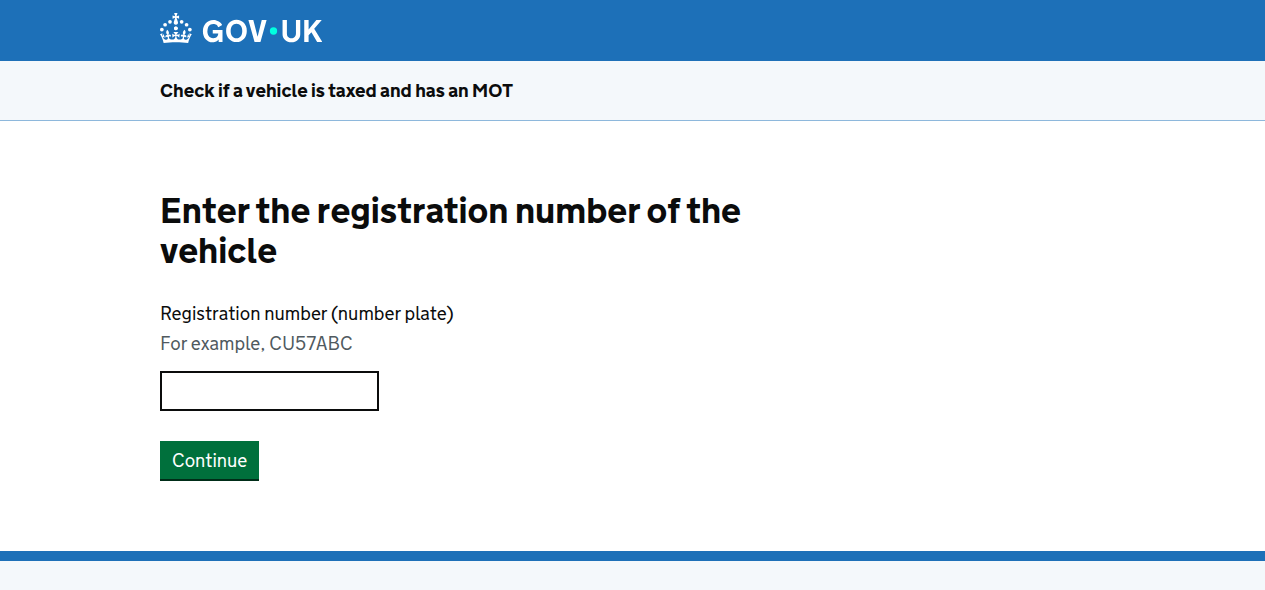
Use the official GOV.UK service called Check if a vehicle is taxed and has an MOT. You only need the registration number.
On the start page, enter the number plate, press Continue, and the service will tell you whether the vehicle is currently taxed or registered as off the road under a SORN.
That makes it useful in three very common situations:
- you are checking a used car before travelling to see it
- you want to confirm your own vehicle record is up to date
- you need to know whether a car has been declared off the road
What the DVLA check is good at
A lot of drivers still treat this as a boring admin check. It is more useful than that.
If a seller says a car is in daily use but the official record shows it is untaxed or SORN, that is worth asking about straight away. It does not automatically mean anything dishonest is going on, but it does tell you not to take the advert at face value.
For your own car, the service is also a quick way to confirm that a recent tax or SORN application has gone through. GOV.UK says records can take up to 2 working days to update after an application has been approved, so a mismatch is not always instant proof that something has gone wrong.
What the result does not prove
This is where people trip up.
A taxed car is not automatically a car you should buy, and it is not automatically a car you can legally drive away.
The public DVLA check does not confirm all of the things buyers usually care about, including:
- whether the car is insured
- whether there is outstanding finance
- whether it has been stolen
- whether it has been written off in the past
- whether it is mechanically sound
If you are checking your own vehicle’s insurance status, the official route is askMID. If you are buying a used car, you should also pair the tax check with an MOT history check, a recall check and, where appropriate, a paid history check covering finance and write-off records.
Motoring Mojo already has practical guides to the used car recall check and the MOT history check, and both are worth running before you commit.
What buyers should look for in the result
The cleanest outcome is simple. The car appears on the DVLA service, the tax status looks normal, the MOT information broadly matches what the seller told you, and the vehicle details line up with the advert.
If anything feels off, slow down.
Here are the main warning signs:
1. The car is showing as untaxed
That does not always kill the deal, but it changes the conversation. If the seller claims the car is used regularly yet it shows as untaxed, ask why. There may be an innocent explanation, but it can also point to a car that has been sitting longer than the advert suggests.
2. The car is showing as SORN
A SORN means the vehicle has been officially declared off the road. Plenty of perfectly decent project cars, seasonal cars and long-term second cars will be SORN, so this is not automatically a problem. It does mean you need to be realistic about collection and legality. A SORNed car cannot simply be driven home because the seller says it is fine.
If you buy one, you will need to sort the right paperwork before it goes back on the road. GOV.UK’s Register your vehicle as off the road (SORN) guidance covers the official process, and our guide to making a SORN and getting the tax refund right covers the practical side.
3. The seller talks as if tax transfers with the car
It does not. Vehicle tax does not transfer to the new keeper when a used car is sold. That catches people out all the time.
So even if the DVLA check shows the car is currently taxed in the seller’s name, you still need to tax it yourself before you drive it on the road as the new keeper. GOV.UK’s vehicle tax guidance is very clear on this point.
If you are buying today and planning to drive home, our step-by-step guide to taxing a car you have just bought is the one to read before you set off.
4. The tax record looks fine, but the advert still feels thin
A current tax record is not a badge of quality. A car can be taxed and still be overdue expensive maintenance, carrying nasty MOT advisories, or hiding a recall the owner never dealt with.
Treat the tax check as an early filter, not a final verdict.
How to check if a car is taxed in under a minute
If you just want the practical steps, here they are:
- Go to the official GOV.UK Check if a vehicle is taxed and has an MOT service.
- Enter the vehicle registration number exactly as shown on the number plate.
- Press Continue.
- Review the tax status shown by the service.
- If you are buying the car, compare that result with the advert, the MOT history and what the seller has told you.
It is one of those rare checks that is both free and genuinely worth doing every single time.
Can you drive a car home just because the check says it is taxed?
No. This is the part many buyers get wrong.
Even if the seller’s record shows the vehicle is taxed, that tax does not pass to you when ownership changes. You still need to tax it in your own name before driving on the public road.
In practice, that usually means making sure you have:
- insurance in place
- a valid MOT where one is required
- the new keeper details or reference needed to tax it
If you are trying to do those jobs in the wrong order, the DVLA system will usually stop you. We broke that down in our guide to why you cannot usually tax a car before arranging insurance.
What if your own car shows as untaxed by mistake?
Start with the obvious points before panicking.
- Check whether you taxed it very recently.
- Check whether a direct debit payment or application was still being processed.
- Check whether you made a SORN by mistake.
- Check whether you are looking at the correct registration.
If you have just completed a tax or SORN application, allow the DVLA’s stated update window. If the record still looks wrong after that, go back through the official GOV.UK tax pages rather than relying on guesswork.
The simple used-car rule
Before you travel, before you leave a deposit, and definitely before you drive anything home, run the free DVLA tax check.
It will not tell you everything, but it is a fast way to catch basic inconsistencies, confirm whether a vehicle is taxed or off the road, and avoid one of the easiest used-car mistakes in the UK: assuming the admin is sorted because a seller says it is.
For a check that costs nothing, that is a decent return.