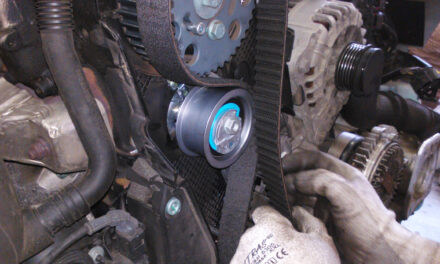
If your timing belt change is looming, the short version is this: many UK drivers will see quotes of roughly £350 to £700 fitted, while some smaller, simpler cars can come in lower and some premium or awkward jobs will go well beyond that. Once a garage also replaces the water pump, tensioners and pulleys, the bill often climbs, but that does not automatically mean the quote is padded. Often it means the garage is pricing the sensible version of the job rather than the bare-minimum version.
That matters because a timing belt is not a part most people can afford to gamble on. If it fails, the repair bill can leap from routine maintenance into major engine damage very quickly.
The quick UK answer
A practical guide for most drivers looks like this:
| Job type | Typical fitted UK cost |
|---|---|
| Simpler small-car timing belt job | about £300 to £450 |
| Many mainstream family cars | about £450 to £700 |
| Premium cars or awkward-access engines | about £700 to £1,000+ |
| Timing belt plus water pump package | often about £430 to £800+ |
Those figures line up with the shape of current UK pricing published by major repair platforms and motoring services, even though the exact average varies by source and vehicle mix. Fixter currently shows a broad national timing belt range of roughly £226 to £552, RAC says a cambelt change often sits around £300 to £600, and FixMyCar’s broader marketplace data puts the average cambelt replacement at £678.20. That is why drivers so often feel confused by the quotes. They are comparing different cars, different labour times and often different bundles of parts.
Why one timing belt quote can be twice another
This is the bit most guides skip, but it is usually what drivers really want to know.
1. Engine access changes the labour bill fast
On some engines, the belt is relatively straightforward to reach. On others, access is tight and the job can swallow far more labour time. That alone can move a quote by hundreds of pounds.
2. Some quotes include the water pump and some do not
This is the classic trap. If your water pump is driven by the timing belt, many garages will recommend replacing it at the same time. That adds cost now, but it can be the cheaper decision overall because the labour overlap is so large. Paying separately for a water pump later can mean paying for much of the same strip-down twice.
3. Tensioners, pulleys and ancillary parts matter
A proper timing belt job often involves more than just the belt itself. Tensioners, idlers and auxiliary belts may also be due or show wear. A suspiciously cheap quote may simply be pricing fewer parts.
4. Parts quality is not all the same
A quote using genuine or premium OE-quality parts can land higher than one built around the cheapest aftermarket kit. That does not always mean the expensive quote is best, but it does mean the cheapest one may not be the bargain it first appears to be.
5. Labour rates vary by postcode
A good independent garage outside a major city can price very differently from a main dealer or a city-centre workshop. If two quotes are far apart, labour rate is often a big part of the answer.
When should a timing belt be replaced?
There is no safe universal interval for every car, which is why generic internet advice is only a starting point. Current UK guidance from RAC puts typical replacement intervals at around 50,000 to 100,000 miles, with some manufacturers also specifying replacement by age at roughly 5 to 10 years. RAC’s own booking guidance also notes that many cambelts are replaced at around 60,000 to 100,000 miles or every 4 to 6 years, depending on the car.
The rule that actually matters is the one in your car’s service schedule. If you are buying used and there is no clear invoice showing when the belt was last done, treat that as a real cost risk rather than a paperwork detail. Our guide to checking a used car’s service history is worth reading before you assume the seller’s word is enough.
Can a timing belt give warning signs before it fails?
Sometimes, yes. Often, not much.
Possible warning signs can include:
- visible cracking, fraying or glazing on an inspected belt
- contamination from oil or coolant leaks
- chirping or slapping noises from the belt area
- a history showing the replacement interval is already overdue
The problem is that a timing belt can still fail without dramatic advance notice. This is one reason garages are so firm about sticking to age and mileage intervals. It is preventive maintenance, not a part you usually run until it obviously wears out.
Why delaying a timing belt job can get expensive very quickly
On many engines, a snapped timing belt allows internal components to fall out of sync. The ugly version is pistons and valves meeting when they should not. That can leave you facing bent valves, cylinder-head work or, in some cases, an engine that is simply not worth repairing.
That is why timing belt replacement sits in a different category from postponing something like a minor trim repair or cosmetic wheel scuff. If you are already close to the replacement interval, saving a few months rarely makes financial sense.
Should you replace the water pump at the same time?
Very often, yes.
If the water pump is driven by the timing belt, replacing it during the same job is usually sensible because:
- the labour overlap is significant
- pumps tend to have a similar service-life logic
- a later pump failure can force you to pay for repeated labour
- coolant leaks can damage the new belt
FixMyCar currently puts the average cambelt and water pump replacement at £468.89, which helps explain why a combined quote is not necessarily bad news. In many cases it is simply the more complete and safer job.
Timing belt or timing chain: do not mix them up
A lot of drivers search for cambelt prices without first confirming whether their car even has one. Some engines use a timing chain instead of a belt. Chains are often designed to last longer, but they are not magically maintenance-free and can be expensive when they do fail.
If you are unsure what your car uses, check the handbook, the manufacturer maintenance schedule, or ask a reputable garage to confirm using your registration and engine code. Guessing is how people either budget for the wrong repair or miss a belt interval entirely.
How to judge a timing belt quote properly
When you compare quotes, ask these questions:
- Is the water pump included?
- Are tensioners and pulleys included?
- What brand or quality level are the parts?
- Is fresh coolant included if the pump is being changed?
- Is there a warranty on parts and labour?
- Has the garage priced the job for my exact engine, not just the model range?
That last point matters more than most drivers realise. A 1.0-litre petrol and a 2.0-litre diesel version of the same model can have very different labour times and parts costs.
What if the car is running fine and the belt is only just overdue?
It is still a risk. A timing belt does not care whether the car feels normal on the school run. If the age or mileage interval has passed, the relevant question is not whether it still starts today. It is whether you want to keep betting an engine against a maintenance item that already had a scheduled expiry point.
Used-car buyers: this is one of the bills to check before you commit
If you are looking at a used car that is close to a belt interval, do not let a seller wave it away with "it should be fine". Ask for:
- an invoice showing the belt replacement date and mileage
- confirmation of whether the water pump was done at the same time
- the exact engine variant so you can check the correct interval
If there is no proof, budget for the job as if it has not been done. That is usually the safest way to value the car. It also helps to understand the wider maintenance picture, which is where our guide to UK car servicing costs can help.
The bottom line
Timing belt replacement is one of those jobs that feels expensive right up until you compare it with the cost of a failed engine. For many UK drivers, a realistic budgeting range is somewhere around £350 to £700, with plenty of room above or below that depending on the car and whether the quote includes the water pump and related hardware.
If you are shopping around, do not just hunt for the lowest number. Check what is included, check the interval for your exact engine, and take missing service-history proof seriously. With timing belts, the cheapest-looking decision can easily become the most expensive one.
Frequently asked questions
Is a timing belt the same thing as a cambelt?
Yes. In everyday UK use, timing belt and cambelt are usually talking about the same part.
Can I wait until the timing belt starts making noise?
That is a bad plan. Some belts give little or no warning before failure, so the service interval matters more than waiting for a dramatic symptom.
Why is a dealer quote sometimes much higher than an independent garage?
It can come down to labour rate, parts source, and whether the quote includes a fuller parts kit or extra fluids. Higher is not always better, but lower is not always like-for-like either.