You turn the key or press the start button, the dashboard wakes up, but the engine will not start. It is tempting to rule out the battery immediately. Do not. The lamps, radio and screen need far less power than the starter motor, and a battery can light the cabin while still failing under the much heavier load of cranking the engine.
The useful clue is what happens when you ask the car to start. Listen once, look at the lights, and avoid repeated long attempts. That gives you a better first diagnosis than buying parts on a hunch.
First, make the situation safe
Put a manual car in neutral with the handbrake on, or an automatic in Park. Switch off heated screens, lights, the blower and other electrical loads. If you are stopped somewhere exposed, such as a live lane, motorway verge or blind bend, put personal safety first and use a breakdown provider or the emergency services where appropriate. Do not keep trying to start a car that smells strongly of fuel, has smoke from the engine bay, or has a red warning light that remains on.
On a manual, make sure the clutch pedal is fully down. On an automatic, try again firmly in Park and, only if the handbook permits, Neutral. Some cars will not crank unless they can see the correct pedal or selector position.
If it clicks once, or clicks rapidly
A rapid series of clicks, dimming dashboard lights or a clock that resets are classic signs that the 12V battery is low or its connection is poor. The car may have enough residual power for the radio and dash, but not enough current to turn the starter.
- Check that the battery terminals are secure. Do not touch or dismantle them if there is obvious damage, heat, swelling or a leaking battery.
- Look for heavy white or blue-green corrosion around the terminals. Corrosion can add resistance and stop a healthy-looking battery delivering its power. See our guide to battery-terminal corrosion before attempting any cleaning.
- Think about the pattern. A car that starts after a jump but is flat again the next morning could have an ageing battery, a charging-system fault or an electrical drain. It needs a proper battery and charging test, not guesswork.
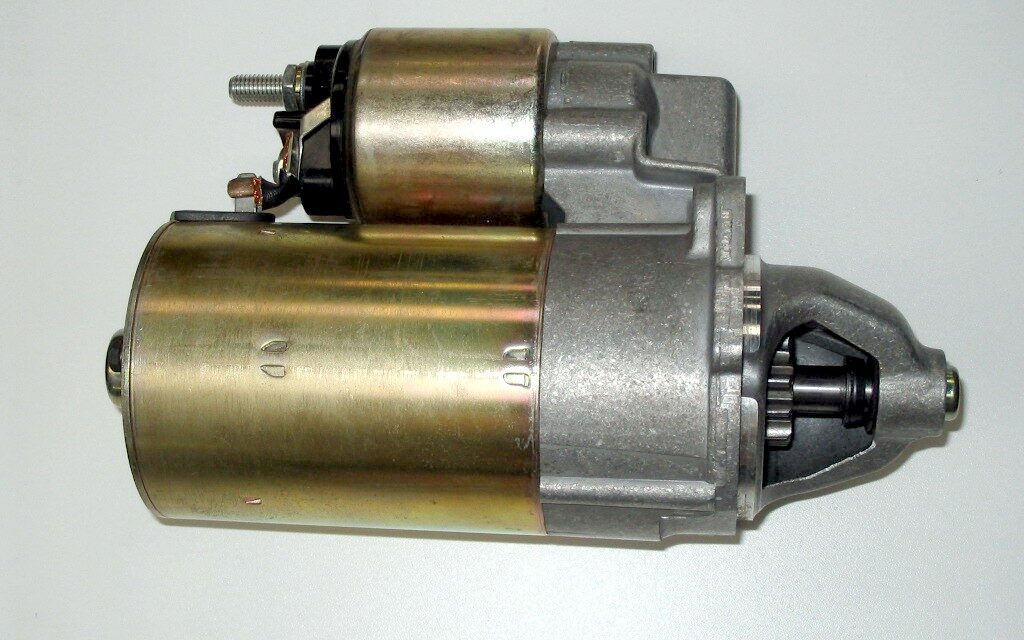
A single firm click with normal-looking lights can point to the starter motor, its solenoid or the heavy wiring to it. It is not a certain diagnosis: a weak battery can still produce one click. A garage should test voltage under load and the starter circuit before approving a replacement.
If nothing happens when you try to start
Silence is different from a slow crank. It can be caused by a flat battery, but also by an issue with the start button or ignition switch, brake or clutch switch, gear-position sensor, key recognition or an immobiliser. A message on the instrument panel matters here. If the car says the key is not detected, try the emergency starting position described in its handbook, rather than assuming the engine itself has failed.
For a conventional key fob, a flat coin cell can prevent remote unlocking or keyless starting even when the car’s 12V battery is fine. Many cars have a backup sensing point or procedure. The correct method varies by make and model, so use the handbook. If the fob is clearly weak, our key-fob battery guide explains how to change it without damaging the remote.
Do not repeatedly move an automatic selector between gears in the hope of forcing a start. One careful retry in Park or Neutral is reasonable. Beyond that, arrange diagnosis. Modern cars use several interlocks and fault codes, so a scan and a basic electrical test are usually more valuable than speculation.
If the engine turns slowly
A slow, laboured crank usually brings the battery and its connections back to the top of the list. Cold weather, short journeys and a car left unused for weeks can all expose a battery that was already marginal. Leaving accessories running with the engine off can do the same.
It can also happen after the car has been driven if the alternator is not replenishing the battery. The battery warning lamp is a warning about the charging system, not a simple instruction to fit a new battery. If it came on while driving, or the car needed a jump shortly after a decent run, get the charging system checked. Our guide to the battery warning light explains why continuing to drive can be a bad bet.
If it cranks normally but will not fire
If the starter turns the engine at a normal speed but the engine does not catch, the problem is less likely to be the starter motor. Petrol engines need the right mix of fuel, air and spark; diesels have their own fuel and combustion requirements. A warning light, a recent fault message, an empty fuel tank, contaminated fuel, a failed sensor or an ignition or fuel-system issue can all be relevant.
There is no universal roadside cure. Avoid holding the starter for long stretches, as that can flatten the battery and overheat the starter. Do not spray flammable products into the intake, disconnect fuel lines or bypass safety systems. If the car cranks but does not start after a few sensible attempts, recovery or a mobile technician is the sensible next step.
Before you jump-start it
A jump-start can be useful when a conventional 12V battery is discharged, but it is not appropriate for every car or every fault. Check the vehicle handbook first. Some cars specify connection points, and hybrid and electric cars still have a 12V system but also contain high-voltage equipment that must not be improvised with. Never connect jump leads to orange high-voltage cables or components.
If you do have confirmation that a jump-start is suitable, follow the correct sequence, use sound leads and keep metal tools and loose clothing clear. This UK jump-start guide sets out the cable order. Once it is running, do not treat that as proof that the problem is fixed. A battery that has gone flat without an obvious reason needs investigating.
What to tell the garage or recovery patrol
A short, accurate description saves time and can prevent an unnecessary part being fitted. Make a note of:
- whether the engine was silent, clicked, turned slowly or cranked normally;
- whether the lights dimmed or the dash reset;
- any warning messages or lamps, ideally with a photo;
- how long the car had been standing and whether it has needed a jump recently;
- whether the problem followed very cold weather, heavy rain, a long journey, refuelling or recent work; and
- the age of the 12V battery, if known.
Ask for the battery to be load-tested and the charging voltage checked before agreeing to a battery, alternator or starter-motor replacement. Those tests help separate three faults that can look very similar from the driver’s seat.
The sensible bottom line
Dashboard lights do not clear the battery. Rapid clicking or slow cranking makes a weak battery or poor connection likely, while a normal crank with no start points elsewhere. A single click or complete silence may be a starter, interlock or key-recognition issue. Take the symptom seriously, make the car safe and get a proper test if the cause is not obvious. It is cheaper and safer than replacing parts one by one.