A key that slides into the ignition but will not turn is frustrating, particularly when you are parked somewhere awkward. The useful distinction is between a key that physically will not rotate and a car that turns over but will not start. This guide is about the first problem.
Do not put your full weight into the key or use pliers. The key blade, ignition barrel and steering-lock parts are all easier to damage than many drivers expect. Start with the simple checks below, then stop if the key still feels jammed rather than merely stiff.
First, take the pressure off the steering lock
On many cars with a conventional ignition key, the steering wheel locks when it is turned after the key has been removed. If a front wheel is resting against a kerb, or the steering has been left on full lock, the mechanism can be under enough load to stop the key turning.
- Put the handbrake on and make sure the car is secure.
- Hold the steering wheel firmly and try moving it gently left and right. It will usually have a small amount of movement in one direction.
- While maintaining gentle pressure in that free direction, turn the key normally.
Use one hand on the wheel and one on the key. Do not wrench either of them. When the load comes off the steering lock, the key will often turn immediately.
Make sure the car is properly in Park or neutral
An automatic may prevent the ignition from moving if it does not recognise Park. Press the foot brake, move the selector firmly into P, then try again. If it still will not turn, hold the brake and move the selector through its positions before returning it to P. Do not try this in traffic or on a slope unless the vehicle is secure.
With a manual car, fully depress the clutch before trying the key. It will not normally cure a mechanically jammed barrel, but it rules out a simple interlock on cars that use one.
Check the key before you blame the car
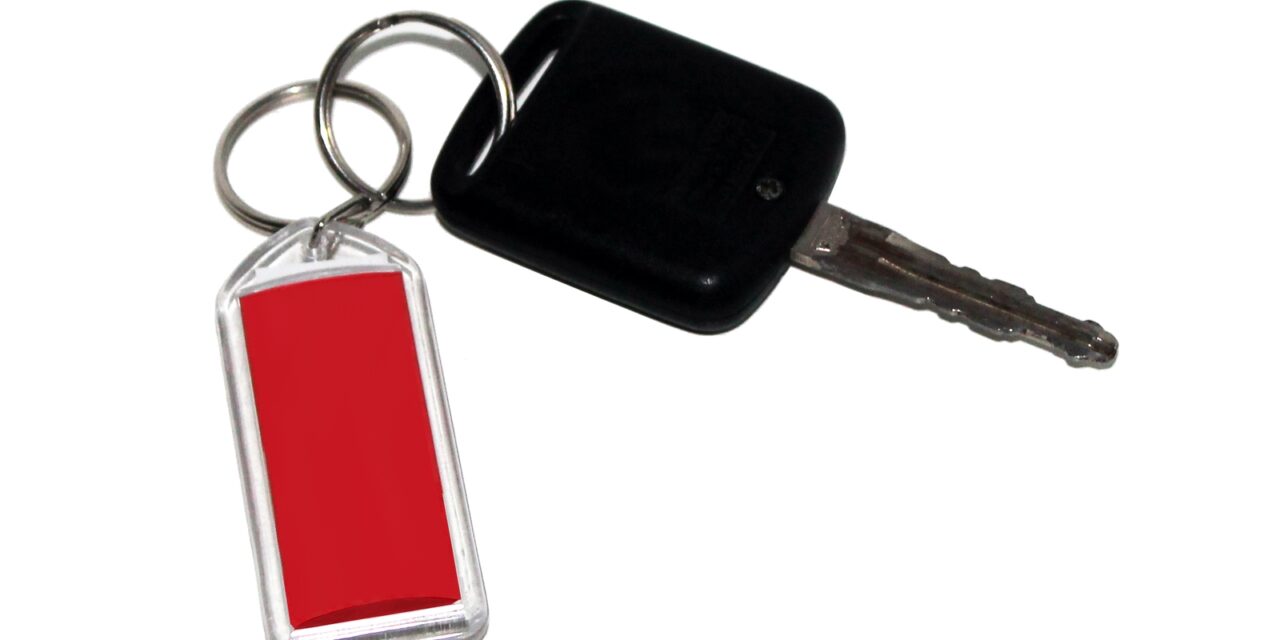
Look closely at the metal blade in good light. A worn key can eventually stop lifting the small pins inside an ignition barrel accurately enough to turn it. Warning signs include rounded edges, visibly uneven teeth, a blade that feels loose in the remote casing, or a problem that has become gradually more frequent.
If you have a spare mechanical key, try it. That is one of the best tests you can do. If the spare turns smoothly, stop using the worn key and arrange a replacement or have it assessed. Avoid copying a badly worn key at a kiosk: it can reproduce the wear as well as the original pattern.
A flat remote battery is different. On most cars it does not stop the metal blade turning in a conventional barrel, though it can affect remote locking or an immobiliser on some models. Check the handbook for the manufacturer’s emergency-start procedure rather than assuming the battery is the cause. If your remote battery is flat, see our guide to changing a car key fob battery.
Cold, dirt and a dry mechanism can make the problem worse
Frost or moisture around the key slot can make a marginal lock feel seized. If conditions are cold, use a purpose-made lock de-icer as directed and allow it to work. Do not pour boiling water over the key area. It can refreeze and may create a separate problem around electrical trim.
Do not spray general-purpose oil, cooking oil or thick grease into an ignition barrel. They can collect dirt and leave the lock worse over time. A locksmith can advise on the appropriate lock lubricant for the particular vehicle if the barrel is dry or contaminated.
When a gentle retry is reasonable, and when it is time to stop
A few calm checks are sensible. Repeatedly forcing the key is not. Stop and call a reputable auto locksmith, breakdown provider or garage if any of these apply:
- the key bends, catches or feels as though it might snap;
- the key turns only intermittently and the spare behaves the same way;
- the steering-lock check makes no difference;
- the key is damaged, badly worn or has broken inside the barrel;
- there is visible damage around the ignition, including after an attempted theft; or
- the car has a keyless system and the handbook’s emergency procedure does not work.
A specialist can determine whether the problem is the key, the lock barrel, a steering-lock component or an electronic immobiliser. That diagnosis matters because changing parts at random can create coding and security complications on newer cars.
What not to do
- Do not force or twist the key with tools. A broken key inside the barrel makes recovery more involved.
- Do not remove steering-column trim yourself just to investigate. Airbag wiring and security components may be nearby.
- Do not keep trying the key for minutes on end. If it is an intermittent worn-barrel fault, this can be the moment it fails completely.
- Do not assume a new remote battery fixes an ignition-barrel problem. Treat the mechanical key and electronic remote as separate systems unless your handbook says otherwise.
How to reduce the chance of it happening again
Use the spare key occasionally so you know it works, and keep it somewhere separate from the everyday key. Avoid a very heavy keyring, which can put extra load on an older ignition cylinder over time. If your key has started needing a particular jiggle or angle, deal with it before it becomes a roadside problem.
Finally, keep the car handbook accessible. Its instructions for a spare key, keyless emergency start and immobiliser warning light are specific to your model. That is more reliable than a generic fix when the car has a modern electronic steering lock or a push-button start system.
The short answer
Try relieving the steering-lock pressure, confirm the gear selector is in the correct position, and test a spare key if you have one. If the key still will not turn freely, do not force it. A locksmith or breakdown technician can protect the key and identify whether the fault is mechanical or electronic before a small inconvenience becomes a broken key or damaged ignition.