Parking close to a junction can make it harder for everyone to see, turn and cross safely. The relevant advice is more specific than many drivers realise: Highway Code Rule 243 says you should not stop or park opposite, or within 10 metres (32 feet), of a junction, except in an authorised parking space.
That is a useful rule to know before squeezing into an apparently convenient gap. It applies even where there are no yellow lines, and it is separate from any local waiting restrictions.
Start with the 10-metre zone
For everyday decisions, treat the 10 metres as a no-parking buffer leading up to the junction. It is roughly the length of two average family cars, but measuring with cars is only a rough guide. If there is any doubt, choose a different space.
Rule 243 also says not to park opposite a junction. That matters on narrow residential roads in particular. A car directly opposite can turn a normal exit into a blind, awkward manoeuvre and can prevent larger vehicles from making the turn.
The exception is an authorised parking space. A properly marked and signed bay at or near a junction is there by design, so follow the signs and bay markings. Do not assume that an unmarked piece of kerb is an authorised space simply because other cars are using it.
Yellow lines do not replace the junction rule
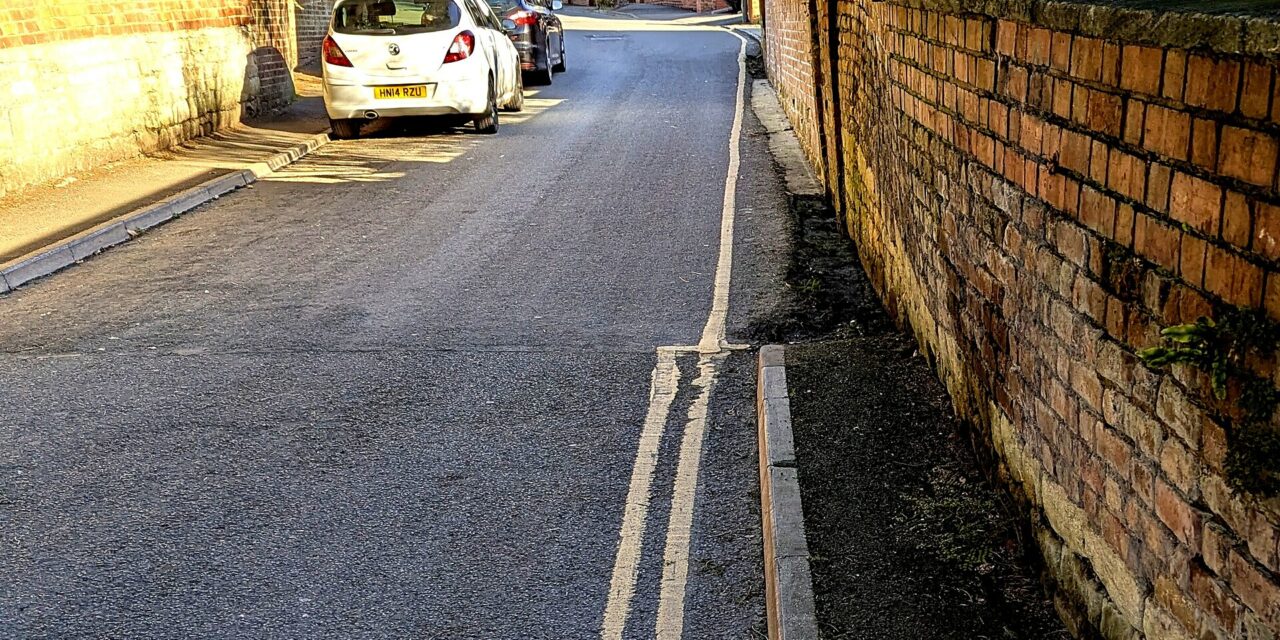
Drivers sometimes look only for paint on the road. That is not enough. Yellow lines, kerb marks, signs, controlled parking zones and red-route restrictions can create enforceable restrictions with their own times and exemptions. The Highway Code’s waiting and parking section makes clear that double yellow lines prohibit waiting at any time, while single yellow lines operate at the times shown on nearby signs or zone-entry signs.
But a clear kerb with no yellow line is not automatically a sensible place to park. Rule 243 is about avoiding positions that create danger or obstruction, including the approach to and the opposite side of a junction. Think of the rules as two checks, not alternatives:
- Restriction check: Is there a sign, line, bay, permit rule or local restriction that prohibits parking or waiting here?
- Safety check: Even if there is no marked restriction, is the car within the junction buffer, opposite the junction, blocking sightlines or making the road difficult to use?
Pass both checks before leaving the car.
Do not confuse “should not” with a free pass
The wording in Rule 243 is “should not”, rather than “must not”. That does not mean the place is safe, permitted in every circumstance or immune from action. Other laws and local restrictions can still apply, and a badly positioned vehicle can cause an obstruction or create a hazard.
The practical point is simple: do not rely on the absence of a yellow line when the car would make a junction difficult to use. If a bus, refuse lorry, emergency vehicle, cyclist, person crossing or driver emerging from the side road would be put at a disadvantage, move on. Rule 243 specifically also warns against parking where access for emergency services would be prevented.
The places that catch drivers out
On the bend just before a side road
A gap before the corner can look harmless from the driver’s seat. From the side road, though, it can hide approaching traffic, especially where there are parked cars on both sides. If the gap is within 10 metres of the junction, leave it.
Directly opposite a narrow side road
There may be plenty of room to park beside the kerb, but that does not make the position considerate. A vehicle leaving the side road may need the full width to turn. Delivery vans, refuse vehicles and emergency vehicles need more room still.
At a T-junction with a marked bay nearby
A bay can be the authorised-space exception, but read every sign. Check the hours, any permit condition, loading restriction and the bay’s end markings. The bay may be valid only at certain times or for certain vehicles.
Near a dropped kerb or crossing point
A junction is often close to a pedestrian crossing point or dropped kerb. Those are separate concerns. Rule 243 says drivers should not park where the kerb has been lowered to help wheelchair users and powered mobility vehicles. Local rules can be stricter, so never treat the 10-metre distance as permission to block a crossing point.
A 20-second parking check
Before switching off, ask yourself:
- Is this within 10 metres of the junction or directly opposite it?
- Is it a clearly marked, signed authorised parking space?
- Are there yellow lines, signs, kerb marks, a controlled parking zone or a red-route rule?
- Would my car reduce sightlines for people turning, crossing or cycling?
- Could a large vehicle or emergency vehicle still get through without a risky manoeuvre?
- Am I near a dropped kerb, school entrance, bus stop, bend, crossing or driveway?
A “yes” to the first question, or any doubt on the safety questions, is a good reason to find another space.
Parking at night needs an extra check
Junction parking has a second wrinkle after dark. Rule 250 says certain vehicles parked without lights on a road with a speed limit of 30mph or less must be at least 10 metres away from any junction, close to the kerb and facing with the traffic flow, unless they are in a recognised parking place or lay-by.
So the same 10-metre distance appears in the night-parking rules too, but for a different reason. Do not read it as a guarantee that a space is acceptable in daylight. The Rule 243 safety advice still applies.
The sensible answer
If you are deciding whether to park by a junction, the safest answer is usually to leave a clear buffer before the corner and avoid the opposite side altogether. Markings and signs may make a place legally restricted; an unmarked stretch may still be a poor and potentially obstructive choice. A few extra steps are cheaper and less stressful than returning to a penalty notice, an angry neighbour or a blocked road.
For the full wording and the wider list of places drivers should avoid, check the current Highway Code rules on waiting and parking before relying on a tight kerbside space.