Yes, you can often leave a car battery charger connected overnight, but only when the charger is designed to manage the battery automatically and the instructions for that exact model allow it. A modern smart charger normally reduces or stops its charge once the battery is full, then monitors it. An older basic charger may not. Treating both as interchangeable is where people get into trouble.
Before you plug anything in, check the charger label and its manual, confirm that it suits your battery type and charge it in a dry, well-ventilated place. Do not use an extension lead as a casual workaround, do not charge a visibly damaged battery and do not leave a conventional unregulated charger running unattended. If the battery is hot, swollen, cracked, leaking or smells strongly of rotten eggs, stop and get professional advice.
The short answer
A smart, automatic 12V charger can usually be left on overnight if its manufacturer says it can. The charger should be compatible with the battery, in good condition and connected in a suitable location. It is not a licence to ignore the setup.
A basic manual charger should not be assumed safe to leave overnight. These units can continue charging unless the user switches them off. Overcharging can heat a lead-acid battery, shorten its life and, in the worst case, create a fire or explosion risk. Follow the manual rather than relying on a timer or what worked with a different charger.
First, work out what sort of charger you have
The words on the box matter more than its physical size. Look for terms such as automatic, smart, multi-stage, maintenance or float. These usually describe a charger that assesses battery voltage and changes its output as the battery fills. They are commonly sold for cars that are not used every day, including seasonal vehicles.
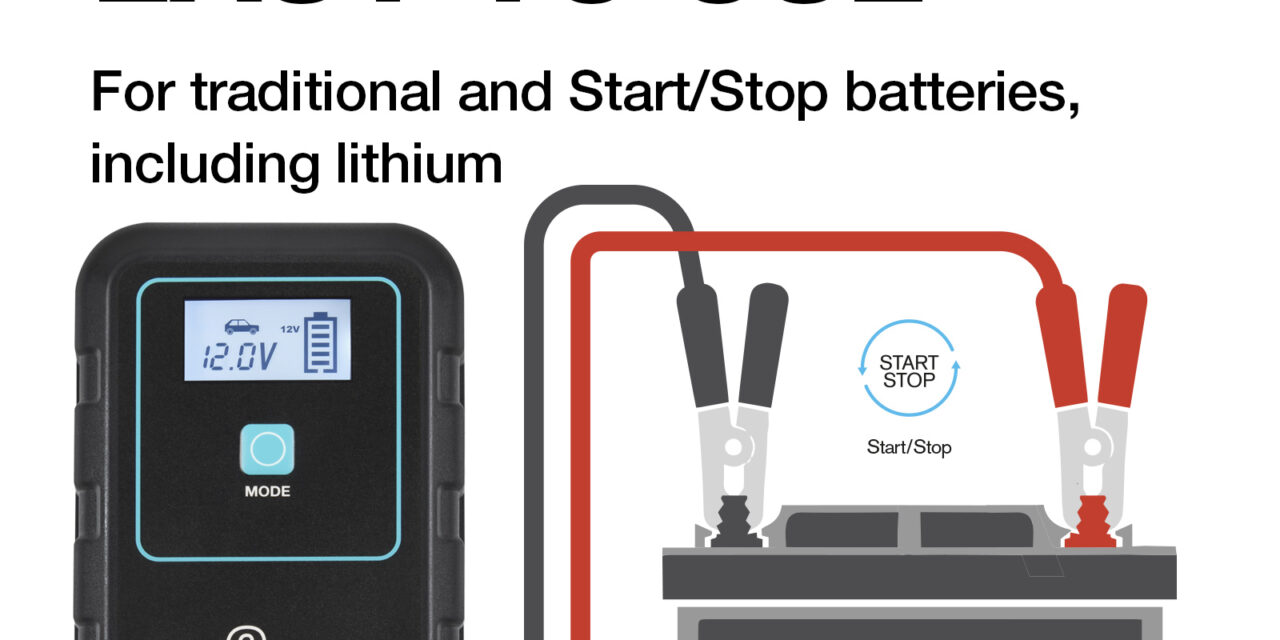
That does not mean every smart charger is suitable for every battery. A start-stop car may use an AGM or EFB battery, and the wrong programme can damage it or fail to charge it properly. Check the battery label and select the correct mode. If the car handbook says the battery has a battery-monitoring system or gives a preferred charging point, follow that guidance too.
For an example of the features to look for, the Ring RSC906 product information describes automatic charging and maintenance functions. That is useful context, not a substitute for the instructions for the charger in your hand.
When an overnight charge is a good idea
- The battery is a normal 12V starter battery and the charger is rated for that battery type.
- The charger is automatic and its manual expressly permits unattended or maintenance charging.
- The battery is in sound physical condition, with no leak, bulge, crack or excessive heat.
- The car and charger are in a dry, ventilated place with the cables protected from damage.
- You have selected the correct battery mode, especially for AGM or EFB start-stop batteries.
It can be particularly useful after a car has sat unused, after several very short trips or when cold weather has exposed a marginal battery. But a charger is not a cure for a battery that keeps failing. Repeated flat batteries can point to an ageing battery, charging-system fault or electrical drain. If that sounds familiar, see our guide to why a car battery keeps going flat before spending money on a replacement.
When you should not leave it unattended
Do not leave it overnight simply because it is convenient if any of these applies:
- The charger is an old-fashioned manual unit, or you cannot confirm that it switches to a safe maintenance mode.
- The battery is damaged, very hot, leaking, frozen or giving off a strong sulphur or rotten-egg smell.
- You are unsure whether the battery is conventional lead-acid, AGM, EFB, gel or lithium, or the charger has no matching setting.
- The cables, clamps, plug or mains lead are damaged.
- The charger would sit in rain, standing water, a sealed unventilated space or somewhere a child or pet could disturb the leads.
In those cases, disconnect the charger from the mains first, then remove the clamps, and investigate. General electrical safety guidance from the Health and Safety Executive is a useful reminder not to use damaged electrical equipment or improvise around a fault.
A safe overnight charging checklist
- Read the handbook for the car and charger. Look for battery type, charging points and any vehicle-specific warnings.
- Park safely. Use a dry, ventilated garage or carport. Avoid a sealed domestic room. Keep flames, cigarettes and sparks away from a lead-acid battery.
- Turn the car off and remove the key. Switch off electrical accessories. Leave doors closed if the interior lights would otherwise remain on.
- Inspect the battery and leads. Do not proceed with a swollen, cracked, leaking or unusually hot battery. Make sure the charger leads are not frayed and the clamps are clean.
- Select the right programme. Use the charger setting that matches the battery. AGM and EFB batteries need particular care. Our guide to AGM and EFB batteries explains why the label matters on a start-stop car.
- Connect in the order specified by the charger. Usually this means red to the positive terminal or designated positive point, then black to the negative terminal or approved earth point. The exact instruction can differ, so the charger manual wins.
- Plug into the mains only after the clamps are secure. Keep the charger off the car, battery and floor if there is any chance of water. Do not trap leads in a bonnet or door.
- Check the indicator lights before leaving it. A fault light, incorrect mode or clamp warning is a reason to stop, not to hope it resolves itself.
- In the morning, switch off or unplug at the mains before removing clamps. Remove them in the order instructed by the manufacturer, then refit any terminal covers.
Should you disconnect the battery from the car?
Usually, no. Many modern smart chargers are intended to charge a battery while it remains connected, using the vehicle’s approved points. Disconnecting a modern car’s battery can reset clocks, radio settings, one-touch windows and other learned functions. It can also create avoidable complications on some vehicles.
There are exceptions. A vehicle or battery manufacturer may require isolation for a particular procedure, and some specialist chargers have different instructions. If there is any doubt, use the car handbook or a qualified technician rather than removing a terminal by guesswork. Never attempt to charge a battery that the vehicle maker says is damaged or has suffered a serious impact.
How long should a car battery charger take?
There is no honest universal number. It depends on the battery’s capacity, how flat it is, the charger’s output and temperature. A low-amp maintenance charger can take many hours, which is exactly why overnight use is common. A faster charger may take less time, but faster is not automatically better for a small or weak battery.
The charger display, if it has one, is more useful than guessing. A battery that declares itself full almost immediately after repeatedly failing to start the car may not be healthy. Equally, a charger that never progresses or reports a fault deserves investigation. Do not keep cycling a failing battery in the hope that another overnight charge will restore it.
What about leaving it connected for weeks?
Only use long-term maintenance charging when the charger is specifically designed for it and the instructions allow it. This is sometimes called float, conditioning or maintenance mode. It is different from leaving a conventional charger running indefinitely.
For a car stored over winter, inspect the setup periodically. Check that the charger has not shown a fault, the cables have not been disturbed and the area is still dry. If a battery cannot hold charge despite correct maintenance charging, the useful next step is a battery and charging-system test, not a more powerful charger.
Do not confuse a charger with jump leads
A charger replenishes the battery gradually. Jump leads or a jump pack get a stranded car started, but they do not diagnose why it went flat and may not put meaningful charge back into the battery on a short drive. If you need a jump, follow the vehicle handbook and use the correct connection sequence. We have a separate guide on how to jump-start a car safely.
The bottom line
Leaving a car battery charger on overnight is sensible only when it is an automatic charger approved for the battery and used exactly as its instructions require. Put safety ahead of convenience: use the correct mode, charge in a dry ventilated space, inspect the battery and leads, and stop if anything looks or smells wrong. If the battery continues to go flat, find the underlying fault rather than making overnight charging part of the daily routine.