A car that will not unlock from the drive can make a tiny coin-cell battery feel like a major breakdown. Fortunately, a fading key-fob battery is usually a straightforward home job. The important word is usually: the battery size, the opening method and the emergency-start procedure vary by car, and forcing the wrong part can damage an expensive remote.
This guide covers the sensible UK approach, from confirming that the battery is really the problem to testing the fob after it is back together.
First, make sure it is the key fob battery
The usual early clue is reduced range. You may need to stand closer to the car, press the button twice, or find that one remote works normally while the other does not. Some cars display a key-battery warning on the dashboard. A keyless-entry car may also ask you to hold the fob at a particular spot to start it.
Do not jump straight to a battery if neither key works. Try the spare fob if you have one. If both fail at the same time, the car’s 12V battery, a blown fuse, receiver issue or central-locking fault is more plausible than two coin cells dying together. Likewise, a remote that has been through a washing machine, dropped hard or left wet may need more than a new battery.
Find the exact battery before you open the case
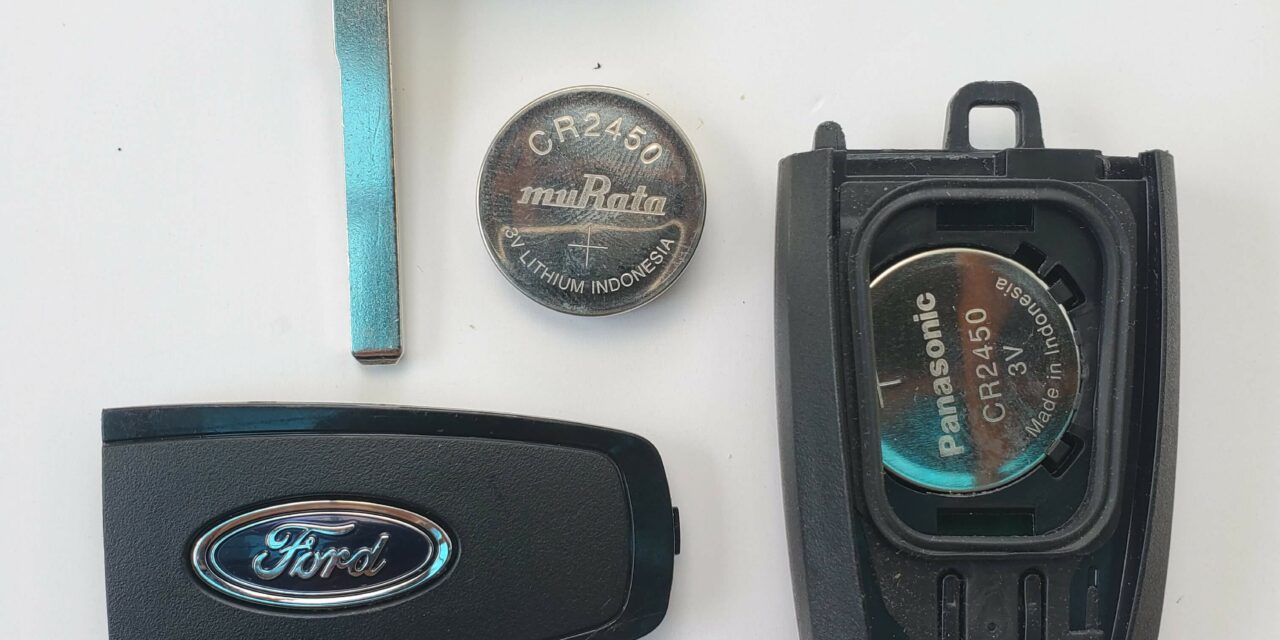
Buy the battery named in the owner’s handbook or read the code on the old cell once the fob is open. Many remotes use 3V lithium coin cells, but the diameter and thickness are not interchangeable. Common markings include CR2032, CR2025 and CR2450. A cell that looks almost right can be too thick for the holder or fail to make reliable contact.
A good habit is to have the replacement in hand before taking the fob apart. Use a reputable branded cell in an unopened pack, and check its expiry date if it is shown. Do not use a used battery from a drawer just because it lights an LED.
What you need
- The correct new coin cell
- A small flat plastic trim tool or plastic guitar pick
- A clean, well-lit table
- The car handbook or the manufacturer’s key-fob instructions
Avoid a large metal screwdriver where possible. It is easy to scar the casing, slip into the circuit board or crack a retaining clip. If your handbook specifically shows a screwdriver slot, use the smallest tool that fits and turn it gently.
How to change a car key fob battery
1. Work over a clear surface
Put a light-coloured cloth or tray on the table. Small springs, emergency key blades and the old battery are much easier to find there than in the footwell or on a dark driveway. Keep the new battery in its packet until you need it.
2. Remove the emergency key if there is one
Most modern fobs hide a mechanical key blade. There is often a small release catch on the side or back. Slide it, remove the blade, then look for the seam or notch that it reveals. The mechanical key is useful if the car is already locked and the remote has gone flat, so do not misplace it.
3. Open the fob at its intended notch
Use the handbook diagram or examine the case for a small pry point. Insert a plastic tool and twist only enough to separate the halves. Work around the edge if necessary. A case that will not move is a cue to stop and re-check the instructions, not to apply more force. Some fobs have a separate battery cover; others split into two sections.
4. Note the battery code and which way it faces
Before lifting the cell out, take a quick phone photo. The positive side is normally marked with a plus sign, but do not rely on memory. The holder or printed circuit board should also show the correct orientation.
Release the battery from the edge that is not held by a metal contact. Do not bend the contacts or scrape across the circuit board. If the old cell has leaked, avoid touching residue with bare fingers and arrange disposal rather than trying to clean the fob with liquid.
5. Fit the new cell cleanly
Slide the new cell under the retaining contact, then press it down gently in the same orientation as the old one. Try not to touch the flat faces more than necessary. Check that it sits level and that no rubber seal or plastic clip has moved out of position.
6. Reassemble and test before walking away
Click the case shut evenly, refit the emergency blade and test lock, unlock and boot-release buttons while standing beside the car. Then try the fob from your normal approach distance. If it is a keyless-start car, start it in the normal way before you throw away the old battery.
Some vehicles re-establish the remote connection automatically. Others have a specific re-synchronising sequence, so follow the handbook rather than trying random button combinations found online.
If the car will not start with a flat fob
A flat remote battery does not necessarily mean the car is stranded. Many keyless-start cars have an emergency reader location that can detect the fob at very close range. Depending on the model, it may be in the steering-column area, centre console or a marked place in the cupholder. Use the mechanical blade to enter the car if needed, then follow the procedure in the handbook.
Do not assume the same method works across makes, or even across model years. If there is no response after fitting a correct fresh battery, use the spare key if possible and contact the manufacturer, a reputable auto locksmith or breakdown provider.
When a new battery does not fix it
Stop treating it as a battery problem if the replacement cell is correct and fitted the right way but the fob still does nothing. Check for damaged buttons, corrosion, a cracked case, loose battery contacts and water exposure. Test the spare fob. If the spare works, the first remote may need repair or replacement.
If neither fob operates the central locking, do not pay for two new remotes before the car’s 12V battery and locking system have been checked. A weak vehicle battery can cause misleading electrical symptoms, particularly after the car has been parked for a while.
Dispose of the old coin cell safely
Never put a loose coin-cell battery in household waste. Take it to a battery collection point, often available at supermarkets, electrical retailers or recycling centres. Keep both old and new coin cells away from children and pets: swallowed button batteries are a medical emergency. Tape over the terminals of the old cell before carrying it if you cannot recycle it immediately.
The simple rule
Use the exact battery specified for the fob, open the case only at its designed release point and test the remote before you leave the drive. That is normally all it takes. If the fault remains, the right next step is diagnosis, not repeatedly buying more coin cells.