Realising the keys are on the driver’s seat while the doors are locked is a horrible little moment. It is also the point at which rushed solutions tend to make an expensive problem worse. A bent door frame, damaged weather seal, smashed window or triggered alarm can cost far more than getting proper help.
The best response is not the same everywhere. A lockout in your own driveway is an inconvenience. A lockout on a live motorway, with a child or pet in a hot car, is a safety issue first. Work through the steps below in order and resist the temptation to force your way in.
First, check whether it is an emergency
Call 999 if someone inside the vehicle is in immediate danger. That can include a child, vulnerable person or animal in distress, a car exposed to dangerous heat or cold, a fire risk, or a vehicle stopped where it creates an urgent traffic hazard. Give the operator the location, vehicle details and the nature of the danger. Do not spend valuable time trying improvised ways to open the door.
If nobody is at risk but the car is in an unsafe place, concentrate on keeping yourself safe. On a motorway or other high-speed road, get behind a safety barrier where possible and follow the Highway Code guidance on breakdowns and incidents. Do not stand beside the car, cross live lanes or attempt a DIY entry at the roadside. National Highways also has specific advice for stopping safely on motorways and major A-roads.
For a routine lockout in a safe place, take a breath and move on to the practical checks.
Make sure the car really is locked
It sounds obvious, but check every door and the boot once, without pulling hard. On some cars the boot can be released separately, and a door may not have latched fully. If you have a keyless entry fob, move it away from the car and try the handle again: a fob left very close by, or a second key in a bag, can occasionally make the behaviour less obvious.
Then check for the simple escape routes:
- Is a spare key at home, with a family member or held by someone you can reach?
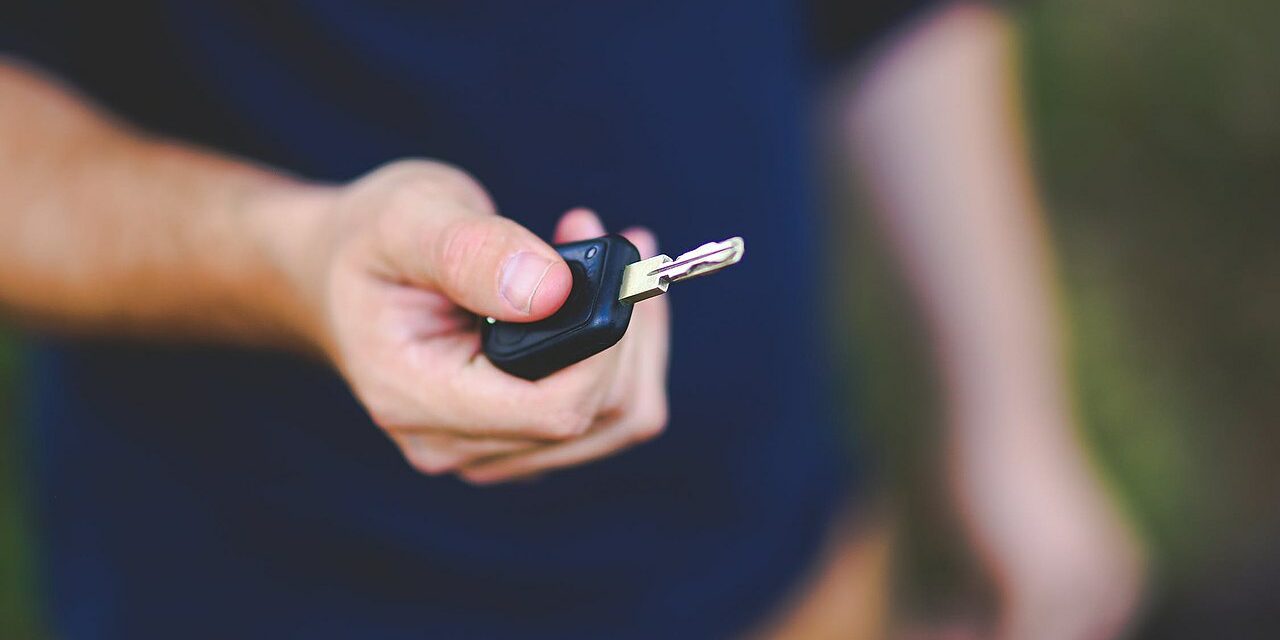
- Does the key fob have a hidden mechanical blade? Many do, although it only helps if you have the fob with you.
- Has the car manufacturer’s app or connected-car service been set up before today? Some makes allow remote unlock on certain models and subscriptions.
- Are you sure the keys are inside rather than in a coat, luggage, shopping bag or the boot?
Do not assume that an app will solve it. Remote-unlock functions vary by manufacturer, vehicle age, market and subscription, and may require a PIN or account verification. Treat it as one option, not the plan.
Check breakdown cover before paying for a call-out
Many UK breakdown policies include help when keys are lost, stolen, broken or locked in the vehicle, but the exact wording matters. Some providers classify entry assistance as a roadside recovery service; others limit it, charge for it, or exclude replacement keys. Your bank account, packaged account, new-car cover, manufacturer assistance or motor insurance may also include breakdown cover that you have forgotten about.
Use the provider’s official app or phone number, quote the registration and explain plainly that the keys are locked inside. Ask two questions before agreeing to anything: will the patrol attempt non-destructive entry, and what happens if it cannot? The answer determines whether you will need a car locksmith, recovery or a replacement key.
Do not cancel a locksmith simply because a breakdown service is on its way. Confirm the expected attendance time and whether your membership actually covers the job. If you are in a car park, also check whether there is a closing time or a requirement to give your registration to site security.
When a car locksmith is the better route
A reputable automotive locksmith is often the most direct option when you have no accessible spare key, your cover excludes lockouts or the key itself has failed. They can assess the lock and immobiliser system and may be able to open the vehicle without damage. If a key is lost or defective, some can cut and programme a replacement, though capability varies sharply by make, model and age.
Before booking, provide the registration, make, model, year and your location. Ask for a written estimate or at least a clear breakdown of the call-out charge, labour, VAT and any extra cost for evening, weekend or programming work. Be wary of a vague low headline price that becomes a much larger bill after arrival.
A legitimate locksmith should expect to see proof that you are entitled to access the car. Have photo ID, the V5C if it is available, insurance documents, finance paperwork or other ownership evidence ready. The V5C shows the registered keeper rather than legal ownership, but it can still help support the identification checks. A professional who skips basic checks is not reassuring.
What not to do with keys locked inside
Modern cars have side airbags, wiring, sensors, laminated glass and tightly fitted weather seals around the doors. Methods passed around online, such as forcing the top of the door open, using a coat hanger, fishing through a window gap or trying to manipulate the lock, can damage the car or create a security problem. They can also invalidate a warranty claim for the damage or leave you with a wet, noisy door afterwards.
Do not break a window unless there is a genuine immediate threat to life and the emergency services have advised action. Even then, broken glass is hazardous and a replacement side window, clean-up and security repair can turn a bad day into a much bigger job.
Also avoid accepting help from an unverified stranger who says they can open any car. If you use a local provider, independently check its business details and reviews, agree the price before work begins, and keep the invoice.
If the key fob is the real problem
Sometimes the keys are not inside at all: the fob battery is flat, the remote has been damaged or the car’s 12V battery is too weak to respond. If you have the fob, look in the handbook for the emergency mechanical key and the stated method for unlocking the door and starting the car with a weak fob. Those procedures are model-specific, so do not rely on a video for another vehicle.
A flat fob battery is usually straightforward, but forcing the case or fitting the wrong cell can damage it. Our guide to changing a car key-fob battery safely explains the sensible approach. If the car still will not unlock or start after a new battery, it needs a diagnosis rather than repeated button presses.
After you are back in the car
Before driving away, check that every door, window and the boot now lock and unlock normally. If a locksmith or recovery patrol has worked around a door, look for a disturbed seal, a window that does not move smoothly or a warning message. Take a photo and raise any concern immediately rather than discovering it after the provider has gone.
Then make the next lockout less likely. Arrange a properly stored spare key, update the details for a trusted person, and learn where the mechanical blade lives in your fob. If you rely on a manufacturer app, make sure the login and recovery details are current. A spare key should be secure, not hidden in or under the car, where it is an invitation to theft.
The short version
If you have locked keys in the car, protect people and road safety first, check the genuinely simple options, then use your breakdown provider or a vetted automotive locksmith. Do not turn a lockout into bodywork, glass or electrical damage by forcing the vehicle open. The quickest-looking shortcut is rarely the cheapest one.