A bus lane penalty charge notice is easy to mishandle because the road can look ordinary until the last few metres. But the question is not simply whether your wheels crossed a painted line. It is whether the restriction shown by the signs applied to your vehicle at that time, and whether the notice and evidence support the allegation.
This guide is for council-issued bus lane PCNs in England and Wales. Procedures and legislation can differ in Scotland and Northern Ireland. Treat the notice itself as the controlling document: it identifies the authority, allegation, amount and deadlines that apply to your case.
Do this first: preserve the deadline and the evidence
Put the payment and representation dates in your calendar before you do anything else. Many authorities offer a lower amount for prompt payment, but the date and whether that discount is held while an informal challenge is considered can vary. Do not assume that paying keeps a formal challenge alive. If you may contest the PCN, read its instructions before making payment.
Save a copy of the notice, then use the authority’s online service to view and download the camera images or video if it is available. Make a note of the exact location, direction of travel, time, registration mark and alleged contravention. A screenshot of a map is useful for your own records, but it is not a substitute for the authority’s evidence.
The six checks that matter
1. Read the restriction signs, not just the road paint
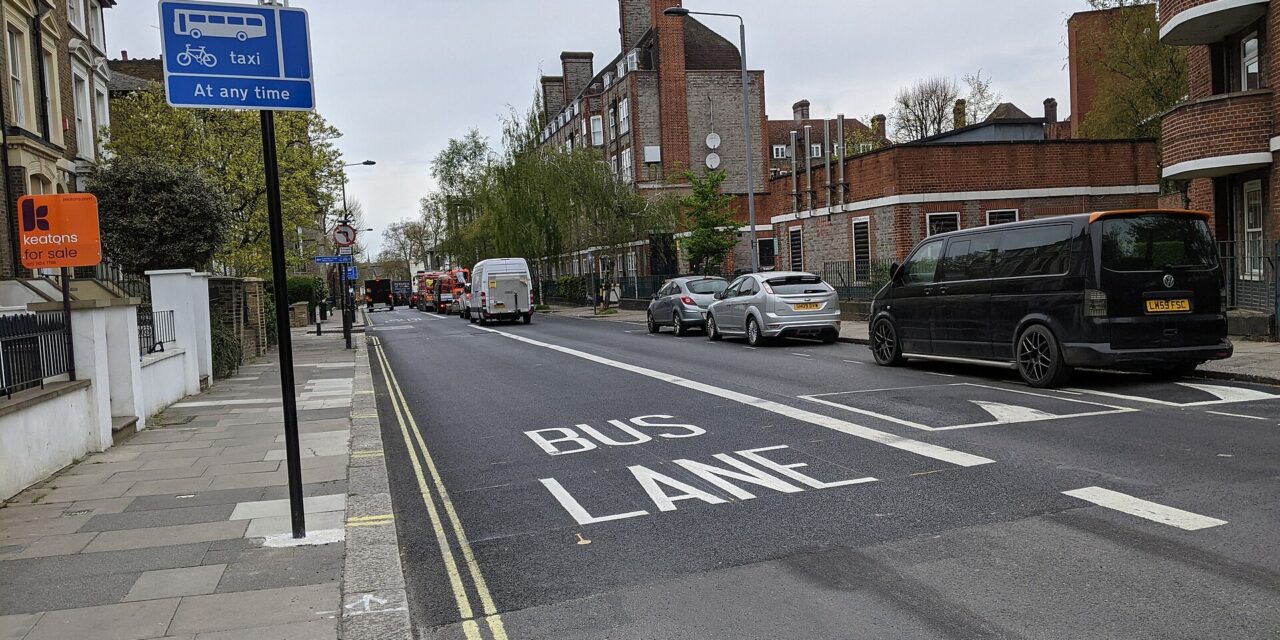
The Highway Code’s bus-lane rule says drivers must not use a bus lane during its period of operation. The upright sign at the start of the restriction is therefore crucial. It should indicate who may use the lane and, where relevant, the operating times. Some lanes allow specified vehicles such as buses, cycles, taxis or motorcycles, but that is a local restriction, not a general permission.
Go back safely on foot if practical, or use recent street-level imagery cautiously, to check the approach. Look for the first sign, any advance warning, the time plate, the end sign and whether a left or right turn required you to enter the lane. If you rely on photographs, keep the original files and record when they were taken. Signs may have changed since the alleged date.
2. Check the date, time and location against your own record
Match every detail on the notice against the video, your calendar, dash-cam footage, phone location history if you have it, and any passenger who can genuinely confirm what happened. A wrong registration mark, a location that does not identify the restriction, or footage that does not show the relevant entry can matter. Be precise: saying you did not notice the lane is usually not the same as showing that the restriction did not apply.
3. Ask whether your vehicle was permitted
Do not infer permission from a vehicle type or from what another driver did. Read the symbols on that particular sign. A lane that permits a licensed taxi may not permit a private-hire car; a lane open to a bicycle does not make it open to every powered two-wheeler. If the PCN alleges that a particular class of vehicle was prohibited, keep copies of any documents that show why your vehicle fell within a permitted class, if that is your case.
4. Check who the notice is addressed to
If you had sold the vehicle, were a hire company customer, or were dealing with a lease vehicle, do not ignore the notice because somebody else was driving. Follow the PCN instructions promptly and provide the documents it asks for. The registered keeper details held for enforcement may not tell the whole story, but the process has deadlines and evidence requirements.
5. Separate a real ground from an understandable explanation
Heavy traffic, an unfamiliar road or a sat-nav instruction can explain why an error happened, but they do not automatically cancel a bus-lane PCN. A stronger representation ties the facts to the allegation: for example, the video shows your vehicle using a permitted route, the signs did not clearly show an operative restriction, the vehicle was no longer yours, or the notice contains a material error. Explain the sequence briefly, attach only relevant evidence and avoid exaggeration.
6. Use the route printed on the PCN
Do not send a generic email to a council department and assume it counts as a challenge. Use the online portal, postal address or appeal route on the notice, retain the submission confirmation and keep a copy of everything uploaded. In England and Wales, GOV.UK’s local-authority PCN service is a useful starting point for finding the issuing council. It also makes clear that the service is for England and Wales only.
Pay, make representations, or take it further?
There is no one-size-fits-all answer. If the evidence is clear and none of the facts gives you a credible basis to dispute the PCN, the reduced-payment deadline may be the financially sensible point to stop. If the restriction, evidence or recipient details are genuinely in doubt, make representations within the stated time and explain exactly why.
| Situation | Sensible next step |
|---|---|
| You clearly entered a signed, operative restriction and have no contrary evidence | Check the reduced-payment deadline and the PCN instructions before deciding whether to pay. |
| The video or notice appears wrong | Download the evidence, list the discrepancy and submit a concise representation through the stated route. |
| You believe the signs or permitted-vehicle symbols were unclear | Photograph the approach and signs safely, identify the precise issue and avoid relying only on a general complaint. |
| The vehicle had been sold, hired or leased | Respond promptly with the paperwork requested on the notice. Do not leave it for the next person to resolve. |
If representations are rejected, the response should say whether there is an independent appeal route and how long you have. Read it carefully. Do not let the deadline expire while you are still gathering evidence. If the amount is significant or the case is legally complicated, independent consumer or legal advice may be worthwhile.
Common mistakes that weaken a bus-lane challenge
- Assuming the rule is the same everywhere. Times, exemptions and enforcement arrangements can change street by street.
- Arguing from memory alone. Video, legible photos and the PCN carry more weight than a vague account.
- Using current imagery as proof of the historic layout. It can support an enquiry, but works or new signs may mean it does not show the road on the day.
- Paying before checking the consequences. Payment may be treated as closing the case. Follow the PCN’s own wording.
- Missing a deadline while waiting for an answer by phone. Submit through the formal route in time and retain proof.
The bottom line
A bus lane PCN is not a reason to panic, and it is not a reason to fire off a speculative appeal. Start with the notice, the authority’s video and the actual signs at the location. Check whether the restriction applied to your vehicle at that time, then use the exact process and deadline on the PCN. That approach gives you the best chance of making a sound decision, whether you pay or challenge.